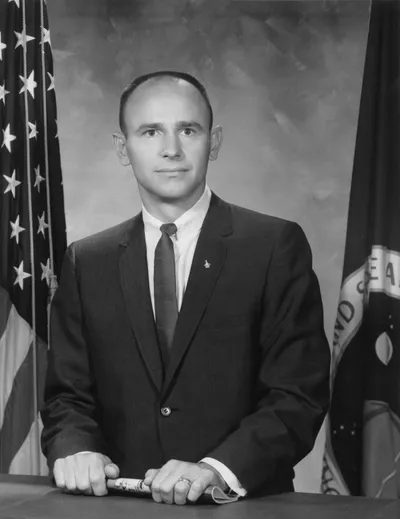
Alan Bean didn’t just visit the moon. He lasted long enough to leave a mark.
Born in Wheeler, Texas in 1932, Bean became one of the most photographed people in history. But his accomplishments go beyond being an astronaut. It’s about what he did after he came back.
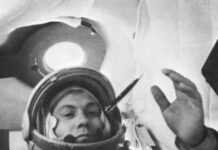
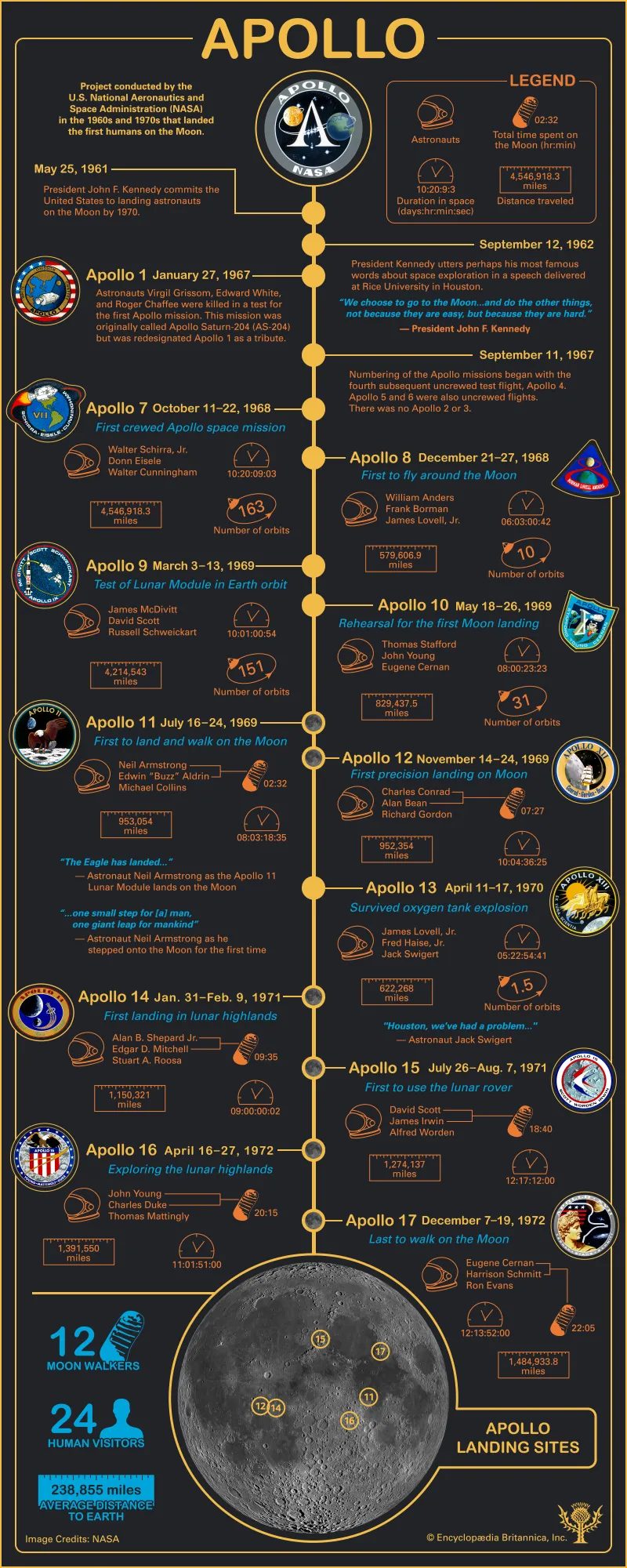
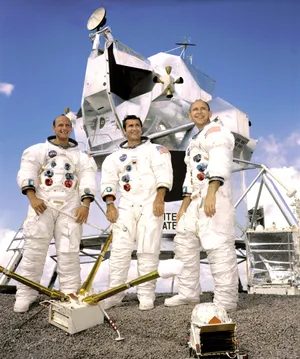
He was the pilot of the Apollo 12 lunar module. The mission landed in November 1969. Just weeks after Apollo 11 landed on the moon, the world watched in real time as Bean and Commander Charles Conrad Jr. touched down near Surveyor 3. A robotic probe landed there two years earlier. It was a precise landing.
They walked nearly eight hours on the surface. They even recovered parts of Surveyor 3 to take home for analysis.
While Bean and Conrad kicked up moon dust, Richard Gordon circled the skies in his command module Yankee Clipper. They returned to Earth on November 24, 1969.
But this is something that most history books ignore.
Bean wasn’t done with space. He was just starting to get interested in art.
From astronaut to astronaut artist
Bean died on May 26, 2018 in Houston. By then he had become a famous artist. He drew what he saw. Not from a textbook. Not from imagination. From memory.
He was one of only 24 humans to travel to the Moon. Only 12 walked on its surface. Bean was one of the few who became a professional painter. His works are in museums and private collections around the world.
Why is this important?
Because Bean bridged two worlds. Science and art. Logic and emotion. He proved that he can be a test pilot and a poet at the same time.
His paintings are not just beautiful paintings. They are historical records. They show the rugged beauty of the lunar landscape. The way the shadow stretches across the crater. The way the Earth hangs in the black sky.
“I’ve never been able to forget the beauty of the view from space.”
Bean’s art helps us understand space exploration in a different way. It’s not just about rockets and data. It’s about human experience. It’s about standing in another world and feeling small.
The legacy of Apollo 12
Apollo 12 is often overshadowed by Apollo 11, but Neil Armstrong and Buzz Aldrin got all the credit. But Apollo 12 showed something important. This shows that the moon landing was not an isolated accident. It was repeatable.
Bean and Conrad landed within 600 feet of Surveyor 3. Very close. Very close. They walked over to the probe. They pulled out its camera. they brought it back.
This is not just a vanity project. It tested whether humans could perform complex tasks on the surface. It showed we could repair or retrieve equipment. This was critical for future missions.
Bean’s role as a lunar module pilot was technical and demanding. He piloted the Intrepid lander. He navigated the descent. He watched Conrad’s every move. This requires precision. This takes courage.
But Bean’s greatest contribution may have come post-flight. He became an ambassador for space exploration. Through his art he
Bean’s double life in space and art
After graduating from the University of Texas at Austin in 1955, Bill Bean enlisted in the US Navy. He didn’t just serve; He honed his skills by becoming a test pilot before the space race reached its peak. In 1963, he was selected for the astronaut program. Of course, he also flew on Apollo 12, but his real command experience came later, on Skylab 3.
The mission began on 28 July 1973 and ended on 25 September. Bean was in charge. He wasn’t alone in that orbiting tin can. Science pilot Owen K. Garriott and command module pilot Jack Lousma completed the crew. They are the second team to actually live and work in Skylab.
They stayed there for 59 days. It’s not just the long hours. This set the record for the longest single space flight at the time. The human body can handle a lot of stress, but this team pushed the limits more than anyone before.
In 1975, Bean hung up his Navy uniform. However, he did not resign from NASA. He continues as the head of the operational training group for astronaut candidates. He stays with the organization and forms the next generation of explorers.
But in 1981, The call of a different kind of canvas came He resigned from NASA. The goal? Painting. He did not turn to landscapes or abstract paintings. He painted what he knew. His themes came directly from his experiences in space flight. Seen from above, the silence of the void, a survival machine.
He changed the cockpit to the studio. The trajectory changed, but the focus remained on the extraordinary.
Why Bean’s post-NASA career matters
You might wonder why a former astronaut took up oil painting. This is not a post-retirement hobby. This is an attempt to preserve a certain visual history.
Spending 59 days in low Earth orbit reveals things that are not in standard textbooks. How light hits the curve of the earth. The dark space is a contrast with the bright, momentary atmosphere. Most people only see these images through the lens of a journalist or a mission patch. Bean wanted to capture them with his own eyes, without the filter of the camera shutter.
This approach to Bill Bean astronaut artwork helps us understand the human side of space exploration. This was not just engineering or the political tension of the Cold War. It’s about isolation. Awe. 450 miles above the ground there are certain quiet moments, but none of them are what you expect.
His transition from test pilot to painter reflects a broader shift in the way we view space travel. It shifted from a purely military-industrial exercise to a more personal exercise. More human.
There’s a reason we still study his flights. Not just for the records broken, but for the perspective gained. After leaving NASA, Bean stayed in the loop after leaving NASA, training candidates. He knew the stakes. He knew how heavy the helmet was. When he started painting, he was documenting the cost of that weight.
The missions