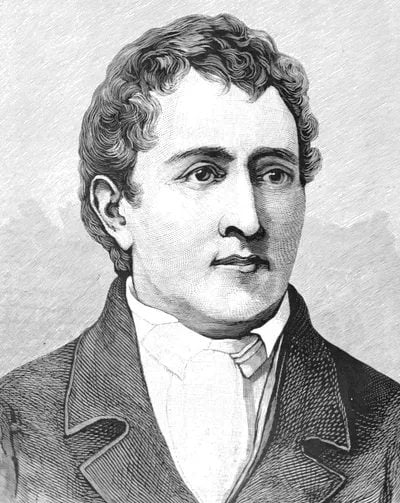
Carl Wilhelm Scheele didn’t have a fancy lab. He didn’t have a team of assistants or a government grant. He was a pharmacist in 18th-century Sweden, working with borrowed glassware and improvised tools. Yet he is widely regarded as the most prolific experimental chemist of his era. He independently discovered oxygen, chlorine, and manganese. He also found tartaric acid and hydrofluoric acid. And he died young, likely killed by the very chemicals he studied.
Born in Stralsund, then part of Swedish Pomerania, Scheele grew up in a world of trade and medicine. His father was a merchant. In 1757, the teenager was apprenticed to a pharmacist in Gothenburg. It was there, surrounded by jars of strange powders and liquids, that his obsession began. He read everything he could find. He tested everything he could get his hands on.
By 1765, he had finished his training. He moved to Malmö to work in a pharmacy. That move changed everything. He connected with Anders Jahan Retzius, an anatomist at Lund University. Through Retzius, Scheele touched the academic world for the first time. It was a bridge he wouldn’t cross alone, but it opened the door.
The Uppsala Connection
Scheele kept moving. Stockholm. Then Uppsala. In Uppsala, he found his intellectual home. He met two giants of Swedish chemistry: Johan Gottlieb Gahn and Torbern Bergman.
The friendship with Bergman was decisive. Bergman was the theorist. Scheele was the hands-on experimenter. Bergman needed someone to test his hypotheses. Scheele needed guidance to organize his chaotic notes. They fit together. Bergman provided the theoretical framework; Scheele provided the data.
For five years, Scheele worked in Uppsala. Then he moved to Köping. He opened his own pharmacy. He settled down. He passed his exams. He joined the Royal Swedish Academy of Science in 1775. The Academy gave him a yearly pension. This was crucial. It allowed him to quit grinding for money and start grinding chemicals for knowledge.
He had no proper oven. His instruments were scraps. But his analytical skill was unmatched. He built ingenious devices for studying gases. He used simple tubes. He used retorts. He used an ox bladder to store air samples. It was primitive. It was brilliant.
The Discovery of Oxygen and Fire Air
Scheele is best known for isolating oxygen. But he didn’t call it oxygen. He called it fire air.
In 1777, he published Chemische Abhandlung von der Luft und dem Feuer. In it, he described how heating substances like mercury oxide released a gas that made candles burn brighter. He measured the amount of this gas in normal air. He found it was about one-fourth of the total volume.
He wasn’t the only one. Joseph Priestley, an English clergyman and scientist, made the same discovery independently around the same time. They were both working under the phlogiston theory. This dominant 18th-century idea claimed that burning materials released a hypothetical substance called phlogiston. When a material lost all its phlogiston, it stopped burning.
Scheele interpreted his findings through this lens. He believed fire air was the air that absorbed phlogiston efficiently. The theory explained combustion. It explained why air became “dephlogisticated” (spent) after a candle went out. Scheele didn’t set out to overthrow the phlogiston theory. He set out to experiment. His results actually proved the theory’s mechanics, even if the theory itself was wrong.
A Life of Acid and Ascent
Scheele’s output was staggering. His cryptic laboratory notes supposedly contain details of 15,000 to 20,000 experiments. Very few were published. He didn’t write for fame. He wrote to understand.
He worked across every field of chemistry available at the time.
- Mineral Acids: He studied arsenic acid, molybdic acid, and tungstic acid.
- Gases: He identified chlorine in 1774. He treated black magnesia (pyrolusite) with muriatic acid (hydrochloric acid). A strange greenish gas appeared. He called it dephlogisticated muriatic acid. We now call it chlorine. He suspected the mineral contained a new element, manganese, but couldn’t isolate it alone.
- Organic Chemistry: As an apothecary, he focused on organic acids. He isolated tartaric, oxalic, lactic, citric, and malic acid. He even named malic acid the “acid of apples.”
- Light and Silver: He discovered that light darkens silver salts. This later became the foundation of photography.
- Fluorine: He determined the properties of hydrofluoric acid.
He also identified baryta (barium oxide). He distinguished molybdenite from graphite. He studied phosphorus. He isolated casein and glycerol.
The Cost of Curiosity
Scheele didn’t keep records well in his youth. He didn’t take regular laboratory notes until Retzius taught him. Bergman helped make his work coherent. Before that, his experiments were sketchy and hazardous.
He handled cyanide. He handled arsenic. He worked without proper ventilation. The toll on his health was inevitable.
In 1786, at age 43, Scheele died in Köping. The cause was likely chronic poisoning from his experiments. On his deathbed, he married the widow of the town’s former apothecary. She had stayed on as his housekeeper. The marriage transferred his pharmacy and assets to her. A final pragmatic move.
He left the theory of chemistry to others. Bergman took the theoretical mantle. Lavoisier would soon dismantle the phlogiston theory entirely, building modern chemistry on the back of Scheele’s data.
Scheele remained an apothecary until the end. He died with jars on his shelves and unfinished experiments in his head. The world didn’t know his name as widely as it knew Priestley’s or Lavoisier’s for decades. But without his hands-on grind, the timeline of chemical discovery might have shifted. He proved that you don’t need a university chair to change science. You just need curiosity. And the ability to endure the fumes.