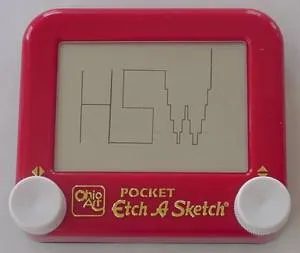
It’s easy to dismiss the Etch-a-Sketch as a distraction on long car journeys, but the mechanics behind the familiar red plastic frame are surprisingly sophisticated. The toy works as a hand-held plotter with a special erasing system. You’re probably already familiar with the classic design: the glass drawing window with two knobs next to it. While the iconic red case remains standard, the manufacturer has expanded the aesthetic options to include a variety of fashion colors. This change in presentation does not change the basic technology of the device, where the user’s hand manipulate the stylus against the glass surface.
Haptic secret
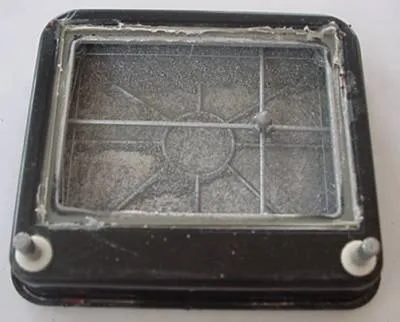
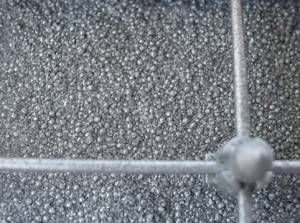
Dismantling it is not a simple task. You actually have to remove the outer shell and lift the glass to look at the mechanics. What is hidden there? A pen that runs on a pair of orthogonal rails. Turn the knobs and the whole thing changes. Then there’s the filler: ultra-fine aluminum powder mixed with tiny beads. The beads aren’t random. They prevent the powder from clumping and allow it to flow evenly over the surface.
Mechanics of touch
It’s not just about moving the cursor. The Rails allow for precise, two-dimensional adjustment. The knobs control the movement and translate your input into physical movement. Aluminum powder gives texture. The beads ensure uniformity. Without them, the powder would settle unevenly. Dead zones would arise. Or worse, the resistance feels sticky rather than smooth.
It’s a mix of Physics and clever engineering designed to mimic the feeling of drawing on paper.
Result? A tactile experience that varies depending on how hard you press. The powder is pressed. The beads move. The pen moves. This is not digital feedback. It’s real, physical resistance.
Why this is important
We’re used to screens feeling the same no matter what. Smooth. Cold. Constant. This setup breaks that mold. It offers variety. You can feel the difference between a rough sketch and a fine line. The knobs give you control. The rails give you precision. The powder gives feedback.
Is it perfect? Probably not. It’s complicated. Even fragile. But it’s a step towards screens that don’t just show you content, they let you feel it.
The question is: Will anyone buy it? The technology exists. The concept is solid. But the cost? Maintenance? These are real obstacles.
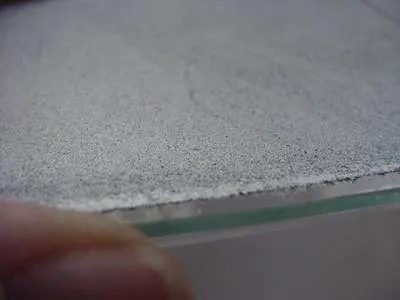
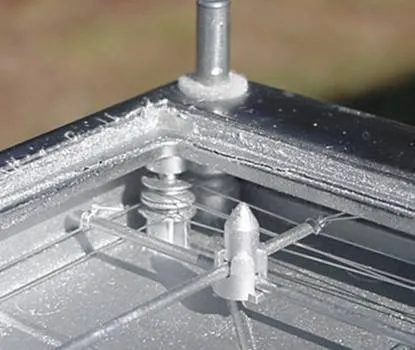
Turn the toy over. Shake well. Suddenly, the dark void between the glass panels turns into a shimmering silver canvas.
The aluminum powder spreads and covers every inch of the interior surface.
It looks like magic. It looks like a small, metallic blizzard. But before you start drawing your masterpiece, you need to ask an obvious question.
Why does the powder stick?
One would assume it would slide right off. The glass is smooth. It’s smooth. But try to touch this powder and you will find the real answer. It sticks to everything.
Aluminum dust doesn’t just sit there. It sticks to every surface inside the case.
Look closely at the mess. It’s not just on the back glass. It’s in the frame. It’s on the edges. It’s everywhere.
This coating reveals something completely different. The hidden mechanics of the toy.
You can now see the Etch-a-Sketch skeleton. It’s not simple. It is a dense steel wire mesh. These threads are incredibly thin. They are precisely lined up.
Wires connect the knobs to the horizontal and vertical bars. But they don’t go straight. They route through a complex pulley system.
Each end of the rod is connected to a wire. This thread is pulled back to the knob that you turn. Spin one. The wire tightens. The bar is moving. The stylus scratches the glass.
It’s a clever, if somewhat fragile, chain reaction. The powder covers it. But shake the toy again. Silver dust settles. And all that’s left is the mechanism.
And the question remains. Why did it stick in the first place?
Because once aluminum powder gets into the Etch-a-Sketch, it doesn’t leave. It stays. It is waiting for the next shake. Next drawing. Next mistake.
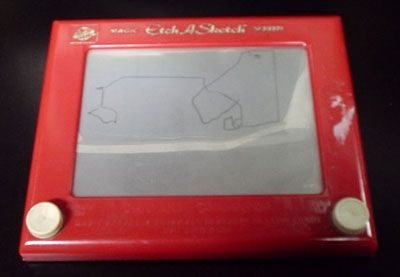
The mechanism is mechanical and fun. Turn the physical knob. That action shifts an internal bar. The lever pushes the pen. The pen is drawn over a specially coated glass screen. This is not ink. This is wear and tear. The tip wipes away a fine layer of aluminum dust, revealing the clear glass underneath. The result is a visible line. A graph. A chart. Pure physics turns information into shapes.
It gives you a sense of satisfaction that a pixel perfect display cannot provide. There will be friction. There is resistance. There is a clear connection between the hands and the print. This is more than just a toy. It is a bridge between abstract numbers and visual reality. To a child growing up in the middle of the 20th century, it seemed like magic. For engineers, it’s a preview of the future.
These devices have been around for decades, before the digital revolution. These represent a time when technology was something you could own. Something you can feel. Something that makes noise while working. The sound of a stylus scratching on glass was the soundtrack of early computational thinking.
Think of a modern tablet. Smooth. Silence. No friction. Now imagine a device that requires effort. In this case, you have to turn the dial yourself to see the results. It creates a sense of ownership of the whole process. Don’t just look at the data. You are carving it into existence.
This tactile visualization method was the forerunner of all the displays we use today. Before LED. Before LCDs. Even before the first large CRT monitors were introduced. There is this. Simple. Effective. Unforgiving. If your hand slips, the line wavered. If you turn the knob too fast, the pen will skipped. Accuracy is required.
Its appeal goes beyond education. This is aesthetics. The bright white lines against the dusty, dark glass create a clean, modernist atmosphere. It feels like the future. It feels like the future. This technology is still rudimentary, but the output was sharp. Clear. Undeniably real.
These early plotters were indispensable toys from the 1950s onwards. They are not just toys. They are an introduction to logic. To geometry. The joy of seeing numbers visually become shapes. They teach children that numbers have shapes. Data has texture. This technology can be amazing.
And perhaps most importantly, they taught patience. You couldn’t just swipe and delete. You had to turn. And turn. And watch the line emerge. Slowly. Deliberately. One scratch at a time.
It’s a strange comfort, looking back. インスタント アップデートとシームレスなインターフェイスで満たされた世界では、デバイスには、隅々まで進歩することを強制するいくつかのルーツがあります。 The stylus doesn’t care about your deadline. It cares about your hand. あなたのリズム。 あなたのタッチ。
That’s the charm. That’s the magic. That’s why these simple, dusty-glass screens still capture our imagination. They remind us that before we could touch the screen, we had to touch the world.