


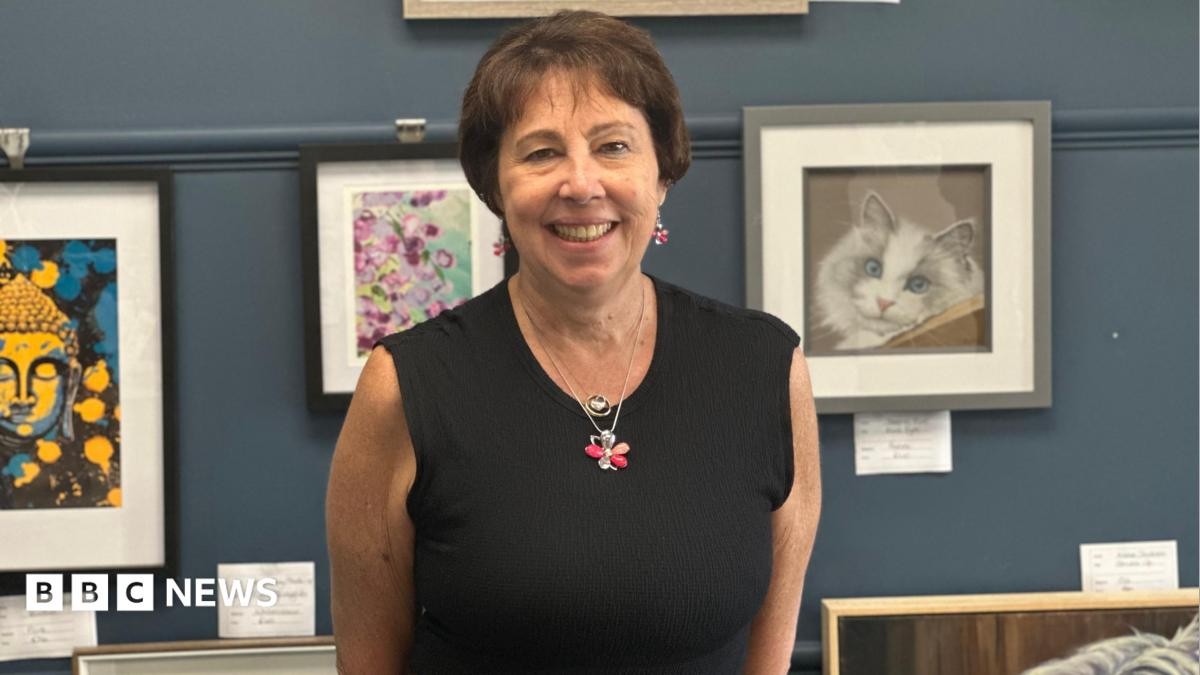
Dr. Nicola Fox knows the landscape better than most. As the acting director of NASA’s Science Mission Directorate, she sits at the helm of the agency’s scientific endeavors. But the woman leading that massive operation traces her roots back to Hitchin, Hertfordshire. And when she returned home to walk through the University of Surrey recently, the view was startlingly different from the one she faced decades ago.
Fox, 57, was struck by the sheer volume of women graduating in physics and engineering.
“It was amazing,” she said.
The contrast isn’t lost on her. Back in 1991, when Fox earned her master’s in telematics and satellite engineering, the gender gap was a chasm. She was one of four women on a course of over 200 students. Today, seeing cohorts of young women taking over fields once deemed “for boys” only reinforced why her path matters.
The Letchworth Shield
How did Fox navigate that male-dominated arena without losing her way? Blame it on her upbringing. She attended St Francis College in Letchworth, an all-girls school.
It sounds like a simple detail. But for someone entering STEM during a time when societal expectations were rigid, that environment was protective. It acted as a buffer.
“I never experienced the ‘girls don’t do this’ or ‘boys do this,'” Fox recalled. “Because we were just girls and they taught us all of the subjects.”
At St Francis, there was no whispering. No subtle cues that certain corners of the intellectual world were off-limits. The curriculum was universal. The expectation was absolute capability. So, a passion for science didn’t register as unusual. It just was.
When the Reality Hits
It wasn’t until college that the illusion of gender neutrality cracked. That’s when the numbers stared her in the face. When you’re four in two hundred, you start to notice the silence. You notice the isolation.
Fox admitted that only then did it occur to her that what she was doing was viewed as “unusual” for a girl. But the damage—or the distortion—hadn’t taken root. She hadn’t internalized the stereotype because she never had the chance to be taught it.
“It wasn’t really until I got to college… it didn’t really occur to me [that it was unusual] until I saw how rare it was.”
Now, seeing the rise of women in these disciplines isn’t just a statistical win. It’s validation. For the head of NASA’s science division, this shift


