Imagine finding a treasure chest the size of a small country in the world’s coldest and most inaccessible desert. Now imagine that the desert is a continent dedicated to science. This is the precarious situation Russia claims to have stumbled into, and it is sending shockwaves through the geopolitical and energy sectors.
At the beginning of July, Russian scientists announced that they were drilling for huge hydrocarbon reserves under the ice. The figures for this discovery are staggering: 511 billion barrels of oil.
In context, it’s not just a lot of oil. This is enough to change the world market. Its reserve is estimated to be 10 times larger than the total production of the North Sea in the last 50 years. In a world that is supposed to be moving towards green energy, this discovery feels more like a trap than a breakthrough.
1959 Treaty and drill bit
Why is this such a big deal? It comes from a document signed in Washington in 1959.
The purpose of the Antarctic Treaty is to maintain peace on the Antarctic continent. It strips each country of its territorial claims and prohibits all military activity or mineral extraction. It was supposed to be a sanctuary. A place for science. “common heritage of mankind” focuses on understanding climate change and natural phenomena rather than exploiting resources.
This rule has remained strong for over 60 years. No one mined. No one drilled. Scientists study ice cores. They measured temperatures. They did not extract fuel.
But now the contract is being tested by a drill bit.
This changes everything
If Russia’s claims are true, the implications are terrifying for the climate agenda.
It was believed that the global transition to renewable energy would make the use of fossil fuels obsolete. This argument is complicated by the discovery of a massive reserve in one of the most protected places on Earth. This raises the troubling question of why we are still looking for oil when the Earth is on fire.
If there is so much oil under the ice, why rush the transition?
The answer, of course, is that if geopolitics change, we cannot leave it alone. But the existence of this reserve changes the conversation. It turned Antarctica from a laboratory into a potential oil field.
A geopolitical trap
This is not just an oil issue. It’s about power.
Those who control the energy control the future. If Russia found this, it has a card that could destabilize the world’s energy balance. Other countries, especially those with fossil fuel interests, may begin to see the Antarctic Treaty less as a moral boundary and more as an obstacle to be removed.
The treaty relies on consensus. It relies on trust. When someone starts drilling for profit, that trust disappears. “Non-sovereign zones” become battlegrounds for legal and potentially physical battles.
What happens next?
We don’t know if the oil can be recovered. We don’t know if it’s economically viable to extract it from miles of ice. We don’t know if independent scientists can back up Russia’s claims.
But we know this. the world is watching. The scientific community is divided between those who want to ignore the discovery and those who fear it will trigger a rush for the Antarctic.
The ice is melting.
Shadow on the ice
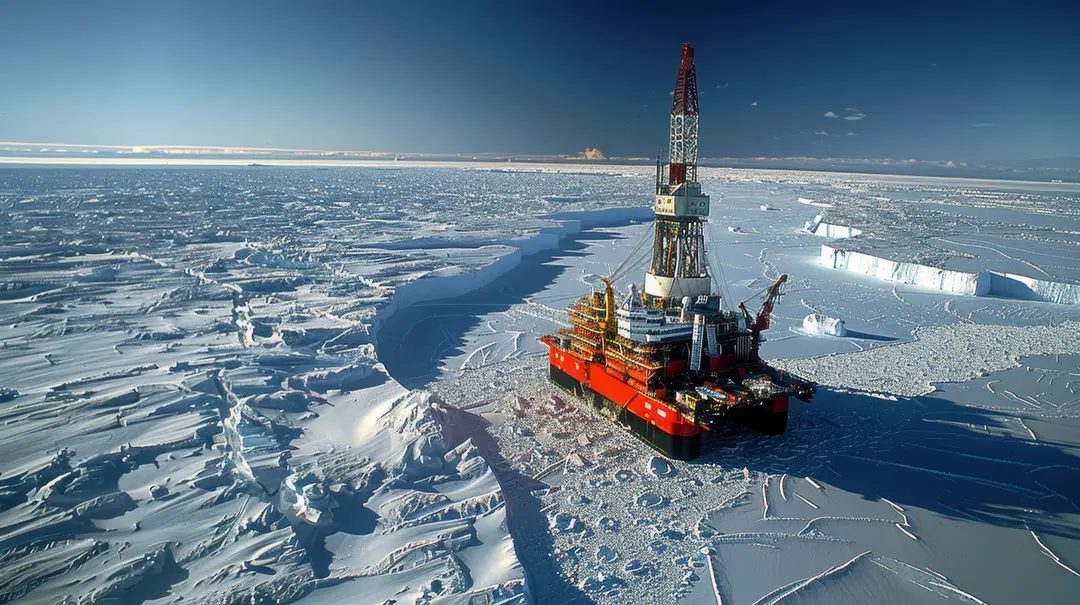
The Russian icebreaker Akademik Alexander Karpinski is not just moving through water; it is moving through a web of suspicion. It passes through the web of doubt. Since 2023, its tracks between Cape Town and the coast of Antarctica has been ringing alarm bells around the world. Climate activists and geopolitical observers stared at the hull and asked questions no one dared whisper. what is the drill bit actually looking for?
According to the report, the goals of these tasks go deeper than conventional seismic research. The fear? That Moscow is using scientific cover to scout for oil. This would be in direct violation of the Antarctic Treaty, which specifically prohibits the use of mineral resources. But this deal is based on trust. Trust is in short supply at the moment.
Geopolitics is central
Russia’s activities in the Antarctic cannot be viewed in isolation. It’s worth looking at its recent history. The invasion of Ukraine shattered the illusion of reliable international compliance. Now the world is preparing for the worst as Moscow sends ships onto the ice.
The distinguished professor of geopolitics, Klaus Dodds, clearly brought this issue to the fore in the British Parliament. His concerns were concrete. It’s not just Russia. They collect data. Seismic data can be repurposed. What looked like a scientific climate research expedition can quickly turn into a reconnaissance mission for oil and gas recovery. The line between science and strategy has blurred, and Russia is treading on it.
The Chinese Factor
And there’s another giant in the room: China. The Chinese government is not sitting idle. We recently opened our fifth permanent scientific base, expanding our footprint to the southern continent. This is no accident.
China is the world’s largest consumer of hydrocarbons. Its appetite for energy is insatiable. As the world’s oil reserves dwindle, Antarctica’s rich, unspoiled oil reserves are increasingly attractive. But China is playing a complicated game. We can use our growing influence to thwart Russia’s ambitions and seal the ice. Or it could require a complete renegotiation of the rules, opening the floodgates to commercial mining. The outcome depends on whether the Chinese government prioritizes environmental protection or energy security.
Uncertain horizon
The stakes have never been higher. When huge oil reserves were discovered under the Antarctic continental shelf, the rules of the game have changed from conservation to competition. We are standing at a precipice. The decisions of the next few years will decide the fate of Earth’s last wilderness.
Will the international community hold the line? Or will the pressures caused by the deficit weaken the basis of the agreement? If it breaks, we are not looking at a few drilling platforms. We are looking at an era of conflict. Competition for natural resources will not only destabilize ecosystems, but also disrupt world politics for decades. As the ice melts, the barriers protecting the area melt. What happens when the protection disappears? We’ll find out soon.