Researchers in Siberia have discovered compelling evidence of a sophisticated surgical procedure performed on a woman from the Pazyryk culture around 2,500 years ago. Using CT scans, scientists found that the woman, who lived during the Iron Age, underwent jaw reconstruction and was fitted with what is believed to be one of the earliest known prosthetic devices. This discovery not only demonstrates advanced medical knowledge in the region but also offers insight into how ancient societies valued the lives of their people.
The Pazyryk Culture and Their Medical Expertise
The Pazyryk people, a nomadic group related to the Scythians, flourished on the Ukok Plateau in southern Siberia. They are known for their remarkably preserved burials in permafrost, including the famous “Princess of Ukok” with her intricate tattoos. These conditions have allowed researchers to study organic remains in exceptional detail, revealing a level of medical skill previously unknown for this era.
In 1994, archaeologists excavated a small cemetery on the Ukok Plateau. One burial contained the remains of a woman aged between 25 and 30, lying on a wooden cot and wearing a wig. Despite being partially mummified, the burial lacked significant artifacts initially, leading to limited investigation at the time.
The Injury and Surgical Intervention
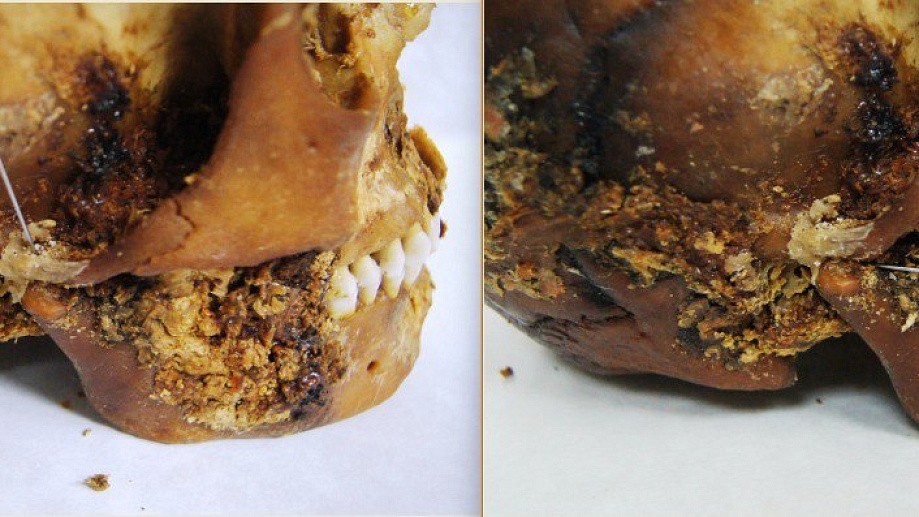
Recent CT scans have revealed that the woman suffered a severe head injury resulting in the destruction of her right temporomandibular joint (TMJ). This injury would have severely impaired her ability to speak and eat. Researchers speculate the injury may have occurred during horseback riding, a common activity for the Pazyryk people.
What sets this case apart is the surgical intervention. The woman’s jaw was reconstructed using drilled canals in the bones, secured with horsehair or animal tendon acting as a primitive prosthetic. According to Dr. Andrey Letyagin, a radiologist at the Siberian Branch of the Russian Academy of Sciences, this is the first known evidence of such a procedure in scientific literature.
Evidence of Recovery and Adaptation
The scans show the woman lived for months, possibly years, after the surgery. New bone tissue grew around the prosthetic, and wear patterns on her teeth suggest she compensated for the damaged side by chewing exclusively on her left. This indicates she survived and adapted to her condition, highlighting the effectiveness of the ancient surgical technique.
The Pazyryk people were already known to practice basic skull surgery, as evidenced by trepanation holes found in other mummies. They also possessed a clear understanding of human anatomy, evident in their mummification practices. However, the TMJ surgery is an exceptional example of their advanced medical capabilities.
A Valued Life, Preserved in History
Despite her burial lacking elaborate artifacts, the successful surgical intervention suggests the woman’s life was valued by her community. Archaeologist Natalia Polosmak emphasizes that this discovery confirms the Pazyryk people were capable of performing complex procedures to save lives.
This study provides further important confirmation that the Pazyryk people were able to perform complex surgical procedures to save the lives of their fellow tribesmen.
This case stands as a remarkable testament to ancient medical innovation, demonstrating that surgical procedures and prosthetic devices existed thousands of years earlier than previously believed. The discovery challenges traditional views on the medical capabilities of nomadic cultures and underscores the ingenuity of the Pazyryk people.