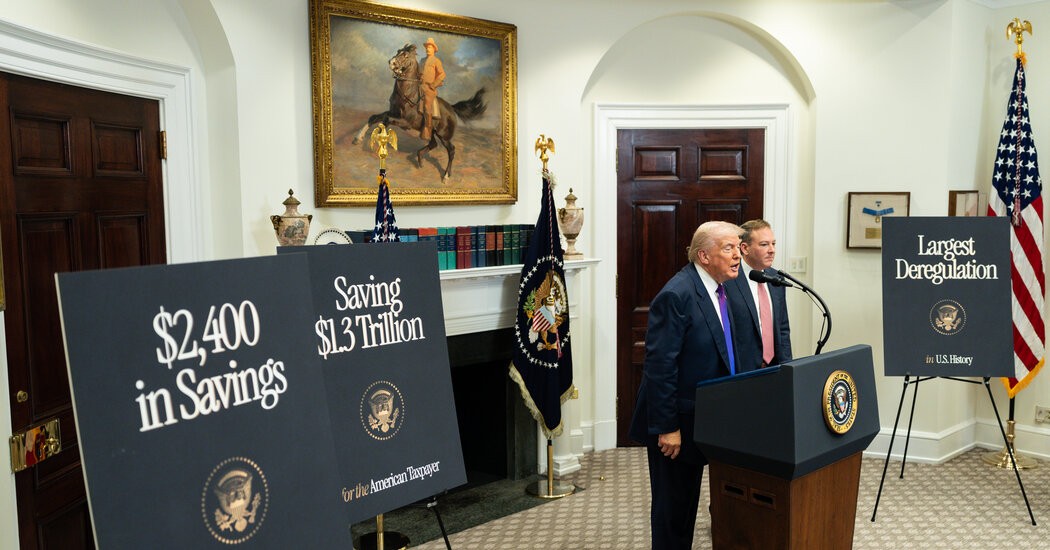
The Trump administration’s decision to formally rescind the “endangerment finding” – a cornerstone of U.S. climate policy – all but guarantees a new wave of lawsuits, likely culminating in a Supreme Court battle. This move effectively removes the scientific basis for regulating greenhouse gas emissions under the Clean Air Act, potentially reshaping federal climate policy for years to come.
Historical Context: The Supreme Court’s Role
The endangerment finding itself originated from a 2007 Supreme Court ruling in Massachusetts v. EPA. The court mandated the Environmental Protection Agency (EPA) to determine whether greenhouse gases posed a threat to public health and, if so, to regulate them accordingly. The EPA subsequently affirmed that greenhouse gases do endanger public health, leading to regulations like the Clean Power Plan.
However, the current Supreme Court’s conservative majority presents a significant obstacle to reinstating those regulations. Unlike the court two decades ago, today’s justices may be more inclined to uphold the EPA’s decision to eliminate the endangerment finding, effectively gutting the legal foundation for climate action.
Legal Strategy and Potential Outcomes
Environmental groups and Democratic-led states are preparing legal challenges, but experts acknowledge the risks. A Supreme Court ruling against them could permanently weaken the federal government’s ability to regulate greenhouse gases, even under future administrations.
“If the rule survives legal challenges, it could pendulum-proof U.S. federal climate policy against a Democratic sweep in 2028,” notes Clearview Energy Partners, a consulting firm.
Despite this risk, some advocates argue that inaction is a greater threat. As Andres Restrepo, a lawyer for the Sierra Club, stated, “You can’t just stand by and let E.P.A. trash its own authority because you’re scared of a potentially negative ruling.”
Implications for Future Climate Policy
The administration’s move signals a broader effort to insulate climate policy from future political shifts. By dismantling the scientific underpinning for regulation, they aim to make it harder for subsequent administrations to reassert climate control. The legal battles ahead will determine whether this strategy succeeds, and whether the U.S. federal government retains the power to address climate change effectively.
The long-term outcome depends on how the courts interpret the Clean Air Act and the extent to which the Supreme Court prioritizes scientific consensus over political expediency. Regardless, this decision underscores a fundamental shift in U.S. climate policy: one where scientific authority is increasingly subordinate to short-term political objectives.