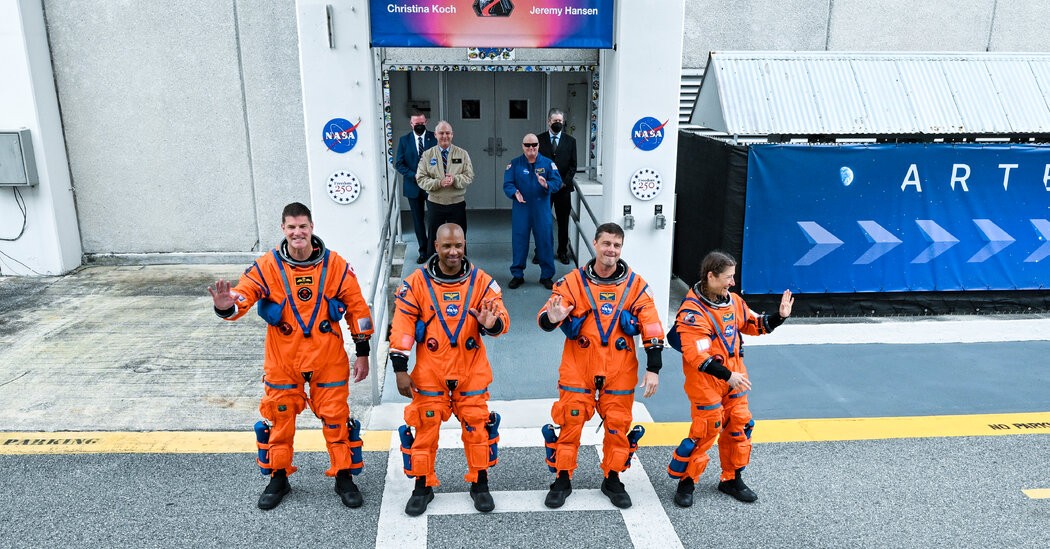
After a half-century hiatus, NASA is poised to send astronauts toward the moon again. The Artemis II mission, set to launch Wednesday at 6:24 p.m. Eastern time, marks the first crewed lunar journey since 1972. While this mission won’t include a landing, it’s a critical test flight for future lunar surface expeditions, aiming for a return by 2028.
The four-person crew—three Americans and one Canadian—will orbit the moon and return to Earth in a 10-day flight aboard the Orion spacecraft. This journey will validate the Orion’s life support systems and other essential technologies for long-duration lunar missions. Once proven, subsequent crews will utilize SpaceX or Blue Origin spacecraft to actually land on the moon.
Why this matters: The Artemis program represents a shift in space exploration. After decades focused on low-Earth orbit (ISS, shuttles), NASA is now committed to deep-space missions. This is not just about revisiting the moon; it’s about establishing a sustained presence and using lunar resources for future missions to Mars. The program’s continuation across presidential administrations (Trump initiated, Biden continued) underscores its strategic importance.
Crew and Firsts
The Artemis II crew includes significant milestones. Victor Glover will be the first Black astronaut to travel around the moon, while Christina Koch will be the first woman to venture into deep space. Jeremy Hansen will become the first Canadian to orbit the moon, marking a historic moment for international collaboration.
Rocket and Mission Details
The mission will utilize the Space Launch System (SLS), a powerful rocket comparable to the Saturn V that powered the Apollo missions. The SLS stands 322 feet tall and weighs over 5.75 million pounds when fully fueled. Once in orbit, the Orion capsule will separate from the rocket and begin its lunar trajectory. The crew will swing out to 43,000 miles above Earth before heading toward the moon, setting a new record for the farthest distance traveled by humans.
Viewing the Launch
NASA will stream full coverage on YouTube, X, its website, and other platforms. The launch window offers flexibility to address last-minute technical issues or weather conditions, with backup launch opportunities through April 6.
A Test for the Future
Artemis II builds upon the success of Artemis I, an uncrewed test flight that orbited the moon in 2022. NASA engineers have analyzed data from that mission, including heat shield performance, to refine the systems for crewed flight. The agency has also been testing the Orion capsule’s capabilities in simulated conditions, preparing for the challenges of deep-space travel.
The Artemis II mission is a crucial step toward establishing a long-term presence on the moon and beyond. While this mission doesn’t land on the lunar surface, it will lay the groundwork for future expeditions that could transform human space exploration.