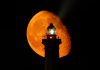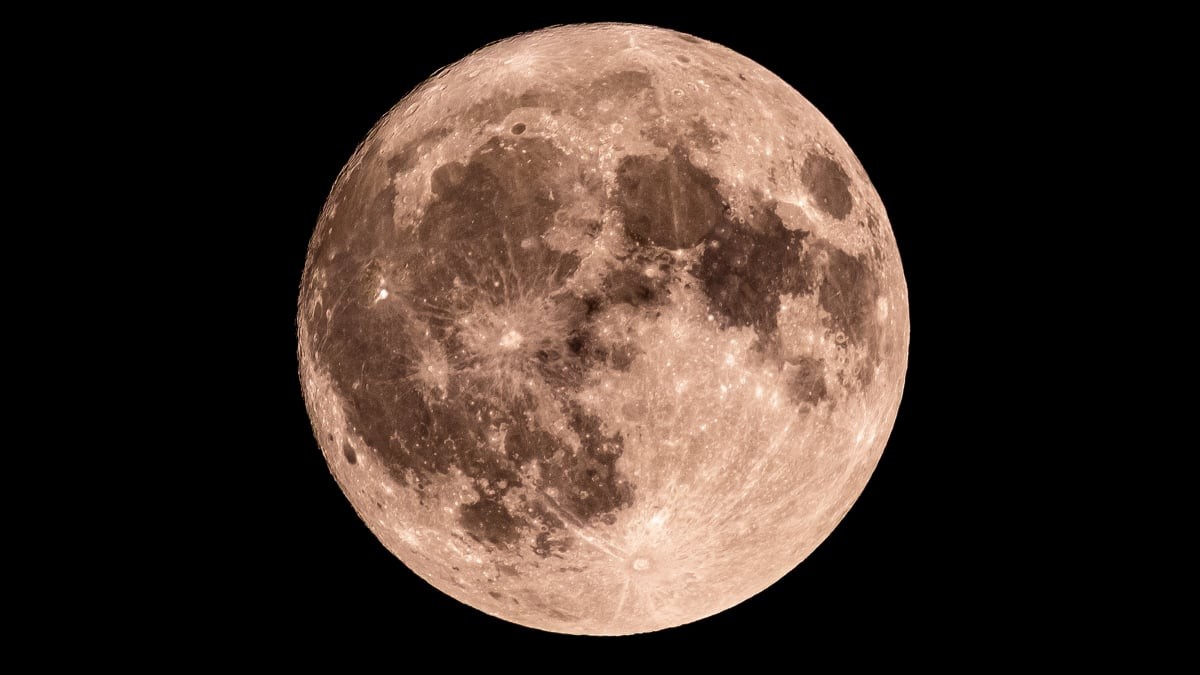
The Moon is currently in its Waning Gibbous phase, meaning it’s shrinking in apparent size as it moves from full illumination towards the New Moon. As of February 2, 2025, approximately 99% of the Moon’s visible surface is lit, making for a bright and easily observable night sky.
What You Can See Tonight
The Waning Gibbous phase offers excellent viewing opportunities with even basic tools. Without any equipment, features like the Mare Imbrium (Sea of Rains), Aristarchus Plateau, and Mare Serenitatis (Sea of Serenity) are readily visible.
With binoculars, observers can also spot the Posidonius Crater, Clavius Crater, and the Apennine Mountains. For those using a telescope, even more detail emerges, including the Caucasus Mountains, Rima Ariadaeus (a lunar rille), and the Rupes Altai (a prominent ridge).
The Lunar Cycle Explained
The Moon orbits Earth roughly every 29.5 days, completing a full cycle of phases. This cycle dictates how much of the Moon appears lit from our perspective. The same side of the Moon always faces Earth, but the angle of sunlight determines whether it appears full, partially illuminated, or invisible.
The eight distinct phases are:
- New Moon: Invisible, as the sunlit side faces away from Earth.
- Waxing Crescent: A thin sliver of light appears, growing each night.
- First Quarter: Half of the Moon is illuminated.
- Waxing Gibbous: More than half lit, approaching fullness.
- Full Moon: Entirely illuminated.
- Waning Gibbous: Light begins to decrease on one side.
- Third Quarter (Last Quarter): The opposite half is lit compared to the First Quarter.
- Waning Crescent: A diminishing sliver before becoming a New Moon again.
When’s the Next Full Moon?
The next Full Moon will occur on March 3rd, restarting the cycle of illumination and darkness. The Moon’s phases are predictable, yet they remain a constant, beautiful reminder of the celestial mechanics at play in our solar system.
The Moon’s phases are a fundamental aspect of observing the night sky, and understanding them enhances appreciation for these celestial events.