New research demonstrates that some giant viruses encode their own protein-making machinery, blurring the line between living and non-living organisms. This discovery suggests these viruses aren’t merely passive parasites but actively manipulate host cells to maximize their own replication, even in harsh conditions. The implications are significant, raising questions about the origins of viruses and the very nature of cellular life.
The Rise of Giant Viruses
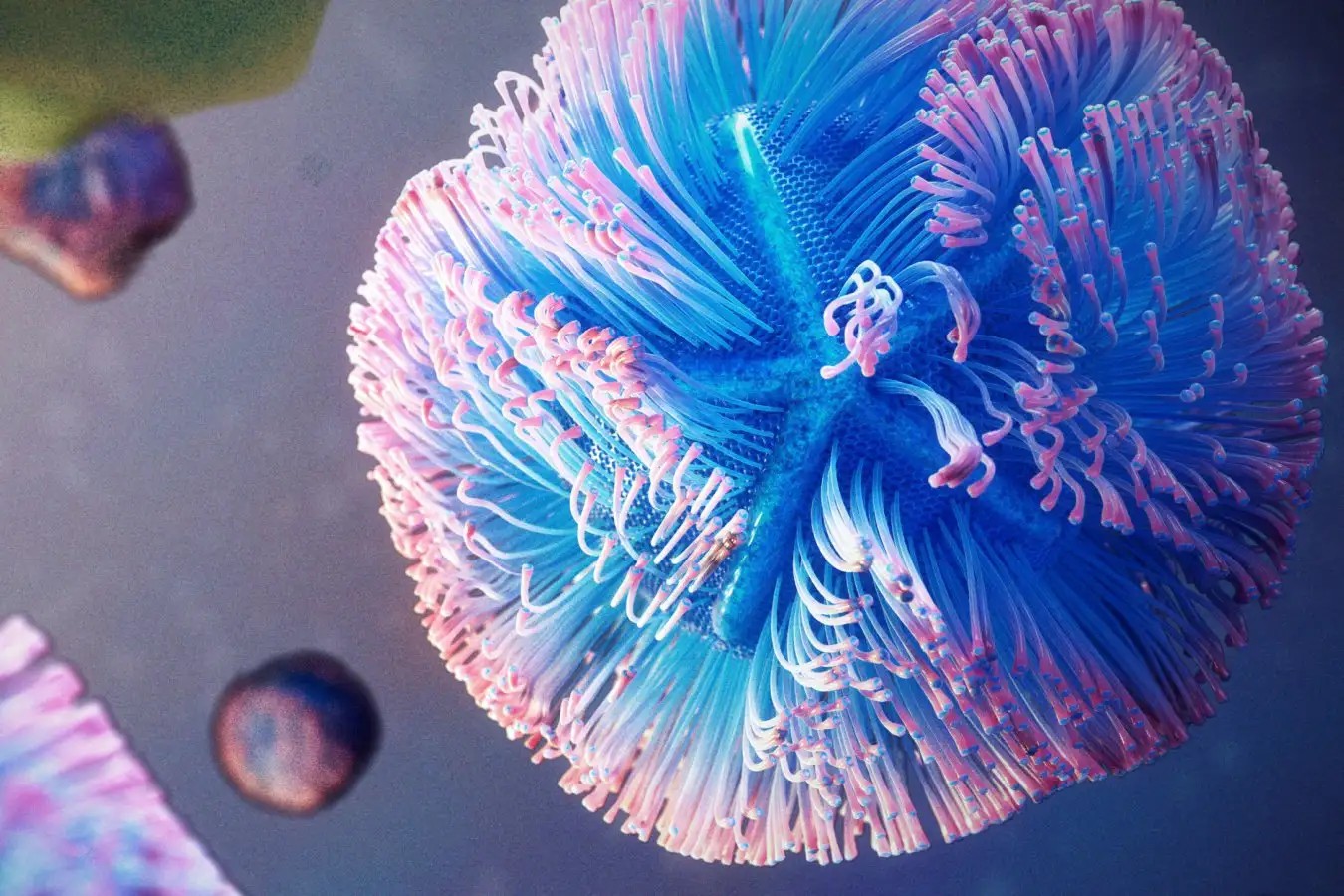
Since 2003, when the first “mimivirus” was identified in the UK, giant viruses have captivated biologists. These viruses, some larger than bacteria, possess complex structures and genomes containing hundreds of genes. Unlike typical viruses, which rely entirely on the host cell’s machinery to reproduce, giant viruses encode components of the translation process—the step where genetic information turns into proteins—within their own DNA.
Viral Control of Protein Synthesis
Researchers at Harvard Medical School, led by Max Fels, investigated how mimiviruses hijack amoebae cells. They found that the viruses assemble a complex within the host cell that redirects the protein synthesis machinery, ensuring the production of viral proteins. Experiments in which viral genes responsible for this complex were disabled resulted in a 100,000-fold reduction in viral production. This confirms that the viral complex is not just present, but actively essential for efficient replication.
Evolutionary Origins: Cellular Ancestry or Gene Theft?
The ability of giant viruses to control protein synthesis raises a fundamental question: where did this capability come from? Two main theories exist. One suggests that giant viruses evolved from ancient, now-extinct cellular life forms. The other proposes that they gradually accumulated genes stolen from their hosts over millions of years. Frank Aylward of Virginia Tech notes that the fluctuating environment within single-celled hosts (like amoebae) may have selected for viruses with more flexible control over protein production.
Unresolved Questions and Future Research
The mimivirus genome encodes approximately 1,000 proteins, but the functions of most remain unknown. Researchers are still working to understand exactly how these viruses regulate protein production during infection. Hiroyuki Ogata of Kyoto University points out that this study challenges the traditional view of viruses as passive entities, revealing their capacity to reshape fundamental molecular systems. This research highlights that viruses can be dynamic drivers of evolution, not just bystanders.
The discovery of giant viruses with self-directed protein synthesis forces scientists to re-evaluate the boundaries between life and non-life. The findings suggest these viruses may represent a unique evolutionary branch, potentially descended from ancient cellular organisms or highly adapted gene thieves. Further research into these complex entities will undoubtedly reshape our understanding of viral evolution and the fundamental building blocks of life itself.