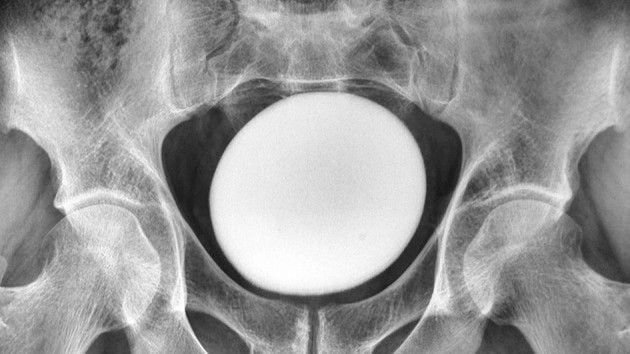
A 35-year-old man in Iran recently underwent surgery to remove an unusually large bladder stone, weighing nearly two pounds (826 grams) and resembling an ostrich egg in size. The case, documented in a medical report, highlights the rare occurrence of such massive urinary tract formations. The patient presented with discomfort but no typical urinary symptoms, such as pain or difficulty urinating, making the discovery even more surprising.
The Discovery and Diagnosis
Doctors detected a large, solid mass in the man’s lower abdomen during a routine physical exam. Ultrasound imaging revealed a smooth, egg-shaped object measuring 4.3 inches (11 centimeters) in diameter. The mass wasn’t connected to surrounding tissues, easing surgical extraction.
The stone was identified as a bladder calculus—a buildup of minerals in urine that crystallizes over time. These stones form when the bladder doesn’t empty completely, allowing minerals, primarily calcium, to concentrate and harden. While bladder stones account for only about 5% of urinary tract stone cases (kidney stones being far more common), this particular specimen was exceptionally large.
Surgical Removal and Recovery
Surgeons performed a cystolithotomy—a surgical incision into the bladder—to remove the stone. Due to its size (approximately 5 inches long, 4 inches wide, and 3 inches tall), the incision had to be extended further back into the bladder.
A catheter was inserted post-surgery to aid urination during recovery and was removed after seven days. The patient’s recovery was uncomplicated, though the case remains notable for its rarity.
Why This Matters: A Rare Phenomenon
Bladder stones are not uncommon, but stones of this magnitude are exceedingly rare. The Iranian case is believed to be the first documented instance of its kind in the country, and among the largest reported globally.
For context, the current world record for bladder stone size belongs to a Brazilian man who had a 4.2-pound (1.9-kilogram) stone removed in 2003. The case underscores the importance of regular medical checkups, even in the absence of severe symptoms. Large stones can obstruct urine flow, cause bleeding, or lead to severe infections if left untreated.
This case serves as a reminder that even seemingly minor discomfort can signal a significant underlying medical issue. Early detection and intervention are critical for preventing complications.