For decades, physicists have struggled with a fundamental contradiction: two different methods of measuring the universe’s expansion rate yield inconsistent results—a discrepancy known as the “Hubble tension.” Now, a team of researchers proposes a novel solution: using gravitational waves, ripples in spacetime, to independently determine the expansion rate, potentially resolving this long-standing puzzle.
The Hubble Tension: A Core Problem in Cosmology
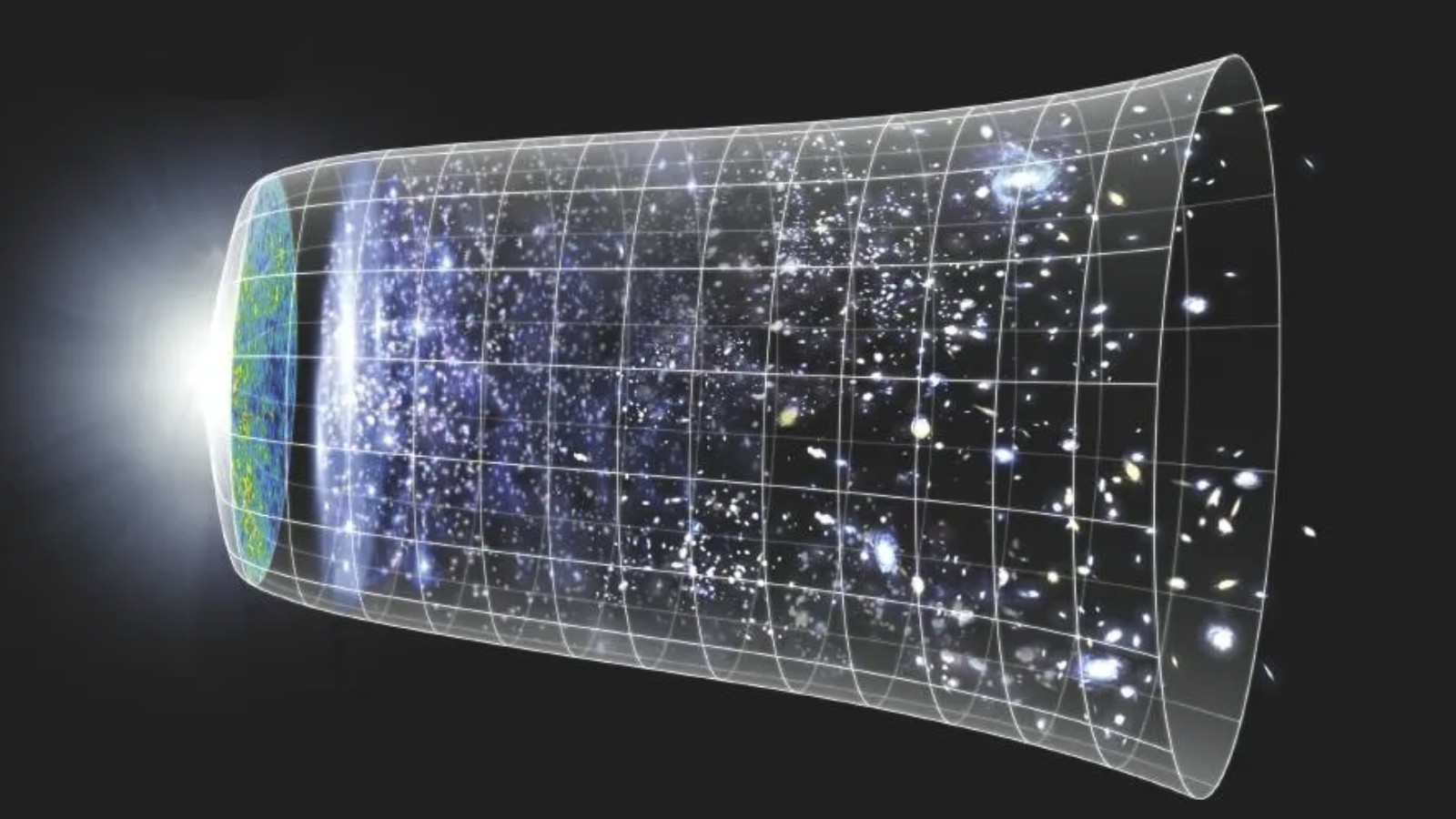
Since 1998, observations have confirmed that the universe isn’t just expanding, but accelerating. This acceleration is attributed to “dark energy,” though its true nature remains unknown. The core issue lies in the inconsistency of the Hubble constant, a critical value defining the expansion rate. Measuring this constant from nearby supernovas produces one result, while calculations based on the early universe—using the standard cosmological model—give a different one. This conflict demands a third, independent measurement to confirm which value is correct.
Gravitational Waves as a New Measurement Tool
The proposed solution leverages gravitational waves, predicted by Einstein’s theory of general relativity. These waves are generated by accelerating massive objects, like merging black holes and neutron stars. First detected in 2015 by the Laser Interferometer Gravitational-Wave Observatory (LIGO), these waves now provide a unique opportunity to probe the universe’s expansion.
The key lies in a method called the stochastic siren method : instead of focusing on individual mergers, it analyzes the faint, continuous “hum” of gravitational waves from countless distant collisions—the gravitational wave background. The strength of this background is directly tied to the Hubble constant; a slower expansion means more space for collisions, weakening the background signal. Conversely, a faster expansion compresses the space, making the background stronger.
Why This Matters: Independent Verification and Future Potential
This approach offers a crucial advantage: it’s independent of the methods that currently disagree. By combining gravitational wave data with traditional electromagnetic observations—a technique called multi-messenger astronomy —scientists can compare results and determine whether the Hubble tension is a genuine discrepancy or a systematic error in existing measurements.
“This should pave the way for applying this method in the future as we continue to increase the sensitivity, better constrain the gravitational-wave background, and maybe even detect it,” says researcher Alex Cousins.
Though current detectors haven’t yet confirmed the background signal, preliminary analyses using existing LIGO-Virgo-KAGRA data suggest a higher expansion rate, aligning with the supernova measurements. As gravitational wave detectors become more sensitive over the next six years, this method promises to refine the Hubble constant measurement and bring us closer to resolving the Hubble tension. The development of this new tool represents a significant leap forward in cosmology, offering a unique path towards understanding the fundamental nature of our expanding universe.