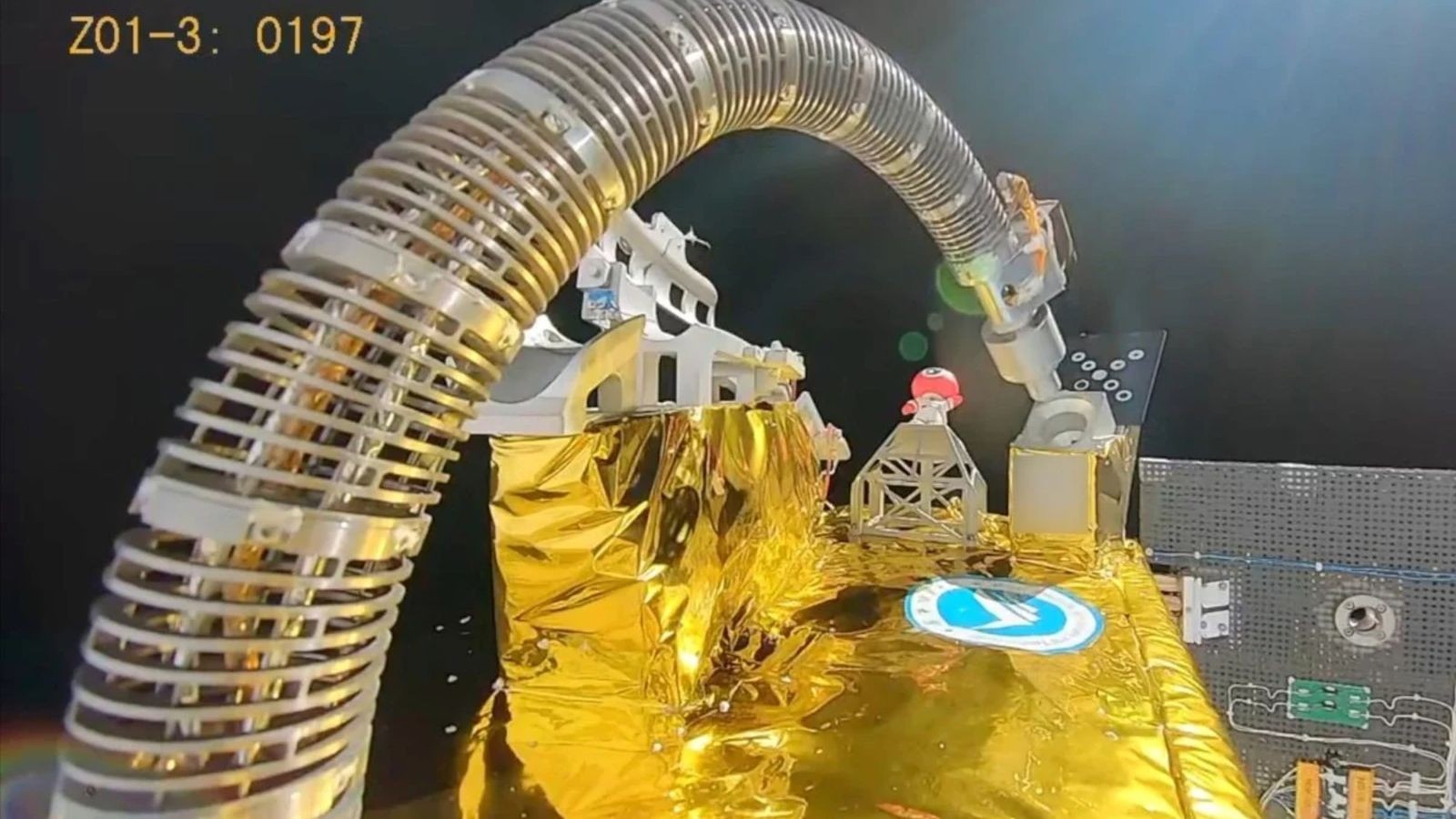
China has demonstrated significant progress in extending the lifespan of satellites and managing orbital debris through a successful in-orbit refueling test using a satellite equipped with a robotic “octopus arm.” The achievement places China at the forefront of this critical space technology, which remains largely undeveloped by NASA and Western competitors.
Satellite Refueling: A Game Changer
The experimental spacecraft, Hukeda-2, completed its first refueling test on March 24, docking its robotic arm with a port on itself. This milestone builds on China’s earlier success in 2025 with the Shijian-25 and Shijian-21 satellites, marking the first confirmed satellite-to-satellite refueling.
Why this matters: Satellites eventually run out of fuel, causing them to lose orbit and burn up in the atmosphere. Refueling enables operators to keep existing spacecraft operational longer, making them more cost-effective and sustainable. This reduces the need for frequent, expensive launches of replacements.
China’s Approach: Refuel, Reuse, Recycle
China is likely to leverage this technology to maintain its rapidly expanding Qianfan constellation—a competitor to SpaceX’s Starlink—which plans to deploy 15,000 satellites by 2030. Unlike SpaceX, which prioritizes frequent launches of new spacecraft, China appears focused on extending the operational life of existing satellites.
Solving the Orbital Debris Problem
The rising number of defunct satellites in low Earth orbit (LEO) poses a growing threat to space operations. To address this, Hukeda-2 will deploy an 8-foot balloon to increase atmospheric drag and accelerate its de-orbiting.
Implications: If successful, this method could allow future Chinese satellites to return to Earth without requiring fuel-intensive de-orbiting burns. However, it’s unlikely to solve the broader issue of overcrowding in LEO, especially if SpaceX proceeds with its plan to launch one million orbital data centers.
The Environmental Impact of Satellite Reentry
Recent research shows that satellite reentries release high levels of metal pollution into the upper atmosphere. The long-term effects of this pollution are still unknown, highlighting a growing environmental concern.
The big picture: China’s advances in satellite refueling and de-orbiting demonstrate a strategic approach to long-term space sustainability. While these technologies offer solutions to extending satellite life and managing debris, the broader challenges of orbital overcrowding and environmental pollution remain significant hurdles for the future of space exploration.