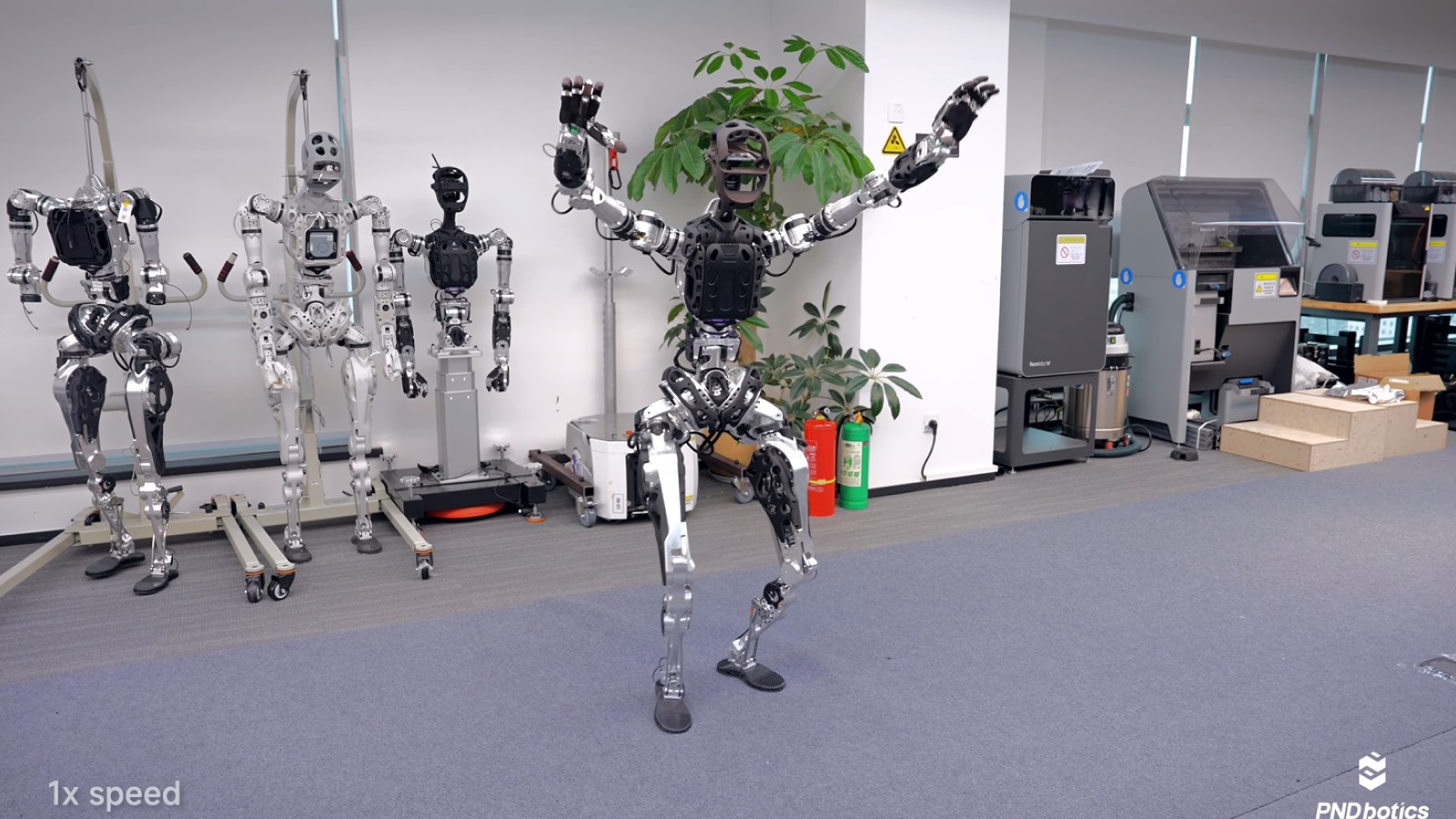
A humanoid robot developed by Chinese firm PNDbotics, dubbed “Adam-U Ultra,” has showcased remarkably fluid and precise dance movements in a recently released video. This demonstration highlights the accelerating progress in robotics and artificial intelligence (AI), specifically in the field of embodied AI and whole-body control.
Key Capabilities and Technology
The Adam-U Ultra achieves this level of performance through 41 independently controlled joints, allowing for a wide range of motion mimicking human flexibility. The robot’s “brain” is powered by an Nvidia Jetson Orin module, integrating a CPU, GPU, and other components. This platform, combined with advanced control systems and neural network training in simulated environments, allows for constant iteration and improvement in stability and balance.
The robot also features a sophisticated vision-language-action (VLA) model, enabling it to understand natural language commands and translate them into physical actions. Backed by 10,000 real-world behavioral samples, the system learns and adapts its movements dynamically. The vision component relies on an Intel RealSense D455 depth sensor, along with lidar and standard cameras, for precise 3D environment modeling and spatial awareness.
Development and Future Applications
PNDbotics is developing Adam-U Ultra alongside a stationary data collection model, the Adam-U, and four additional fully mobile humanoid robots with varying capabilities. The current models weigh between 132 and 139 pounds (60–63 kilograms) and stand 5.2 feet (1.6 meters) tall.
The company envisions a broad range of applications for its robots, including research, medical assistance (rehabilitation training, patient monitoring, surgical collaboration), and industrial roles in manufacturing or service industries (concierge, receptionist). These potential roles suggest a growing shift toward human-robot collaboration in both professional and everyday settings.
Why This Matters
The rapid development of robots like Adam-U Ultra underscores the growing sophistication of AI-driven robotics. This isn’t just about building machines that can move; it’s about creating systems that learn how to move more effectively, adapt to changing environments, and respond to human instructions. The underlying technologies, like VLA and model predictive control, are fundamental to the next generation of robots and represent a significant leap toward more versatile and integrated human-machine interactions.
The increasing accessibility of high-performance computing platforms (like Nvidia’s Jetson Orin) and advanced sensors (Intel RealSense) is accelerating this progress, making these capabilities more readily available to robotics firms worldwide. This trend is likely to reshape industries, labor markets, and the future of human-robot collaboration in the coming years.