The Artemis II mission has officially entered a new era of space exploration. As of April 6, 2026, the four-person crew aboard the Orion spacecraft has traveled farther from Earth than any human being in history, surpassing the long-standing record set by the Apollo 13 mission in 1970.
This milestone is more than just a numerical achievement; it represents the first time humans have ventured into deep space since the end of the Apollo program in 1972. While this mission is not a landing attempt, it serves as a critical “pathfinder” to test the life-support systems and human endurance required for permanent lunar habitation and eventual Mars exploration.
A Moment of Remembrance in Deep Space
Amidst the technical triumphs, the mission has also provided a profound moment of human connection. As the crew approached the lunar flyby, mission specialist Jeremy Hansen requested that NASA dedicate a specific lunar crater to Carroll Wiseman, the late wife of mission commander Reid Wiseman.
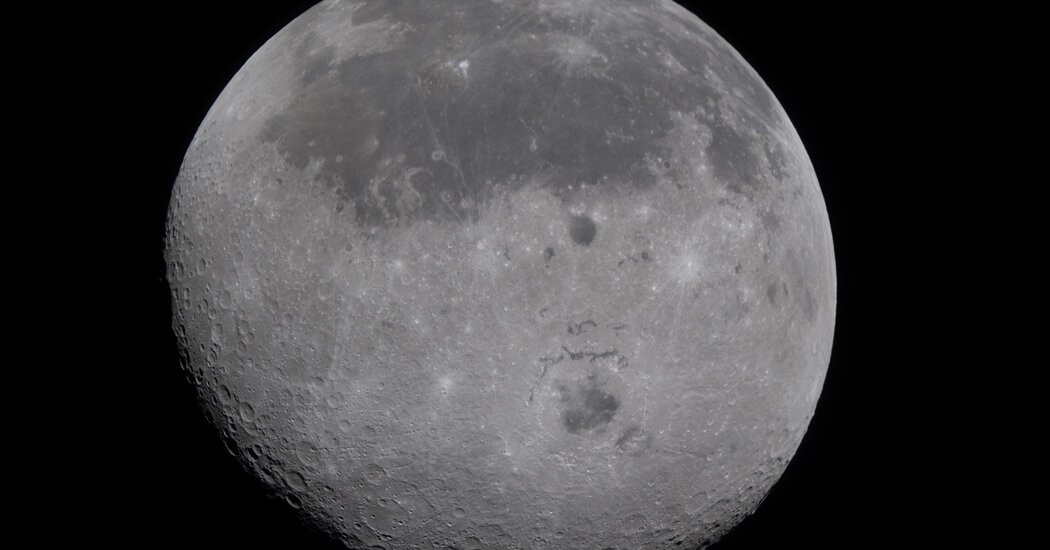
Carroll Wiseman, a pediatric nurse practitioner who passed away from cancer in 2020, was a central figure in Reid Wiseman’s journey to becoming an astronaut. The dedication of “Carroll Crater”—a bright spot straddling the boundary between the moon’s near and far sides—served as a poignant tribute to the support networks that sustain astronauts through their most challenging personal and professional trials.
Exploring the Unseen: The Far Side of the Moon
The crew is currently preparing for a highly anticipated lunar flyby. As the Orion spacecraft loops around the moon, the astronauts will experience several unique phenomena:
- The Radio Blackout: As the moon passes between the spacecraft and Earth, the crew will lose all radio contact with Mission Control for approximately 41 minutes. This is a standard orbital mechanic and not a cause for concern.
- Visual Discovery: For the first time since 1972, humans will observe the lunar far side with their own eyes. Unlike the familiar “near side,” the far side is characterized by a thicker crust, more impact craters, and fewer volcanic plains (maria ).
- Scientific Observation: Scientists expect the far side to appear brighter due to its high crater density and potentially “grayer” in tone. The crew will act as field scientists, using their eyes to detect nuances in color and texture that orbiting satellites might miss, helping NASA map the terrain for future landings.
The Science of Survival: Biology and Nutrition
Beyond navigation and geology, Artemis II is a massive laboratory for human biology. One of the primary goals is to understand how deep-space environments—specifically high radiation and microgravity—affect the human body.
The AVATAR Experiment
A centerpiece of the biological research is the AVATAR (A Virtual Astronaut Tissue Analog Response) experiment. Using “organs on a chip,” researchers are studying bone marrow samples to see how blood cell formation and DNA stability (specifically telomere length) change when humans move beyond Earth’s protective magnetic field.
Sustaining Morale through Food
Living in a cramped capsule for ten days requires more than just calories; it requires psychological stability. NASA food scientists have engineered a menu that balances strict nutritional requirements with crew morale:
– Menu Variety: Options include everything from breakfast sausage and mango salads to barbecued beef brisket and chocolate.
– Microgravity Engineering: Foods are specifically designed to minimize crumbs, which can float into sensitive electronics or be inhaled by the crew.
– The Social Aspect: For astronauts like Christina Koch, sharing meals is a vital way to maintain a sense of “togetherness” in the isolation of deep space.
“The perspective they have from Orion will be unique,” says planetary volcanologist Brent Garry. “The photos they capture will be driven by a blend of scientific curiosity and the heart of humanity.”
Summary
The Artemis II mission is successfully transitioning from a transit phase to an intensive scientific observation phase. By breaking distance records and conducting vital biological research, the crew is laying the groundwork for the next great leap in human spaceflight.