


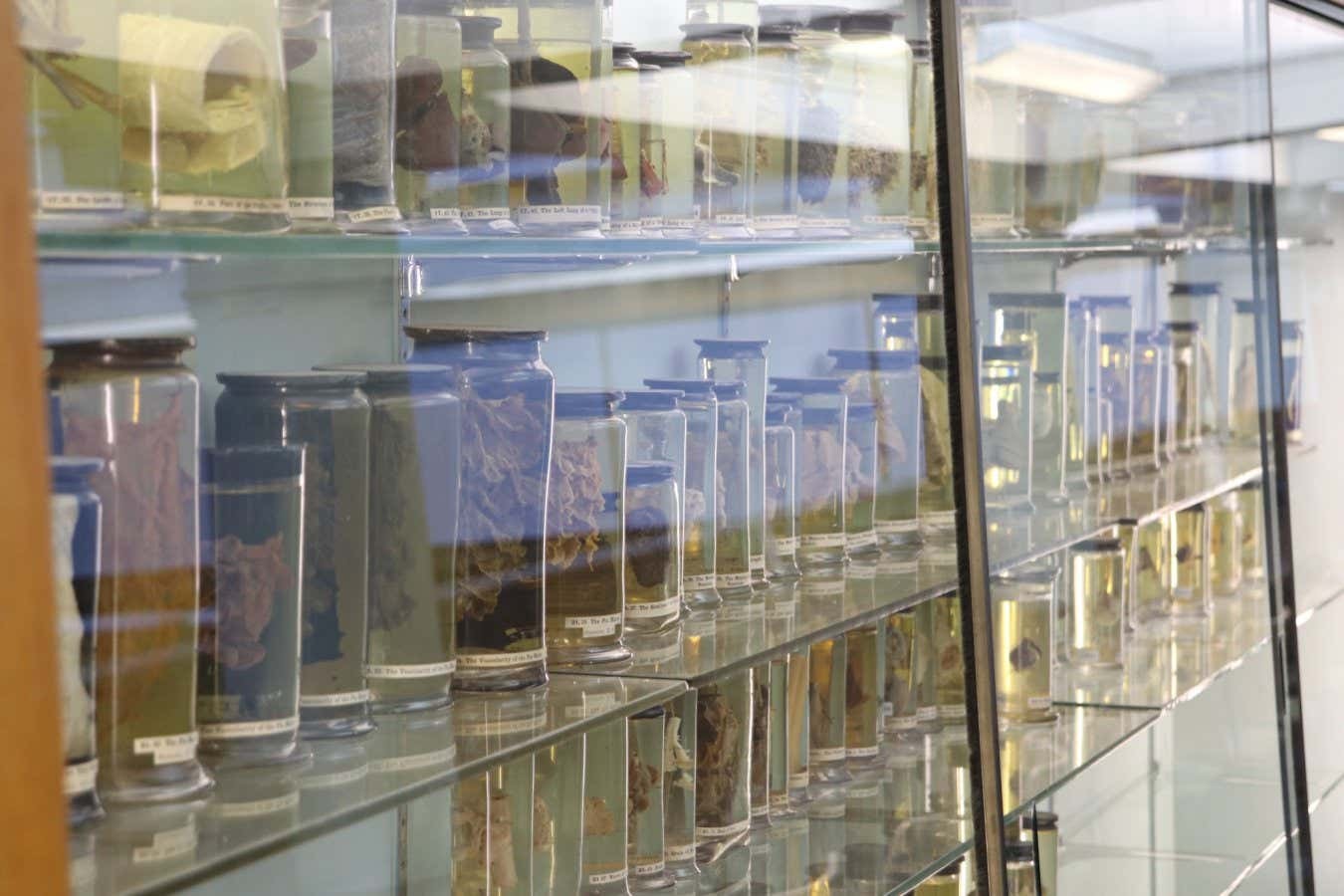
Scientists have successfully extracted and identified the genetic material of a cold virus from the lungs of a woman who died in London around 250 years ago, marking the oldest confirmed human RNA virus ever recovered. This discovery pushes the boundaries of ancient pathogen research, which previously struggled to preserve fragile RNA due to its rapid degradation after death.
The Challenge of Recovering Ancient RNA
While DNA can survive for tens of thousands of years under ideal conditions, RNA is notoriously unstable, typically breaking down within hours. However, researchers have recently made strides in recovering ancient RNA, even extracting it from a 40,000-year-old woolly mammoth.
The breakthrough came from examining pathology collections preserved in formalin, a chemical that slows RNA degradation.
A Lucky Find in Historical Archives
Erin Barnett and colleagues at the Fred Hutchinson Cancer Center sought out older specimens, finding viable samples in the Hunterian Anatomy Museum at the University of Glasgow. The lungs of two individuals—an 18th-century London woman and another from 1877—were preserved in alcohol, not formalin, yet contained enough intact RNA for analysis. Both individuals had documented respiratory illnesses.
Piecing Together the Viral Puzzle
The recovered RNA was severely fragmented, averaging only 20 to 30 nucleotides long (compared to the 1000+ found in living cells). Researchers painstakingly reconstructed the entire genome of a rhinovirus from the 1770s woman’s lungs.
The woman was also infected with bacterial pathogens like Streptococcus pneumoniae.
Connecting Past and Present Viruses
Comparing the ancient viral genome to modern rhinovirus databases revealed that it belongs to the human rhinovirus A group, specifically an extinct lineage closely related to the A19 genotype. Researchers estimate that the historical virus shared a common ancestor with modern A19 in the 1600s.
Implications for Future Research
This discovery demonstrates that RNA can be recovered from historical wet collections, opening new avenues for studying past diseases and viral evolution. The ability to analyze viruses over centuries will yield crucial insights into how they adapt and spread.
It also serves as a reminder that even the most forgotten individuals can contribute to scientific understanding.
“This is the first phase in what will become an explosion in the study of RNA viruses,” says Love Dalén of Stockholm University, highlighting the potential for future discoveries.


