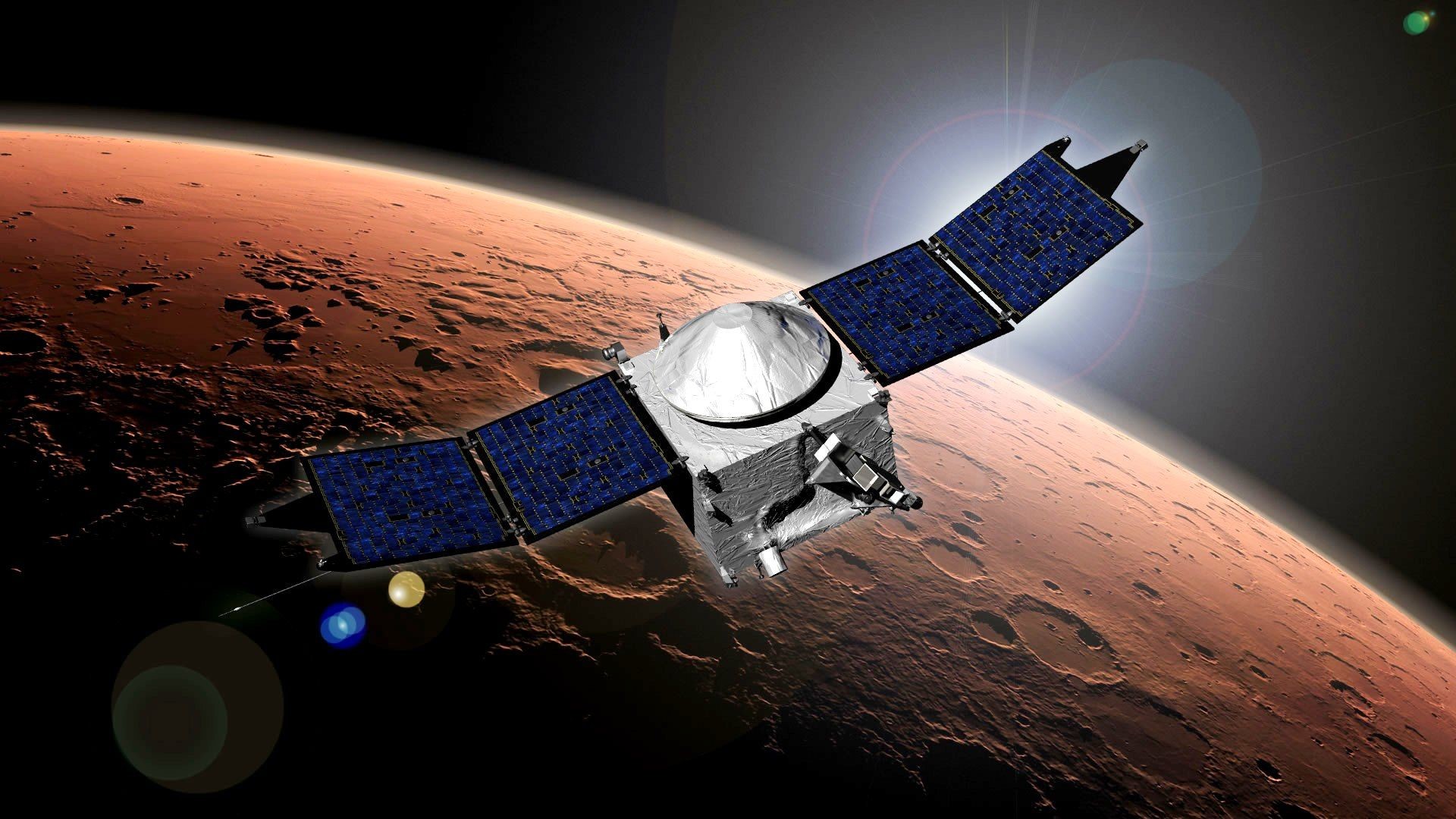
NASA has lost communication with its MAVEN (Mars Atmosphere and Volatile Evolution) orbiter, and early data suggests the spacecraft is tumbling unpredictably as it orbits Mars. The probe went silent on December 4th, and despite repeated attempts to re-establish contact, no signal has been received.
What Happened?
Recovered tracking data from December 6th indicates MAVEN was spinning abnormally when it temporarily re-emerged from behind Mars. This erratic rotation suggests a potential malfunction in the spacecraft’s stabilization systems, and may have altered its orbital path. NASA is still working to analyze the full scope of the problem.
MAVEN’s Mission and Importance
Launched in 2013, MAVEN’s primary goal was to study the Martian atmosphere and its interaction with solar wind. Its findings were crucial to understanding how Mars lost its original, thicker atmosphere, which once supported liquid water on the planet’s surface billions of years ago. Beyond its scientific contributions, MAVEN also acts as a vital communication relay between Earth and NASA’s rovers, Curiosity and Perseverance.
Redundancy in Martian Communication
Fortunately, MAVEN is not the only spacecraft providing this critical relay service. NASA’s Mars Reconnaissance Orbiter, Mars Odyssey, along with the European Space Agency’s Mars Express and ExoMars Trace Gas Orbiter, remain operational. This redundancy ensures that rover operations can continue uninterrupted. NASA is actively scheduling additional communication passes using these other orbiters to maintain contact with Curiosity and Perseverance.
What’s Next?
NASA will continue attempts to regain contact with MAVEN over the next two weeks. The exact cause of the failure remains unknown, but the spacecraft’s unexpected spin points toward a serious technical issue. If communication cannot be re-established, MAVEN’s mission will effectively end, though the loss of the orbiter will not halt ongoing Martian surface operations.
The situation highlights the challenges of deep space missions and the importance of backup systems in maintaining scientific research on Mars.