The successful splashdown of NASA’s Artemis II mission in the Pacific Ocean this Friday marks a pivotal turning point in human spaceflight. More than just a technical achievement, the mission represents the first time humans have ventured beyond low-Earth orbit since the final Apollo missions in 1972.
Beyond the Horizon: A Historic Return
The crew—comprising NASA astronauts Reid Wiseman, Victor Glover, and Christina Koch, alongside Canadian Space Agency astronaut Jeremy Hansen —has successfully completed a journey that bridges the gap between science fiction and modern reality.
As the capsule entered the atmosphere, NASA commentator Rob Navias noted the symbolic weight of the moment, comparing the mission’s success to the transition from the imaginative tales of Jules Verne to the tangible reality of contemporary lunar exploration.
The Geopolitics of the New Space Race
While the mission is a triumph of engineering, it also carries significant geopolitical weight. The successful completion of Artemis II reinforces the United States’ current lead in the 21st-century space race.
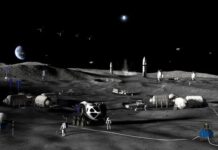
As international competition intensifies, particularly with China’s rapidly advancing lunar programs, NASA’s ability to execute complex, crewed deep-space missions provides a critical strategic advantage. This mission serves as a proof of concept for the infrastructure required to maintain a sustained human presence on and around the Moon.
Why This Matters
The significance of Artemis II extends beyond the immediate flight data:
– Technological Validation: It proves that the systems required for deep-space transit and re-entry are viable for human crews.
– International Cooperation: The inclusion of the Canadian Space Agency highlights the collaborative nature of modern space exploration.
– Public Engagement: By successfully navigating the complexities of lunar-distance flight, NASA has revitalized global interest in space exploration, potentially inspiring a new generation of scientists and engineers.
The successful conclusion of Artemis II sets NASA on a path to expand the boundaries of human reach, securing a vital foothold in the race to explore our celestial neighbor.
Conclusion
Artemis II has successfully transitioned NASA from theoretical planning to operational deep-space capability. This mission secures a momentary lead in the global lunar race and establishes the foundation for future human habitation on the Moon.