On Saturday, March 21, a rare daytime fireball exploded over Houston, Texas, with the force of roughly 26 tons of TNT. The event, which produced a shockwave felt by residents across the region, may have scattered meteorites across a densely populated area between Willowbrook and Northgate Crossing. NASA has now released a provisional “strewn field” map to aid in the search for these extraterrestrial fragments.
What Happened?
The roughly 1-ton meteor entered Earth’s atmosphere and detonated approximately 29 miles above Bammel, Harris County. The resulting flash was so bright it registered on NOAA’s GOES satellites, which orbit tens of thousands of miles above the planet. While most of the meteor vaporized during entry, NASA estimates that a small percentage survived as fragments now scattered across the landscape.
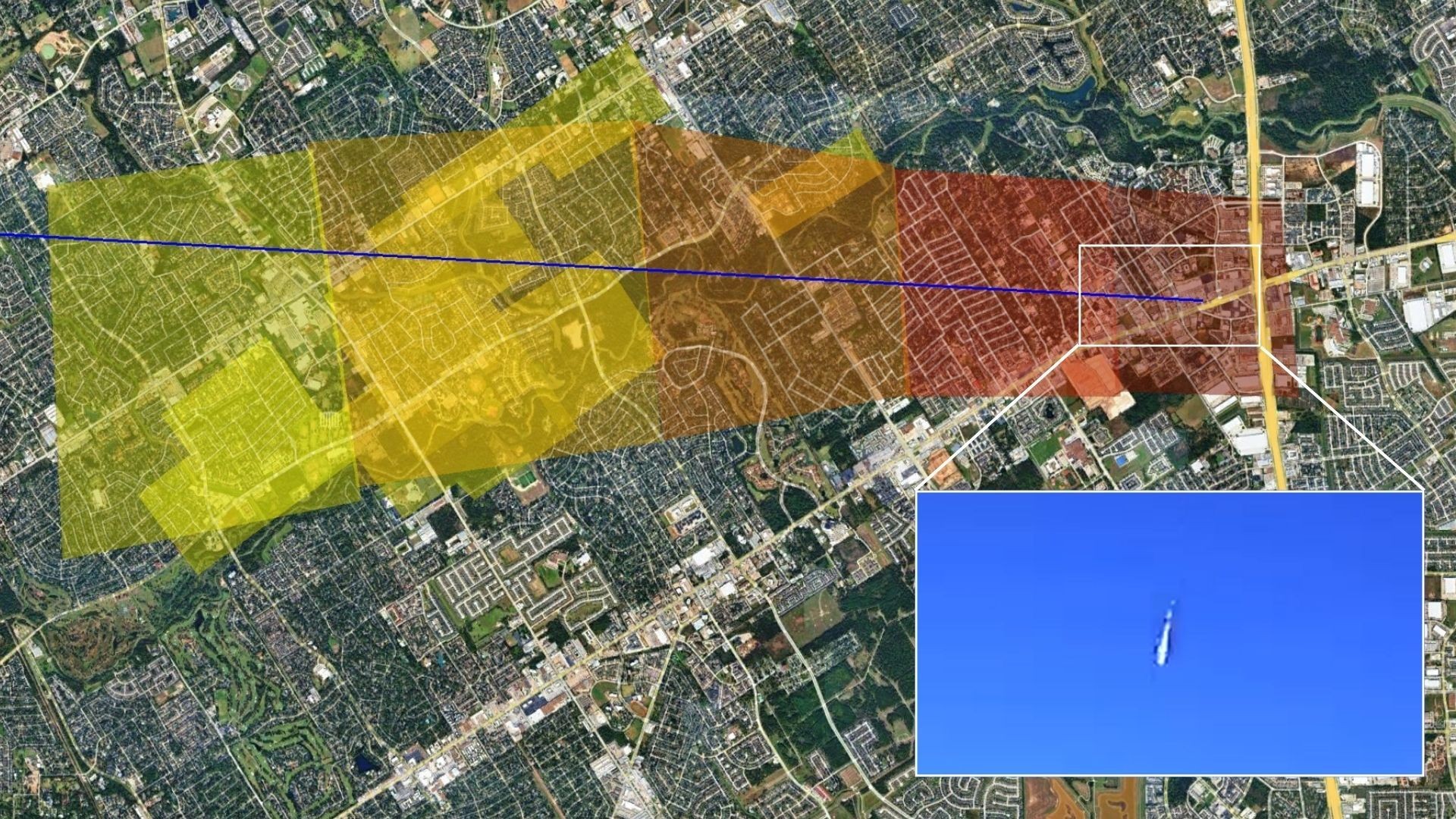
Where to Look: The Strewn Field Map
NASA’s Astromaterials Research and Exploration Science Division (ARES) created a map indicating potential meteorite locations.
- Red zones on the map represent areas where larger fragments (up to 2.2 pounds or 1 kilogram) are most likely to be found.
- Yellow zones suggest the presence of smaller samples (around 0.04 ounces or 1 gram).
The map is provisional and may be updated as NASA refines its data. The agency urges meteorite hunters to respect private property boundaries during their searches.
Identifying Meteorites: A Quick Guide
If you believe you’ve found a meteorite, compare it to verified images online before contacting a local university’s geology department for confirmation. Handle potential samples minimally with bare hands, as skin oils can contaminate them. These meteorites represent some of the oldest material in the solar system, making preservation crucial.
The search for these fragments offers a rare opportunity to study materials untouched since the solar system’s formation. NASA expects that many of the surviving pieces are small, but finding even a gram of extraterrestrial material provides valuable insight into the early conditions of our solar system.