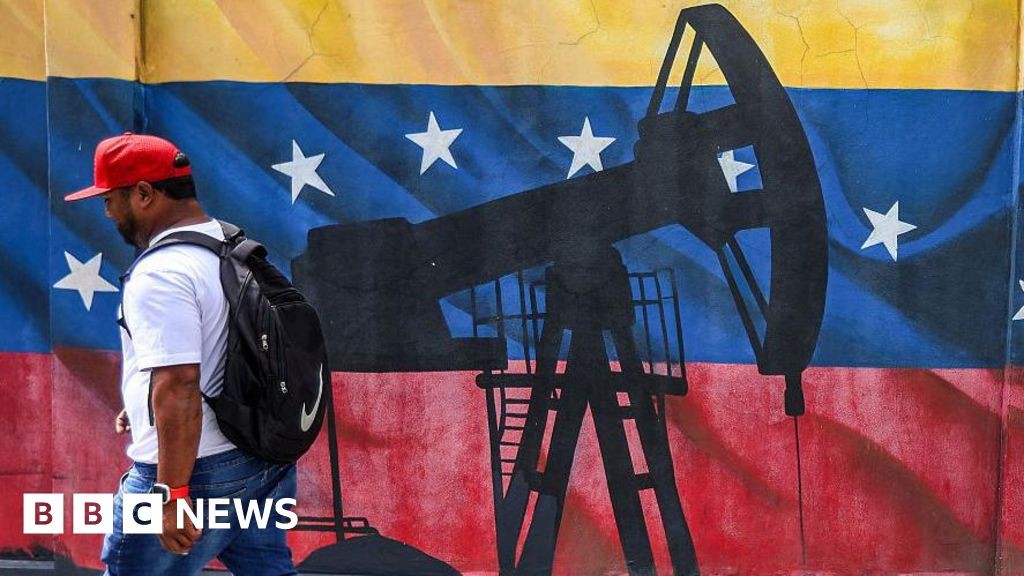
US President Donald Trump’s ambitious plan to revive Venezuela’s oil industry after the recent change in leadership faces significant practical and economic challenges, despite his stated intentions to visit the country and extract “numbers…like few people have seen.” While the US government seeks to tap into Venezuela’s vast oil reserves – the world’s largest – the reality on the ground suggests that a swift and profitable turnaround is far from guaranteed.
The State of Venezuela’s Oil Sector
Venezuela’s state-owned oil company, PDVSA, is in a dire state after decades of mismanagement and underinvestment. Successive administrations, including those of Nicolás Maduro and Hugo Chávez, prioritized social spending over infrastructure maintenance, leading to a drastic decline in production. The country now produces significantly less oil than it did just 15 years ago, with output falling from 1.5 million barrels a day to current levels.
While the US government hopes to revive the sector by attracting $100 billion in foreign investment, major obstacles remain. Venezuela’s oil is of poorer quality – heavy, sour crude with high sulphur content – making extraction and refining more difficult and costly. The country’s reserves, which were artificially inflated during the Chávez presidency to nearly 300 billion barrels, may not be as substantial as reported, especially at current oil prices around $65 per barrel.
Risks for US Oil Companies
US energy firms face substantial risks in Venezuela, including the potential for renewed expropriation. The country has a history of seizing foreign assets, with major companies like ExxonMobil and ConocoPhillips previously losing billions in damages that were never paid. The current Venezuelan regime, led by interim leader Delcy Rodríguez, offers no security guarantees to investors, and the presence of state-sanctioned paramilitary groups adds another layer of instability.
Trump’s approach, described as “all stick, no carrot,” has failed to incentivize private sector investment. Companies like ExxonMobil have already labeled Venezuela “uninvestable” in its current state, and the lack of government incentives makes it unlikely that firms will risk significant capital without greater assurances.
Economic Realities and Global Impact
Even if Venezuela’s oil production were to surge, its impact on global prices is uncertain. The country’s economic crisis has driven millions to flee, including skilled engineers vital to maintaining oil infrastructure. While US firms possess the technical capacity to repair Venezuela’s facilities, the venture must be economically viable, meaning oil prices must be high enough to justify the investment.
Additionally, Canada, a major supplier of similar viscous crude to the US, may face minor competition but is unlikely to be significantly disrupted. Ultimately, the success of Trump’s plan hinges on factors beyond political will: the condition of Venezuela’s infrastructure, the reliability of its government, and the stability of global oil markets.
The situation is complex and opaque, with geopolitical uncertainties further complicating the outlook. For now, Venezuela remains a high-risk, high-reward proposition that few oil companies are willing to take without substantial incentives.