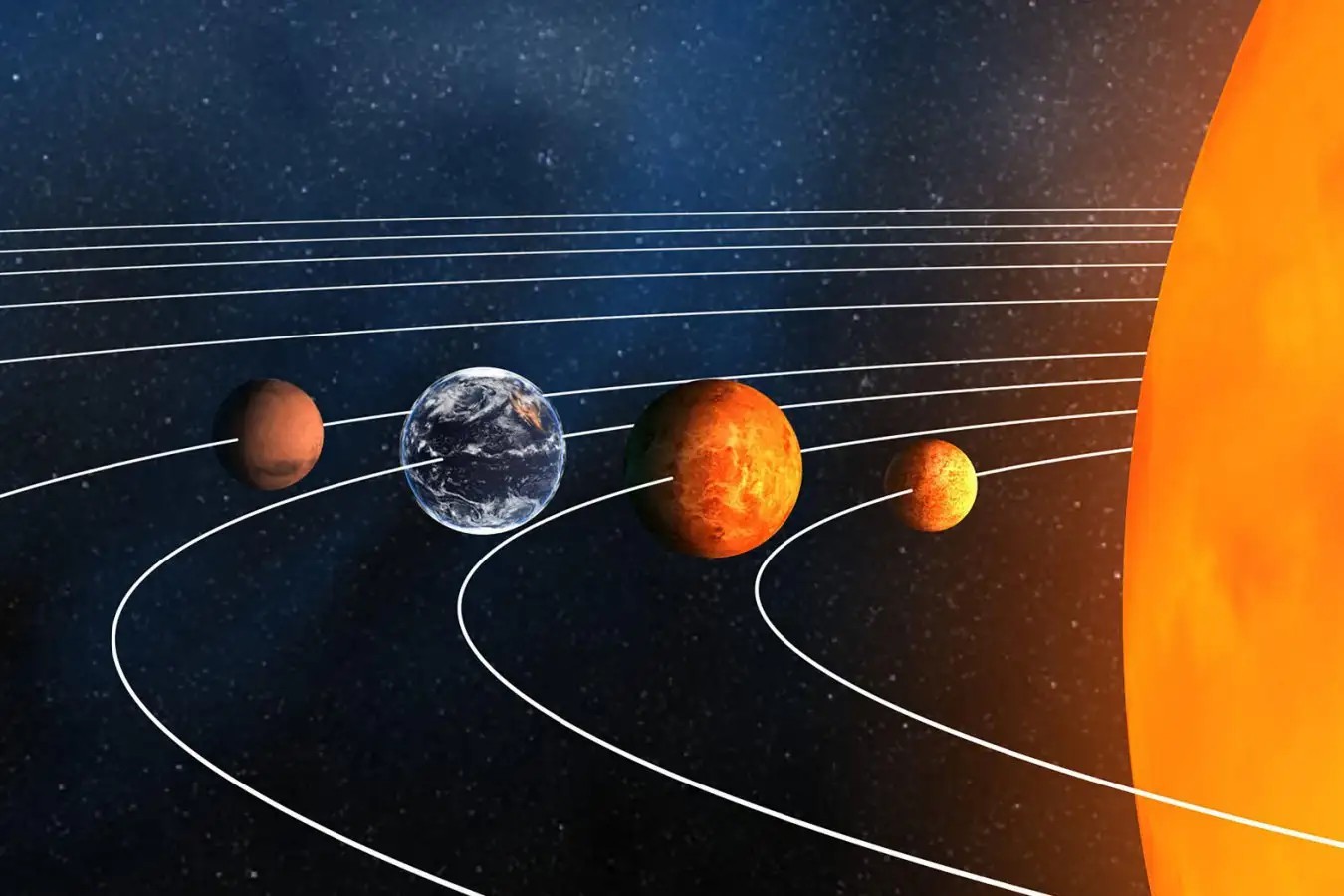
For decades, scientists believed the rocky planets of our solar system coalesced from a single, swirling disc of dust and debris surrounding the young sun. New simulations challenge this long-held view, suggesting Earth and its planetary neighbors might have formed from two distinct rings of material.
The Problem with the Single-Disc Model
Existing models struggle to explain several key features of our solar system. One major issue is Earth’s composition: the planet appears to be made of two different types of rock, which would be unlikely if all its material came from a single source.
Further complicating matters, single-disc simulations consistently predict planets with incorrect sizes and orbital arrangements. Mercury and Mars tend to be too massive, Venus and Earth are too closely spaced, and Earth and Mars share an unexpectedly similar chemical makeup. These discrepancies have long puzzled planetary scientists.
A Desperate Play That Worked
Bill Bottke at the Southwest Research Institute and his team spent months refining single-disc models, but the issues persisted. In a last-ditch effort, they introduced a second reservoir of material into their simulations.
“We spent six months at the computer, nothing was working, so we made a desperation play. We said, why don’t we try a second reservoir?”
The results were striking. The new model accurately reproduced the sizes, distances, and compositions of the terrestrial planets—Earth, Mars, Venus, and Mercury.
Two Discs, Two Origins
The most successful simulation featured two distinct discs: one at roughly half the Earth-sun distance and another at 1.7 times that distance. According to this model, Earth primarily formed from the inner disc, with a small contribution from the outer. Mars, conversely, originated mostly from the outer disc, explaining the compositional differences between the two planets.
Jan Hellmann of the Max Planck Institute for Solar System Research notes that this model aligns with observed planetary compositions: “We think that Earth predominantly formed from [inner solar system] material, and only the last bit came from the outer solar system.”
Remaining Questions and Future Research
While promising, the dual-disc model requires very specific initial conditions to function correctly. Slight changes in disc shape can drastically alter planetary formation, raising questions about why those conditions would exist in the first place.
Researchers are now refining the model with extensive supercomputer simulations to explore its implications for other solar system mysteries, such as the composition of asteroids and the presence of unusual rocks on the Moon. If validated, this new explanation could resolve long-standing puzzles about the formation of our planetary neighborhood.
This discovery suggests that the early solar system may have been far more dynamic and complex than previously imagined, with far-reaching consequences for how we understand the origins of rocky planets throughout the universe.