This week’s scientific discoveries spanned millennia, from the oldest known human art to the largest solar radiation storm in decades. Researchers unearthed evidence of ancient journeys, colossal underground resources, and phenomena reshaping our understanding of the universe.
Ancient Echoes of Humanity
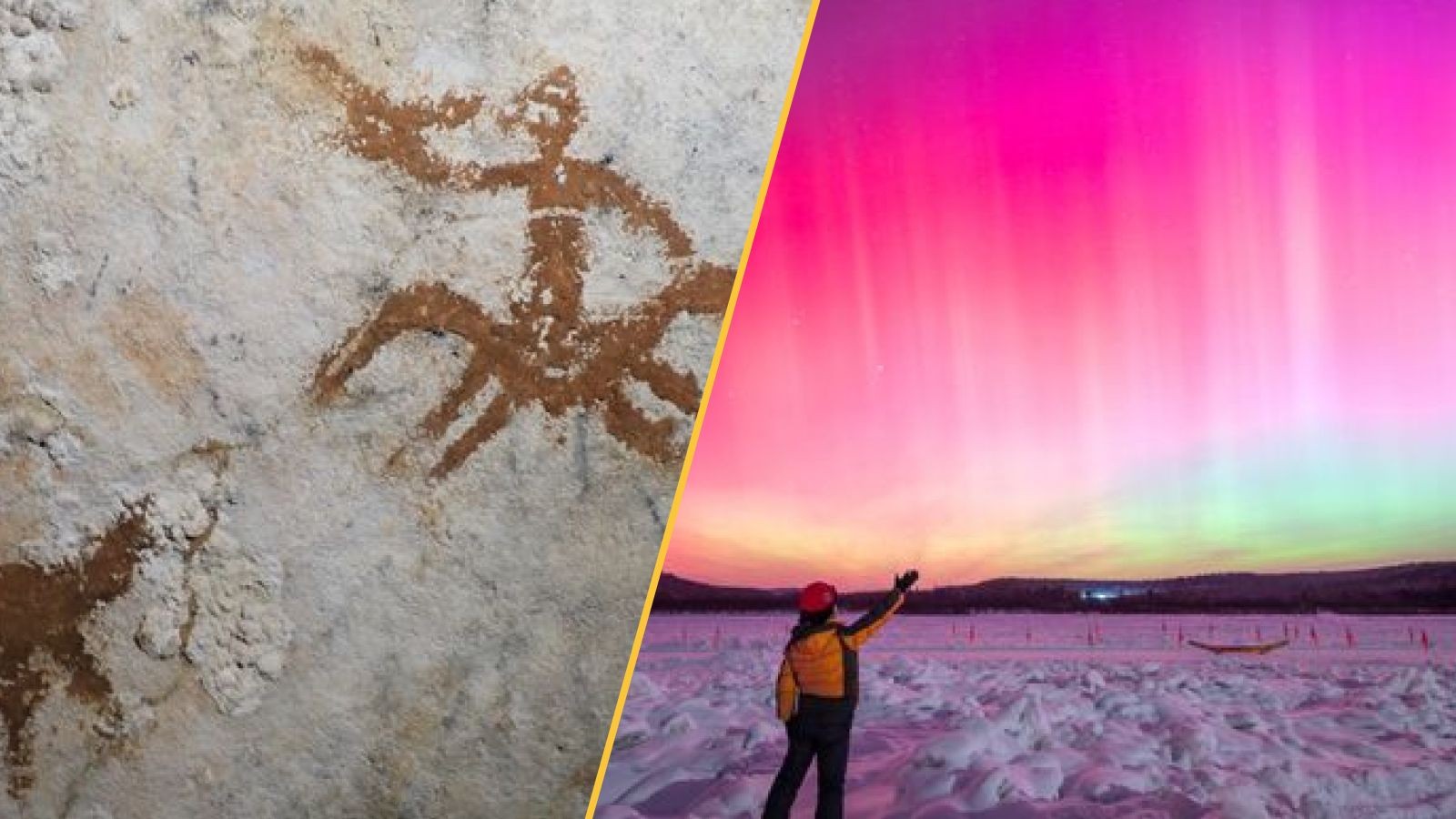
The world’s oldest confirmed rock art – a 70,000-year-old hand stencil found in Sulawesi, Indonesia – provides a new glimpse into early human migration patterns. This discovery suggests a direct link between these ancient artists and the ancestors of Indigenous Australians, filling a critical gap in our knowledge of Southeast Asian prehistory. Simultaneously, a 2.6-million-year-old Paranthropus jawbone was found further north than previously recorded, challenging established assumptions about the range of this extinct hominin.
Beyond these immediate finds, archaeological work continues to reveal lost chapters of human history. Tombs, shrines, shipwrecks, and even the earliest evidence of syphilis (originating in the Americas) were brought to light this week, each adding a piece to the puzzle of our past. These discoveries aren’t just about “what” happened, but why – how diseases spread, how cultures evolved, and how past civilizations adapted to their environments.
Hidden Resources and Earth’s Secrets
Off the East Coast of the United States, scientists confirmed the existence of an enormous freshwater reservoir beneath the seafloor. This geological feature, potentially 20,000 years old and capable of supplying New York City for 800 years, was formed during the last ice age when rainwater became trapped underground before sea levels rose. While the reservoir’s exact composition and usability are still under investigation, its existence highlights the vast, untapped resources hidden beneath our planet’s surface.
Cosmic Events and Solar Fury
Earth experienced its most powerful solar radiation storm in 23 years, triggering spectacular auroras visible as far south as Southern California. While not the largest geomagnetic storm on record (2024’s “Mother’s Day storm” was more potent), the sheer quantity of radiation released was exceptional. This event underscores the sun’s unpredictable behavior and the importance of monitoring space weather for potential disruptions to infrastructure and technology.
The James Webb Space Telescope continues to challenge astronomical assumptions, revealing supermassive black holes in the early universe that shouldn’t exist given current theories of formation. These findings suggest that our understanding of black hole growth and the universe’s early stages is fundamentally incomplete. This isn’t just a detail; it means our cosmological models may need a complete overhaul.
The Unseen and the Unexpected
Human perception itself was also under scrutiny this week, with research explaining why we rarely notice our own noses. The answer lies in how our brains prioritize information, filtering out constant stimuli to focus on changes in the environment. This neurovisual trick, while seemingly trivial, is crucial for survival, allowing us to react quickly to threats without being overwhelmed by sensory input.
In other news, a coyote managed an unprecedented swim to Alcatraz Island, while scientists grapple with the ethical implications of AI-generated content that mimics Indigenous cultures. Even seemingly mundane phenomena like mice exhibiting lower anxiety when exposed to natural environments reveal critical flaws in traditional rodent research methods.
These discoveries, ranging from the ancient to the cosmic, illustrate a fundamental truth: the more we learn, the more we realize how little we truly know. Each breakthrough raises new questions, pushing the boundaries of human understanding and reminding us that exploration is an infinite process.