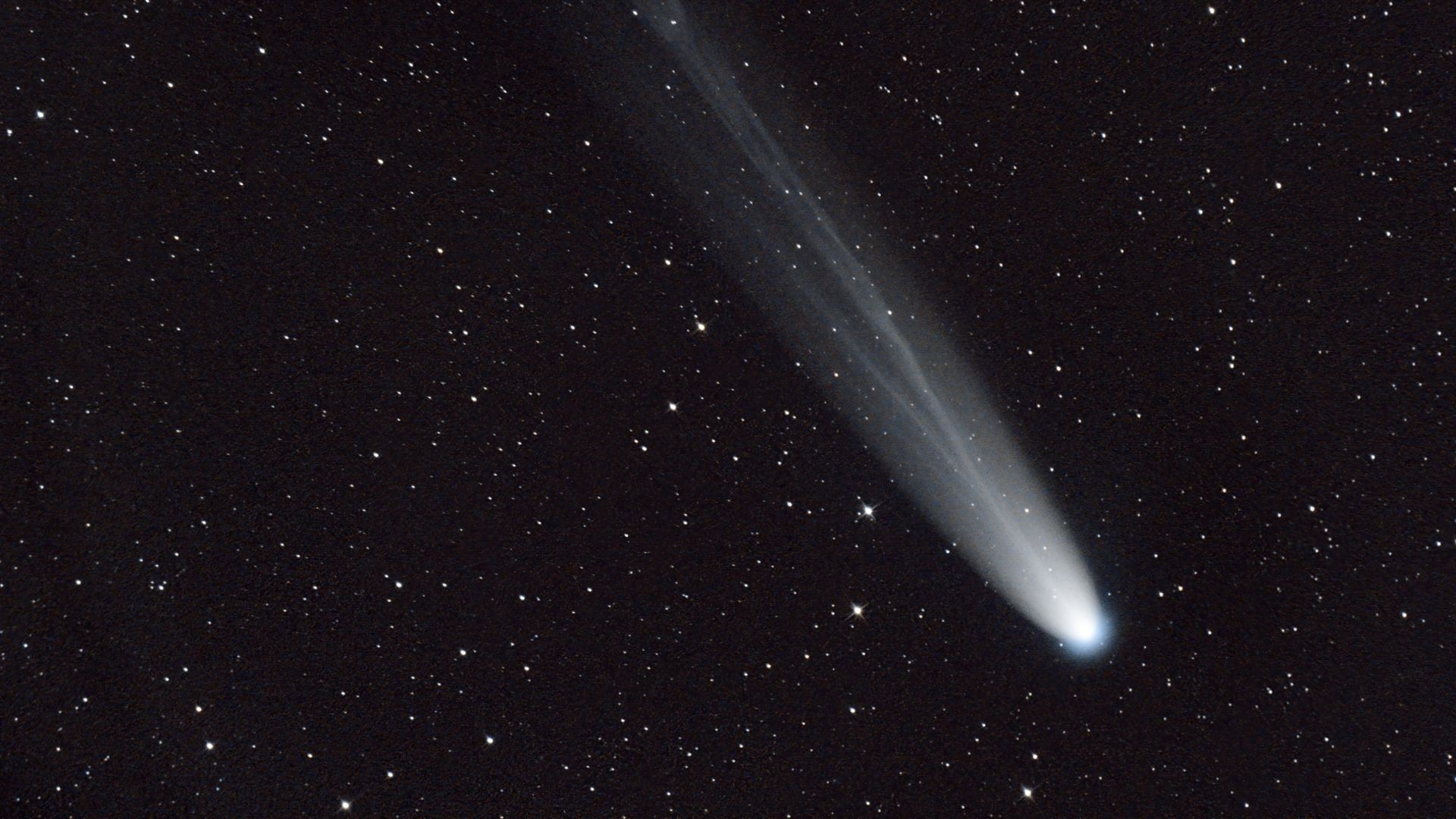
A newly discovered comet, dubbed C/2026 A1 (MAPS), is poised for a dramatic encounter with the sun this Saturday, April 4th. The comet will pass within just 98,000 miles of the sun’s surface – dangerously close, yet presenting a unique opportunity for observation. Whether it survives the intense heat or disintegrates entirely remains to be seen.
Discovery and Characteristics
The comet was first detected on January 13th by astronomers in Chile. Initial estimates suggested a nucleus up to 1.5 miles wide, but recent observations from the James Webb Space Telescope refined this down to under 0.25 miles. This makes it a relatively small but potentially spectacular visitor.
The Kreutz Family and Sungrazers
MAPS belongs to the Kreutz group, a family of comets famous for their close brushes with the sun. These “sungrazers” are believed to originate from a single, massive comet that fragmented around 1,700 years ago after a too-close encounter with our star. There are currently around 3,500 known members of this family, all sharing a similar orbit.
The Perilous Approach
At approximately 9:30 a.m. EDT (13:30 UTC) on Saturday, MAPS will plunge into the sun’s corona, the outermost layer of its atmosphere. The intense heat and radiation will either vaporize the comet or leave it scarred and glowing brightly. Many Kreutz sungrazers don’t survive this close approach; their icy composition simply can’t withstand the extreme conditions.
Potential Visibility and What to Expect
The comet is currently difficult to observe due to its proximity to the sun’s glare. However, if MAPS survives its solar plunge, fragments or a surviving core could become visible in the evening sky starting around April 9th. Observers may witness a large, bright tail stretching across the western horizon.
The fate of MAPS is uncertain, but the event offers a rare glimpse into the volatile dynamics of comets and the sun’s powerful influence on these icy wanderers.
The survival of MAPS is not guaranteed, and even if it does endure, it may break apart, offering a spectacular but brief display before vanishing completely. The coming days will reveal whether this comet will become a breathtaking sight or simply another casualty of the sun’s unforgiving embrace.