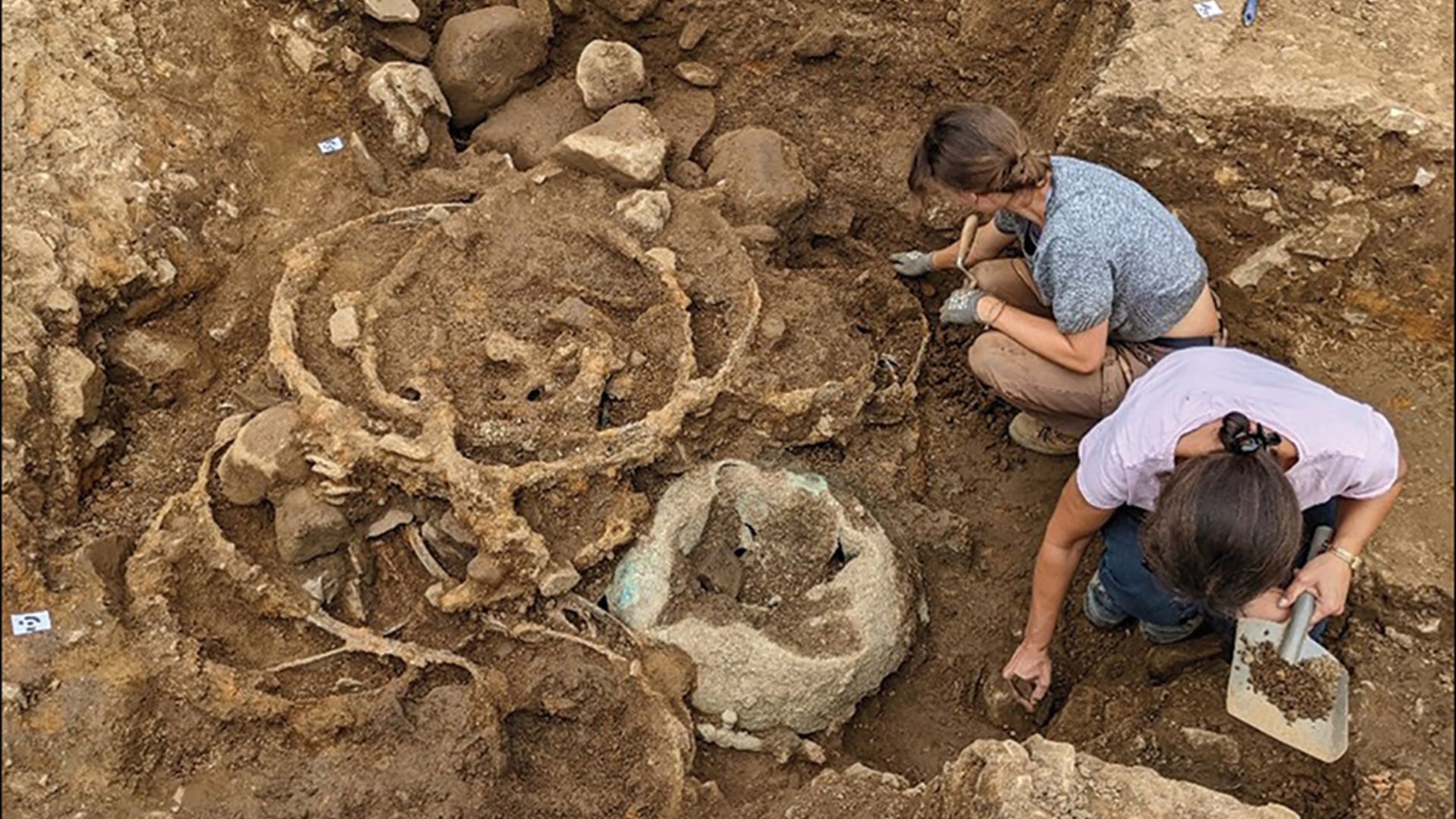
Archaeologists have uncovered two massive Iron Age hoards in North Yorkshire, England, containing over 950 burned metal artifacts – including chariot parts, weapons, and ornate vessels. The findings, detailed in a recent study published in Antiquity, suggest the deposits were part of an elite funeral, potentially for a high-ranking leader, possibly a queen, of the Brigantes tribe.
Elite Burial Rituals of the Brigantes
The hoards were first discovered in 2021 by a metal detectorist near Melsonby. Excavations revealed two separate caches intentionally burned, damaged, and buried. The scale of the deposit – including iron wheel tires, cauldrons, and ceremonial spearheads – points to a lavish funeral ceremony characteristic of Iron Age elites. Though no human remains were found, the deliberate destruction and deposition of valuable objects aligns with known prehistoric funerary practices.
Burning was a common ritual. Many of the artifacts were heated to temperatures high enough to melt copper and silver, suggesting the fire wasn’t accidental, but part of the ceremony. Cremation was gaining popularity among British elites around the first century B.C., the period these items date back to.
The Brigantes and Continental Connections
The Brigantes were a powerful Celtic tribe who controlled the nearby Stanwick royal site, a fortified settlement known to the Romans as an oppidum. The discovery site sits just a few hundred feet from this center of power. The hoards’ contents, including decorations with coral imported from the Mediterranean, show that the Brigantes maintained connections with continental Europe.
A particularly significant finding was the presence of U-shaped iron brackets – previously unknown in British archaeology but common in Europe. Researchers have identified these as parts of four-wheeled carts, indicating that the Brigantes used these vehicles alongside traditional two-wheeled chariots. This further confirms the tribe’s contact with other Celtic groups.
Possible Link to Queen Cartimandua
While the exact identity of the person honored by these deposits remains unknown, the dating of the artifacts (first century B.C.) suggests they predate the Roman conquest. The researchers speculate the funeral could have been for an ancestor of Cartimandua, a queen who ruled the Brigantes as a Roman client ruler after A.D. 69. The Brigantes passed royal power through female lines, making it plausible that earlier queens were also buried with similar ceremonies.
Celtic Resistance Through Art?
Archaeologist Melanie Giles, excavating a contemporary chariot burial in Wales, notes stylistic similarities between the Melsonby hoards and other Celtic artifacts. She proposes that the exaggerated Celtic motifs found on these items could be a form of resistance against Roman expansion. The over-the-top display of Celtic art might have been a way to assert identity and defiance in the face of increasing Roman influence.
The Melsonby hoards represent one of the largest Iron Age finds in Britain. While the precise circumstances surrounding the funeral may remain a mystery, the evidence strongly suggests a deliberate and elaborate ceremony for a powerful leader, reinforcing our understanding of elite burial practices in Iron Age Britain.