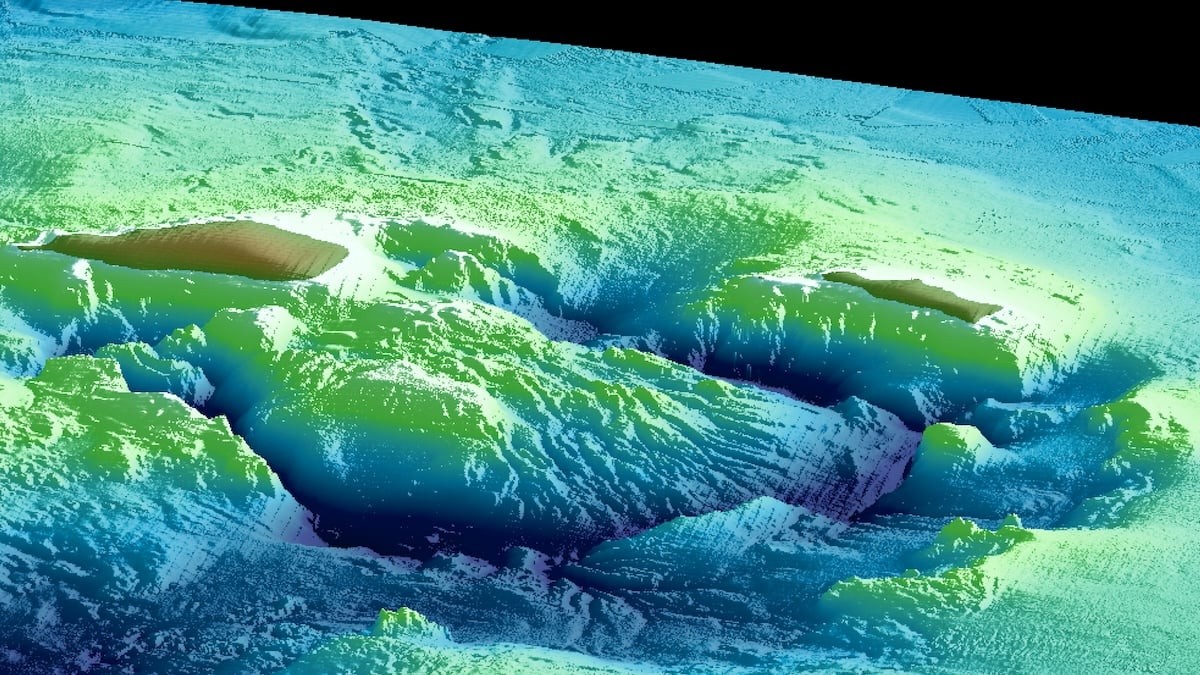
New research has revealed that the Kikai Caldera, one of the most explosive volcanic systems on Earth, is quietly recharging. A recent study indicates that a massive magma chamber beneath the submerged volcano is being replenished with fresh material, providing a rare window into the life cycle of “supervolcanoes.”
A History of Cataclysm
To understand the significance of these findings, one must look back 7,300 years to the Akahoya eruption. This event remains the largest known eruption of the Holocene epoch. The scale of the destruction was immense:
- Volume: The eruption expelled roughly 160 cubic kilometers of rock—over 30 times the volume of the 1991 Pinatubo eruption.
- Impact Area: Pyroclastic flows traveled up to 150 km from the epicenter, and ash (tephra) covered vast portions of Japan and the Korean peninsula.
- Human Cost: While written records do not exist, historians believe the eruption likely devastated the Jōmon people, the prehistoric inhabitants of Japan.
While the volcano has only produced minor activity in recent decades, the sheer scale of its past activity suggests a capacity for much greater violence.
Uncovering the “Recharge” Process
Because the Kikai Caldera is mostly submerged beneath the ocean, it presents a unique challenge for scientists. However, this underwater setting also serves as a preserved laboratory.
A team of researchers from Kobe University and the Japan Agency for Marine-Earth Science and Technology utilized advanced seismic technology to peer beneath the seafloor. By deploying air-gun arrays to send pulses through the Earth’s crust and measuring them with ocean-bottom seismometers, they successfully mapped the area’s internal structure.
The findings were striking:
1. A Massive Reservoir: The team identified a large magma chamber that appears to be the same reservoir responsible for the Akahoya eruption.
2. New Material: Chemical analysis suggests the magma currently in the chamber is not merely leftover residue from the last eruption. Instead, it is newly injected magma, distinct from the original material.
3. Ongoing Growth: Evidence suggests a new lava dome has been slowly forming within the caldera over the last 3,900 years.
Why This Matters: The Global Pattern
This discovery does more than just explain what is happening under Kikai; it offers a potential blueprint for understanding other “supervolcanoes” like Yellowstone in the United States and Toba in Indonesia.
The researchers have proposed a “magma re-injection model.” This theory suggests that giant calderas do not simply “empty out” and go dormant; they undergo long cycles of refilling where new magma is pushed into shallow reservoirs.
“We must understand how such large quantities of magma can accumulate to understand how giant caldera eruptions occur,” says co-author Seama Nobukazu, a geophysicist at Kobe University.
The Challenge of Modern Risk
The stakes for monitoring these systems have changed drastically since the Jōmon era. While the Akahoya eruption occurred in a sparsely populated landscape, the Kikai region is now part of a high-density modern society. Even a relatively modest eruption today could result in catastrophic loss of life and economic disruption.
By refining how we detect these “re-injection” processes, scientists hope to move closer to predicting the next major eruption of a giant caldera, shifting from reactive observation to proactive monitoring.
Conclusion: The discovery of fresh magma injection beneath the Kikai Caldera provides a critical new model for how supervolcanoes recharge, offering hope that improved monitoring could eventually help predict these rare but devastating geological events.