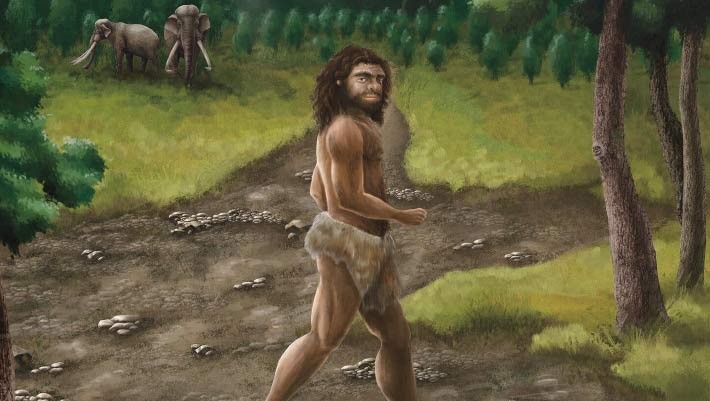
A newly sequenced genome from a 200,000-year-old Denisovan individual is reshaping our understanding of early human interactions, migrations, and genetic mixing in Eurasia. Researchers at the Max Planck Institute for Evolutionary Anthropology extracted high-quality DNA from a molar found at Denisova Cave in Siberia, revealing a far more dynamic picture than previously understood. This discovery challenges the notion of stable archaic human populations, demonstrating repeated interbreeding and population replacements over tens of thousands of years.
The Oldest Denisovan Genome to Date
The molar, designated Denisova 25, belonged to a male who lived at least 200,000 years ago — significantly earlier than the previously sequenced Denisovan, whose genome was 65,000 years old. This older specimen offers critical insight into a period when modern humans were still confined to Africa. The exceptional DNA preservation allowed scientists to reconstruct the genome with high accuracy, providing a direct comparison point to the younger Denisovan.
The research confirms that Denisovans were not a single, uniform population, but instead comprised at least two distinct groups that occupied the Altai region at different times. One group appears to have replaced the other over millennia, indicating complex population dynamics. The older Denisovan carried more Neanderthal DNA than the later one, proving that interbreeding was not a rare event, but a recurring feature of Ice Age Eurasia.
Evidence of “Super-Archaic” Ancestry
More surprisingly, the genome reveals evidence of mixing with an even older hominin population that diverged from the human family tree before the split between Denisovans, Neanderthals, and modern humans. This suggests a deeper layer of genetic complexity in human evolution than previously recognized.
“This genome provides concrete proof that archaic humans weren’t isolated; they mingled, blended, and replaced each other repeatedly,” says Dr. Stéphane Peyrégne, the lead researcher.
Tracing Denisovan Ancestry in Modern Populations
The study also sheds light on why modern populations carry Denisovan DNA in different patterns. Populations in Oceania, South Asia, and East Asia all have Denisovan ancestry, but not the same kind. The new genome helps explain this discrepancy. Researchers identified at least three distinct Denisovan sources, with one group contributing ancestry widely across East Asia and beyond. Another, more divergent population contributed DNA to Oceanians and South Asians independently.
This suggests that the ancestors of East Asians migrated into Asia via a different route — likely from the north — while the ancestors of Oceanians moved through South Asia earlier. The analysis demonstrates multiple migrations into Asia, rather than a single out-of-Africa event with a unified Denisovan contribution.
Denisovan Genes in Modern Humans
The team identified dozens of regions in present-day populations that appear to have been shaped by Denisovan introgression. Several Denisovan-specific mutations affect genes linked to cranial shape, jaw projection, and facial features, aligning with the limited fossil evidence. Some genetic variants were likely beneficial and rose to high frequency in modern humans through natural selection.
For example, the study found links between Denisovan alleles and traits like height, blood pressure, and cholesterol levels in modern populations. One regulatory change sits near FOXP2, a gene involved in brain development, raising new questions about Denisovan cognition.
Implications for Human Evolution
The high-quality genome of Denisova 25 is a landmark achievement in paleogenomics. By comparing it to the younger Denisovan genome, scientists have uncovered a far more complex and fluid history of early human interactions than previously imagined. This research underscores that ancient humans were not isolated groups but dynamic populations that mixed, migrated, and replaced one another over tens of thousands of years. The findings also highlight the importance of studying ancient DNA to understand the full story of human evolution.
The Denisovan genome continues to provide clues about the genetic heritage of modern humans, offering new insights into adaptations, disease susceptibilities, and even physical traits shaped by ancient interbreeding.