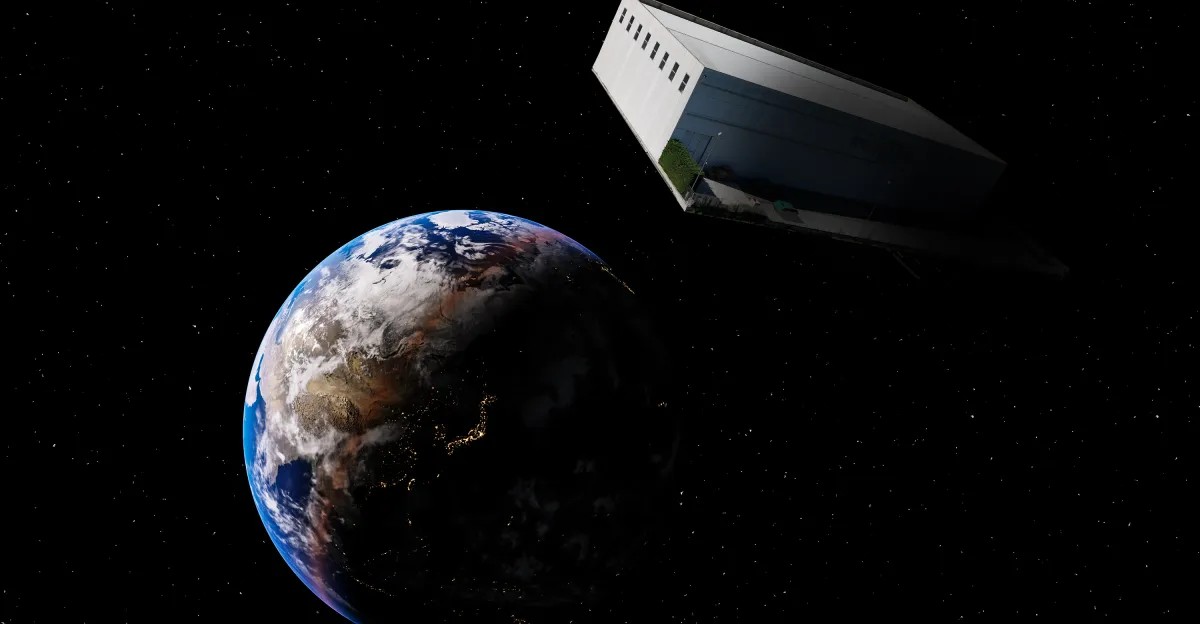
Tech billionaires, already heavily invested in space exploration, are now eyeing low Earth orbit for a new frontier: data centers. Driven by the insatiable demand for processing power from AI, companies like Google and startups such as Aetherflux are proposing fleets of satellites to host these facilities. This isn’t simply a futuristic whim; it’s a direct response to the mounting costs and limitations of building massive data centers on Earth, which consume vast amounts of land, water, and energy.
The Logic Behind Orbital Data Centers
The core idea is simple: tap into limitless solar power in space. Unlike terrestrial data centers that rely on strained power grids, satellites in sun-synchronous orbit can theoretically access continuous, abundant energy. This would be a major advantage for AI workloads, which are notoriously power-hungry. But the path to orbital dominance is far from smooth.
Elon Musk’s SpaceX, Jeff Bezos’ Blue Origin, and Google are already pivoting toward space-based computation. In November 2024, Nvidia launched an H100 GPU-equipped satellite via SpaceX, and China deployed a dozen supercomputer satellites earlier this year. Google’s Project Suncatcher, slated for 2027, envisions an 81-satellite cluster designed to work in unison, using lasers to link TPU chips in place of Earth-based wiring.
The Skepticism from Space Scientists
Many space professionals remain wary. Astronomer Jonathan McDowell, who tracks every satellite launch since the late 1980s, points out the sheer expense of putting anything into orbit. He suggests that some ventures are driven by the allure of “space is cool,” rather than a genuine need for orbital infrastructure.
The biggest challenge is orbital debris. The Sun-synchronous orbit, favored for its consistent sunlight, is also crowded with “a minefield of random objects” moving at 17,000 mph. Google’s 81-satellite cluster would require constant maneuvering to avoid collisions, a task that consumes fuel and introduces new risks. McDowell notes that coordinating movement for an entire cluster would be unprecedented, as most spacecraft operate individually.
The Technical Hurdles
Beyond debris, there are other significant issues. Heat dissipation in a vacuum is a major concern, with companies like Starcloud relying on infrared panels and heavy shielding to protect sensitive electronics. Even more challenging is the potential for light pollution interfering with astronomical research, a point raised by the Center for Space Environmentalism.
Furthermore, maintaining space-based hardware is far more complex than on Earth. Routine repairs are nearly impossible, and the prospect of robotic refueling or reorientation remains largely theoretical.
The Long-Term Implications
Despite these obstacles, the trend toward space-based data centers is likely to continue. Google and Aetherflux plan launches in 2027, while Starcloud aims to scale up production by 2028. The question isn’t if this will happen, but how.
The key challenge for the industry, as space scientist Mojtaba Akhavan-Tafti puts it, is sustainability: “How do we keep low Earth orbit open for business for generations to come?” The answer may lie in stricter regulations, innovative collision-avoidance systems, and a fundamental shift toward responsible space stewardship.