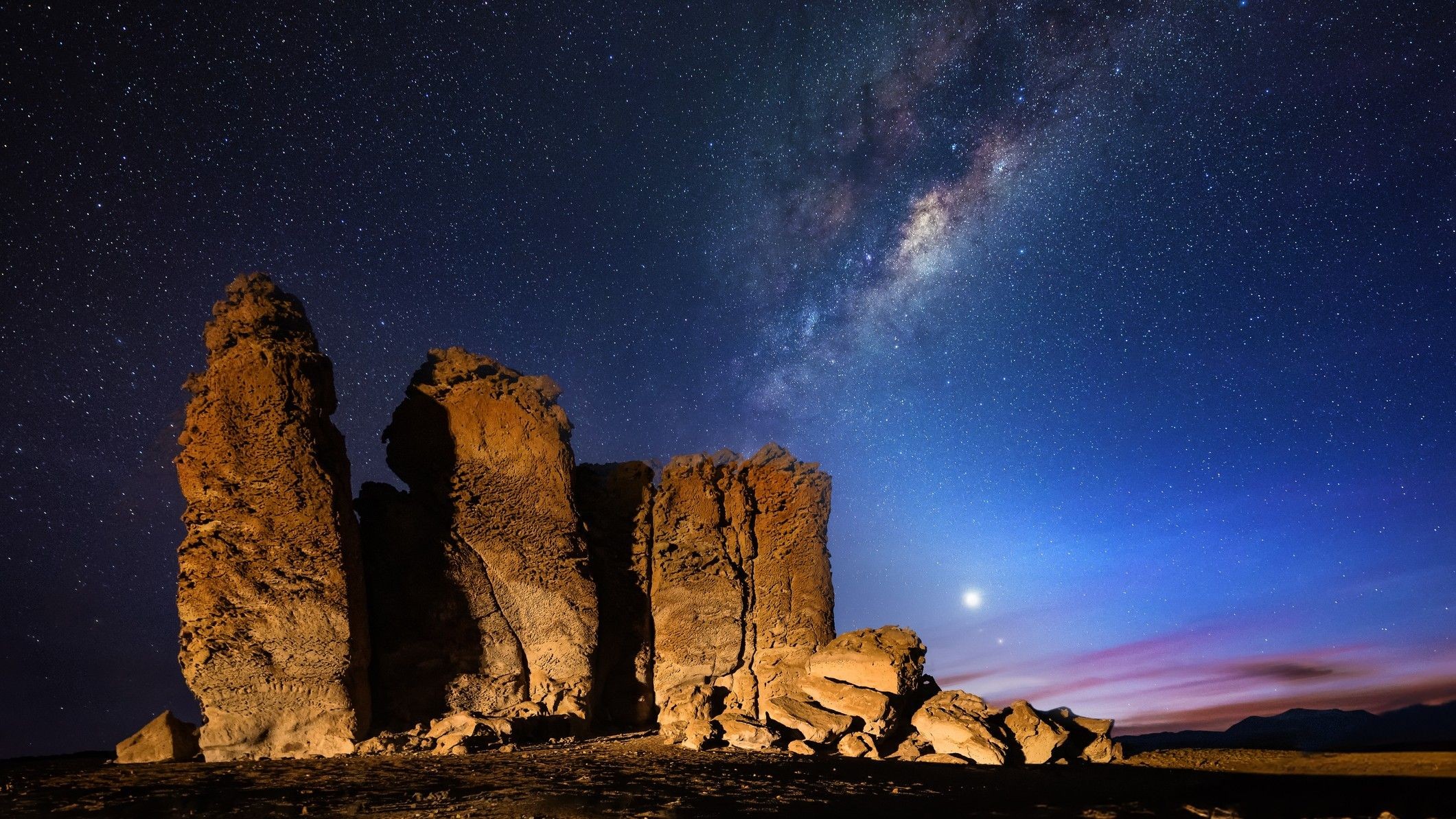
Venus, the most luminous planet visible to the naked eye, is currently at its peak visibility in the evening sky. After a period of being hidden behind the sun, it has re-emerged as a prominent fixture in the western horizon. This celestial event will last approximately five months, making it an ideal time for both amateur and seasoned skywatchers to observe.
The 2026 Venus Cycle
Venus follows a unique orbital pattern, completing 13 circuits around the sun every 8 Earth years. This cycle repeats roughly every 8 years, meaning the phenomena observed in 2026 closely mirrors those of 2018. Ancient civilizations, like the Mayans and Babylonians, meticulously tracked this cycle for its cultural and agricultural significance. The planet’s visibility is dictated by its position relative to Earth and the sun.
Venus passed behind the sun (superior conjunction) on January 6th, rendering it invisible due to the sun’s glare. It has since been gradually emerging into view, climbing higher in the evening sky with each passing day.
Observing Venus in Spring and Summer
During March, Venus rapidly ascended into the evening twilight, becoming the brightest object in the night sky. By the end of the month, it set nearly 100 minutes after sunset, visible even after astronomical twilight had ended. This allows for extended viewing in a fully dark sky until late August.
Venus will be at its most spectacular in June, rising to almost 30 degrees above the sunset horizon and setting nearly 2 hours and 40 minutes after the sun. The ecliptic, the apparent path of the sun and planets, will be nearly vertical to the western horizon, enhancing Venus’s visibility in northern latitudes.
Planetary Encounters: Venus with Uranus, Pleiades, Jupiter, and Mercury
Venus will provide several opportunities for observing other celestial bodies. On April 23rd, it will pass within three-quarters of a degree of Uranus, making the seventh planet easily identifiable in binoculars or a small telescope. Venus will appear 7,700 times brighter than Uranus, providing a striking contrast.
The same evening, Venus will also be near the Pleiades star cluster, allowing observers to fit all three objects within the field of view of standard 7-power binoculars.
June will bring a “celestial summit meeting” with Jupiter and Mercury. On June 9th, Venus will be just 1.8 degrees from Jupiter, creating a striking duo in the western sky. A crescent moon will join the pair on June 16th, with Mercury appearing below the moon. The following night, the moon will pass close to Venus, while Pollux and Castor (the Gemini twins) watch from the background.
On July 9th, Venus will pass less than a degree above Regulus, the brightest star in Leo. Seven days later, a slender crescent moon will add to the spectacle in the western sky.
Venus at its Peak and Decline
Venus reaches its greatest elongation (46 degrees east of the sun) on August 15th, although it will be lower on the horizon compared to its spring prominence. Its maximum brilliancy occurs on September 18th, reaching a magnitude of -4.8, but it will also be setting just over an hour after the sun. By late September, Venus will appear as a large, slender crescent before rapidly disappearing in October.
Observing Venus Through a Telescope
Between now and October, Venus will display a full range of phases. Currently, it appears as a nearly full, dazzling gibbous disk. By July 17th, it will start becoming less gibbous. On August 12th, Venus will reach dichotomy, displaying a “half-moon” shape. After that, it will appear as a large crescent as it swings closer to Earth. The planet’s apparent size will double by August 3rd and again by September 23rd, making its crescent shape easily visible even in 7-power binoculars.
The return of Venus to the evening sky is a remarkable celestial event that provides an opportunity to witness the beauty of our solar system. With clear skies and a bit of patience, observers can enjoy this spectacle throughout the spring and summer of 2026.