This week’s scientific landscape was defined by a mix of urgent public health concerns, breakthroughs in space travel logistics, and leaps forward in energy technology. While a rare human-to-human transmission of hantavirus aboard a cruise ship dominated headlines, researchers also unveiled a potential shortcut to Mars and demonstrated a quantum battery capable of charging in a quadrillionth of a second.
Public Health Alert: Hantavirus on the MV Hondius
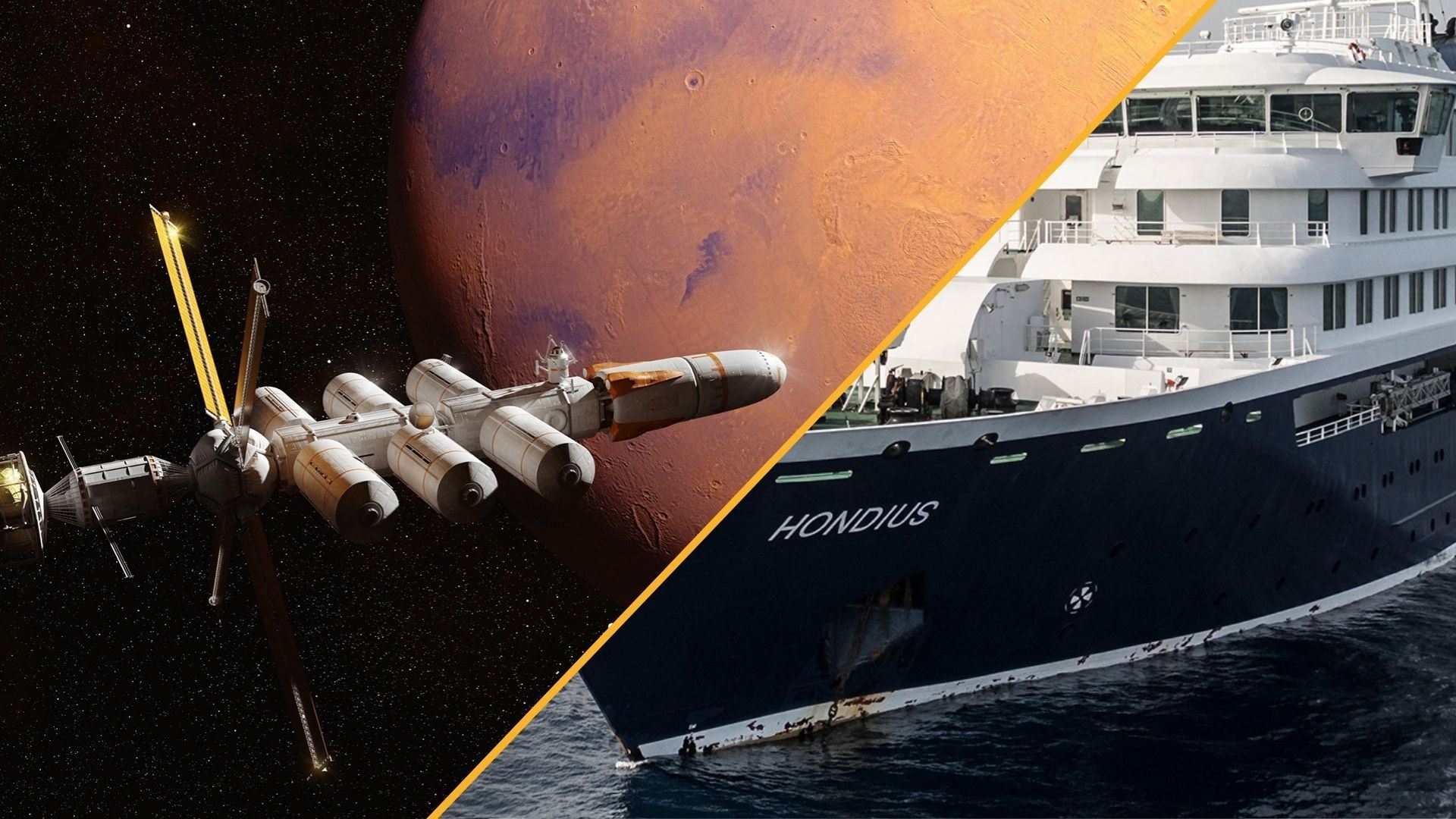
The most pressing story this week involves a cluster of hantavirus infections aboard the Dutch-flagged cruise ship MV Hondius. The situation escalated from a localized health incident to a global concern after health officials identified the specific strain as the Andes virus. This distinction is critical because, unlike most hantaviruses which are transmitted by rodents, the Andes virus is the only known type capable of spreading from person to person.
As the ship heads toward Tenerife, Spain, health authorities are racing to trace contacts. Passengers who disembarked in at least five U.S. states are currently under close monitoring. This case highlights a significant gap in global pandemic preparedness: how quickly can international health systems isolate and track airborne or contact-transmitted pathogens in a mobile, international environment?
Beyond the outbreak, this week’s health reporting explored the nuanced role of estrogen in shaping trauma responses in both male and female brains, challenging the assumption that memory centers start as a “blank slate.” In a separate medical anomaly, researchers documented a rare case of a woman who developed severe skin discoloration shortly after beginning a new medication, underscoring the unpredictable nature of drug interactions.
Space Exploration: A Faster Route to Mars
In aerospace news, a researcher has identified a potential orbital shortcut that could drastically reduce travel time to the Red Planet. By analyzing early, imprecise orbital data of near-Earth asteroids, the scientist discovered a trajectory that allows for a round trip in just 153 days.
However, this speed comes with a significant engineering hurdle: astronauts would arrive at Mars traveling at approximately 64,800 mph (108,000 km/h). Current landing systems are not designed to handle such extreme velocities safely.
Despite this limitation, the study offers a more pragmatic alternative. The same orbital mechanics support a mission timeline of roughly 7.5 months —about half the duration of traditional trajectories. This finding is vital for the future of human exploration, as shorter mission times reduce exposure to cosmic radiation and lower the logistical burden of life support systems.
“The discovery suggests that while we may not yet have the technology for the fastest route, we do have the orbital knowledge to make Mars missions significantly more efficient.”
Technology: The Promise of Quantum Batteries
Addressing one of the most common frustrations in modern tech—slow charging—researchers have developed a proof-of-concept quantum battery. Leveraging the counterintuitive laws of quantum mechanics, this battery design allows molecules to charge at a constant speed regardless of the battery’s size.
Unlike traditional batteries, where charging time increases with capacity, quantum batteries exhibit a scaling advantage: the larger the battery, the faster it charges relative to its size. In laboratory tests, the prototype charged in a quadrillionth of a second. Theoretically, such a battery could hold a charge for a million times longer than it takes to replenish it.
While practical, large-scale prototypes are still years away, this research points toward a future where devices charge instantly and last for years, potentially revolutionizing everything from smartphones to electric vehicles.
Broader Scientific Context
This week’s broader scientific discourse touched on several intriguing topics:
- Evolutionary Biology: New studies attempt to reconcile the paradox of rising human IQ scores with evidence that human brains are shrinking over the last two decades.
- Regulatory Shifts: The FDA introduced a “plausible mechanism pathway,” allowing certain experimental gene therapies to bypass traditional clinical trials for patients with rare disorders. This move promises faster access to life-saving treatments but raises ethical questions about safety oversight.
- Environmental Science: Researchers demonstrated a method for creating clean hydrogen from plastic waste using solar power and battery acid from old cars, offering a dual solution to pollution and energy storage.
Conclusion
From the immediate challenges of containing a transmissible virus on the high seas to the long-term vision of faster Mars missions and instant energy storage, this week’s science news underscores a world in rapid transition. The common thread is the push to overcome biological and physical limitations through deeper understanding and innovative engineering.