


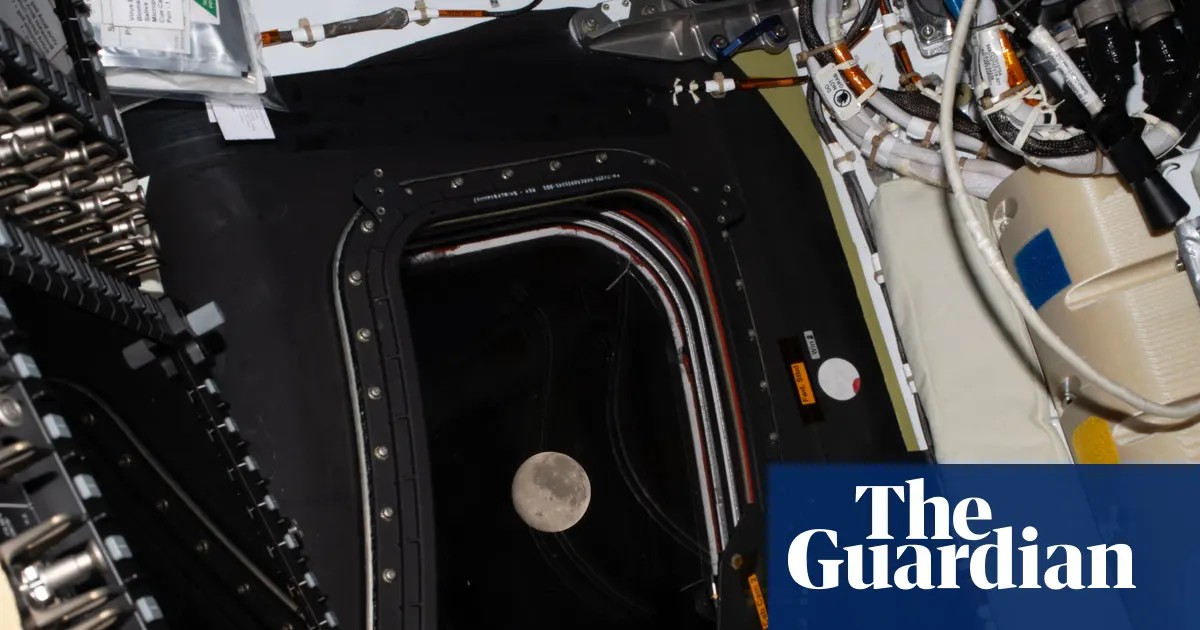
The Artemis II mission has officially entered the history books. On Monday, at 1:57 p.m. ET, the four astronauts aboard the Orion capsule surpassed the distance record previously held by the Apollo 13 mission, becoming the farthest humans have ever traveled from Earth.
By swinging past the Moon without entering a full orbit, the crew reached a distance approximately 4,000 miles beyond the 1970 record set by the Apollo 13 crew. This milestone is not merely a numerical achievement; it represents a pivotal moment in NASA’s renewed push to establish a long-term human presence in deep space.
Breaking the Apollo 13 Benchmark
For over five decades, the distance record was tied to the ill-fated Apollo 13 mission, which reached a maximum of 248,655 miles from Earth during its emergency trajectory. The Artemis II crew—comprised of NASA astronauts Reid Wiseman, Victor Glover, and Christina Koch, along with Canadian Space Agency astronaut Jeremy Hansen —surpassed this mark during a high-stakes lunar flyby.
The mission’s trajectory involves a “free-return” maneuver, where the spacecraft uses the Moon’s gravity to swing around its far side before heading back toward Earth. This path allows the crew to witness lunar features that have remained largely obscured from human eyes for much of history.
Scientific Eyes on the Far Side
While the record-breaking distance is a feat of navigation, the mission’s core purpose is scientific observation. The crew is tasked with documenting the Moon’s “far side”—a region characterized by different geological textures than the side facing Earth.
Key objectives for the flyby include:
– Mapping Lunar Features: Observing “seas,” “lakes,” and “marshes” (basaltic crater features) to better understand lunar topography.
– Surveying Landing Sites: Identifying potential locations for future lunar landings, including the Reiner Gamma formation—a mysterious, bright swirl linked to magnetic anomalies.
– Planetary Observations: Capturing images of Mercury, Venus, Mars, and Saturn during lunar sunrise and sunset.
– The “New Earthrise”: Attempting to recreate the iconic “Earthrise” photograph taken during Apollo 8, hoping to evoke the same sense of global unity that helped spark the environmental movement in the late 1960s.
“It is blowing my mind what you can see with the naked eye from the moon right now,” remarked Canadian astronaut Jeremy Hansen, while challenging future generations to ensure this record does not remain long-lived.
Navigating the Silence
The flyby also presented a significant technical challenge: the communication blackout. As the Orion capsule moved behind the Moon, it lost direct line-of-sight with Mission Control. While NASA utilizes the Deep Space Network (with antennas in California, Spain, and Australia), the Moon itself acts as a physical barrier to radio signals.
Despite the tension inherent in these periods of silence, flight directors remain confident, noting that the laws of physics will inevitably guide the capsule back into communication range as it rounds the lunar limb.
Why This Matters: The Bridge to the Future
This mission serves as a bridge between the legendary Apollo era and the upcoming Artemis era. Unlike the Apollo missions, which were primarily focused on reaching and returning from the Moon, Artemis is designed to build the expertise and data necessary for sustained lunar habitation and eventual Mars exploration.
The crew’s observations—ranging from geological data to the psychological impact of seeing Earth as a “fragile oasis”—will provide the blueprint for the next generation of explorers.
Conclusion: By breaking the Apollo 13 distance record, Artemis II has proven that humanity is once again capable of venturing deeper into the cosmos, turning a historic flyby into a vital stepping stone for future deep-space colonization.


