
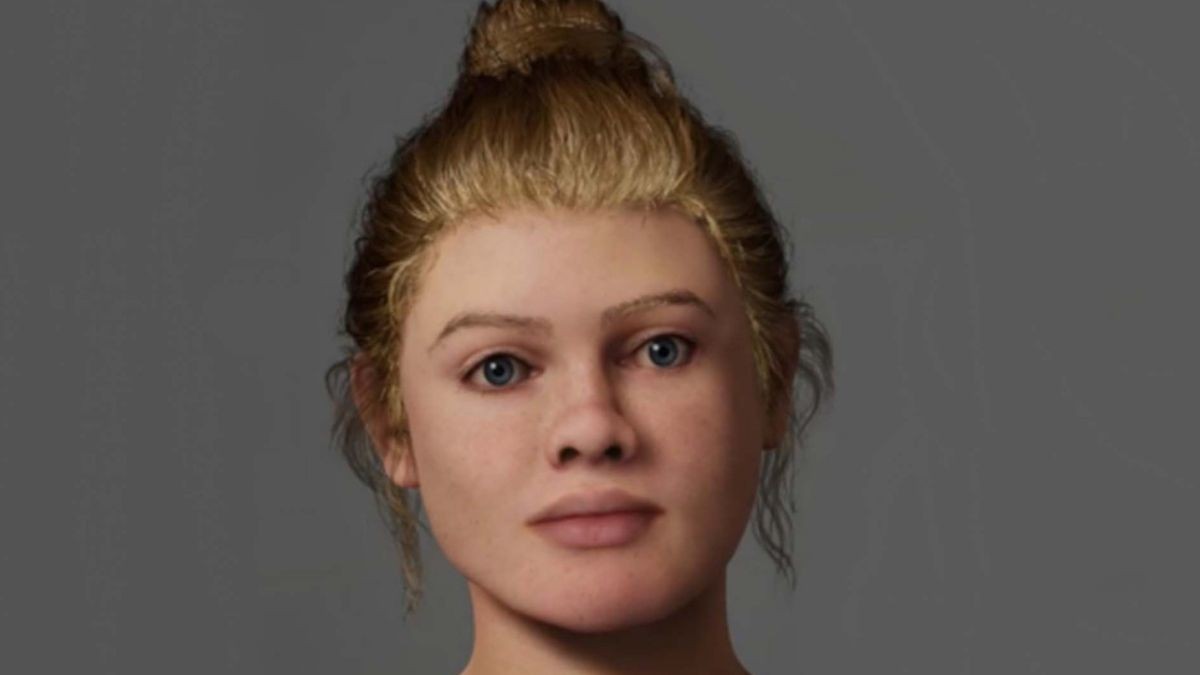
The identity of a Roman-era skeleton discovered in Britain, known as the Beachy Head Woman, has been definitively clarified through advanced DNA analysis. Contrary to earlier speculation suggesting African or East Mediterranean origins, the latest research confirms she was genetically similar to other individuals living in Roman Britain and modern-day Britons.
The Long-Held Misconception
For over a decade, the remains of the Beachy Head Woman, first found in the mid-20th century and rediscovered in 2012, sparked debate about her ancestry. Initial observations of her skull led some researchers to hypothesize she might be the “first black Briton”. This assumption, fueled by physical features, gained traction in media, academic circles, and educational materials. However, the basis for this claim was flawed: relying on skull morphology to determine ethnicity is outdated and unreliable.
The Genetic Breakthrough
The new analysis, led by William Marsh at the Natural History Museum (NHM) in London, utilized state-of-the-art DNA techniques. These methods revealed a “strong genetic affinity” between the Beachy Head Woman and rural British populations during the Roman occupation (129–311 CE).
The woman’s genetic profile suggests she likely had blue eyes, light hair, and skin ranging from pale to dark. Crucially, there is no evidence of recent African ancestry in her genome. Earlier, a 2017 analysis suggested East Mediterranean origins, but this too has been disproven by the more precise current findings.
Why This Matters
The case underscores a vital point: assumptions based on physical appearance are prone to error. The Beachy Head Woman’s story highlights how easily outdated anthropological methods can lead to inaccurate conclusions. Genetics provides a far more robust and objective way to understand ancient populations.
“Our scientific knowledge is constantly evolving, and as scientists, it’s our job to keep pushing for answers,” says NHM anthropologist Selina Brace.
This discovery doesn’t diminish the importance of diversity in British history, but it clarifies that the Beachy Head Woman’s story was misinterpreted. The incident serves as a reminder that genetic data should always be prioritized over subjective interpretations in reconstructing the past.
The Beachy Head Woman’s true origins, now revealed by DNA, demonstrate that assumptions about ancestry based on appearance alone can be misleading. As technology advances, so too does our understanding of human history, and this case exemplifies why rigorous scientific inquiry is essential.