


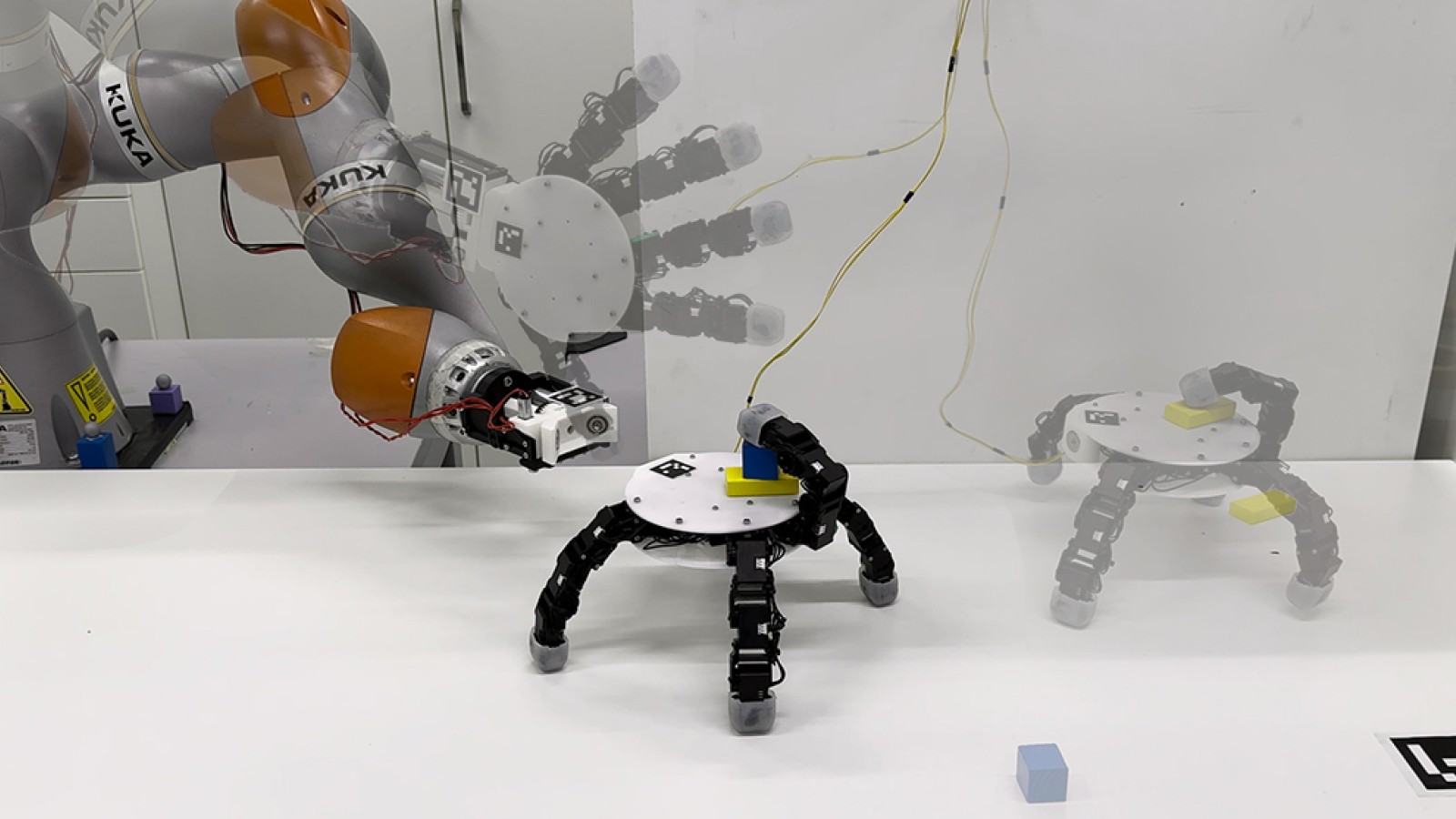
Engineers have developed a unique robotic hand capable of detaching from its arm and independently crawling to collect objects in tight or dangerous spaces. The device, detailed in a January 20th study in Nature Communications, combines manipulation and locomotion in a single, highly adaptable system.
The Problem with Traditional Robotics
Current robotics often separates grasping and movement into distinct functions. This limits their effectiveness in scenarios where access is restricted or human intervention is unsafe. Think of retrieving a tool dropped under heavy machinery, inspecting a collapsed building after a disaster, or exploring confined spaces in industrial settings. Human arms can’t always reach, and full-bodied robots may be too bulky.
This new design solves this by allowing the hand itself to act as a mobile unit. It can detach, navigate, grasp, and return, streamlining the process.
How it Works: Reversible Dexterity
The robotic hand’s key innovation is its reversible functionality. Unlike human hands (or most robotic grippers), this device can grip objects from either side. Each finger bends in both directions, eliminating the need to twist the wrist to change grip orientation.
This is achieved through lightweight, 3D-printed joints powered by small electric motors, topped with soft silicone for enhanced friction. The hand can hold up to four objects simultaneously, even crawling across surfaces while carrying them on its “back”.
Inspired by Nature
The design takes cues from nature, notably the octopus’s ability to move with its arms and the praying mantis’s dual-purpose forelimbs. This biomimicry allows for efficient movement and manipulation without sacrificing dexterity. The team at the Swiss Federal Technology Institute of Lausanne (EPFL) notes that natural hands have limitations—like awkward wrist contortions for reaching behind objects—that their design avoids.
Snap-and-Lock Reattachment
The hand reattaches to a robotic arm via a magnetic “snap-and-lock” system secured by a small motor-driven bolt. The process is quick, reliable, and allows the hand to seamlessly transition between independent and tethered operation.
Beyond Industrial Applications
While initially developed for industrial and exploratory use, the researchers suggest potential applications in prosthetics or human augmentation. The brain’s demonstrated ability to adapt to additional robotic limbs opens the possibility of expanded manipulation capabilities. This isn’t the immediate focus, but the symmetrical, reversible design could be valuable in specialized environments where users need more than standard human function.
The device represents a significant step toward robotics that can truly adapt to the constraints of real-world environments. It’s not just about building stronger robots; it’s about building smarter ones.


