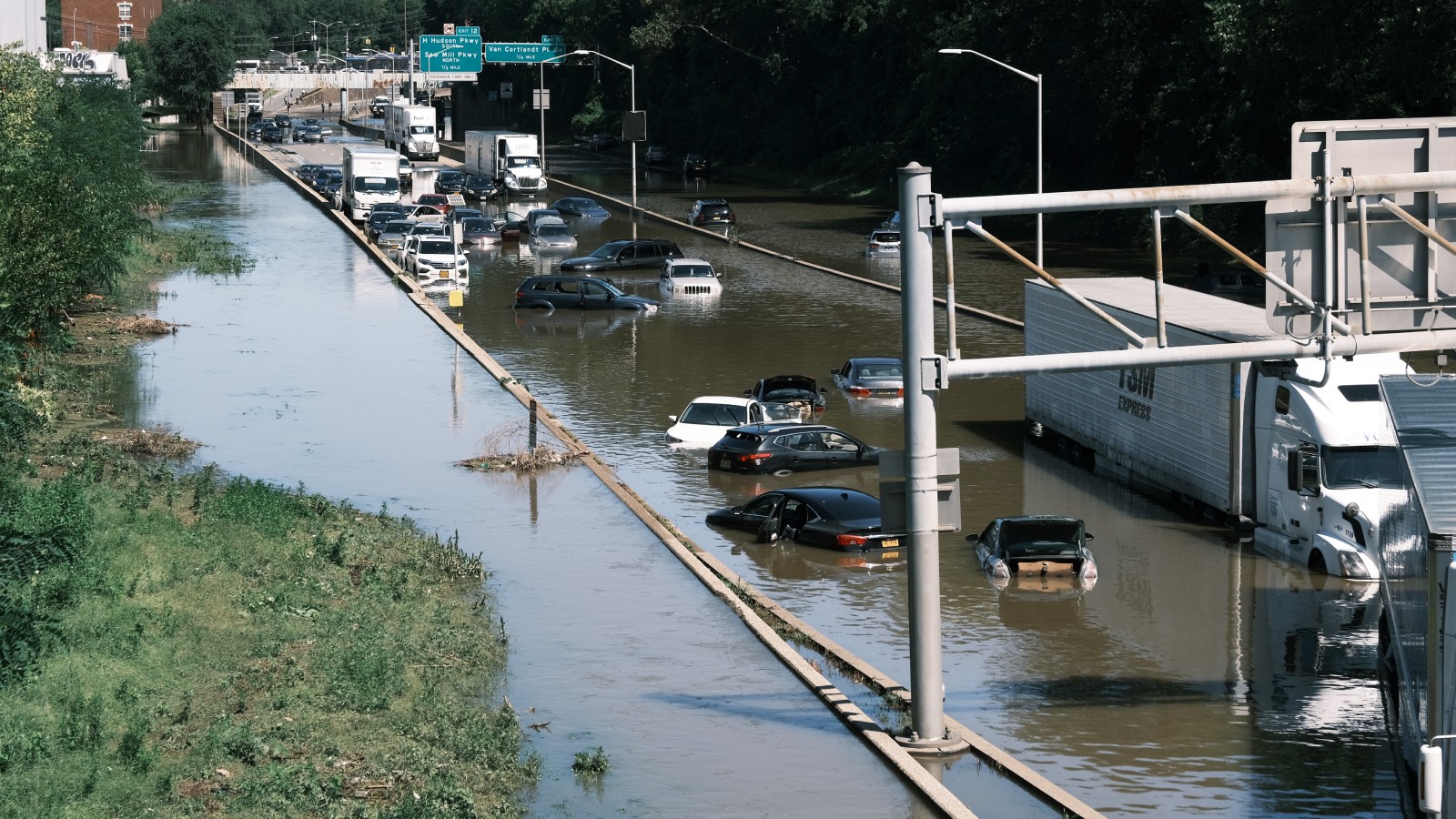
Northeastern coastal communities in the United States face a stark future: extreme flooding events currently expected once a century may become annual occurrences within the next 75 years. A new study published in Earth’s Future reveals this alarming trend, driven by the combined forces of intensifying hurricanes and accelerating sea level rise. The findings underscore a critical shift in risk assessment, demanding immediate adaptation measures.
The Accelerating Threat
Researchers used advanced computer modeling to simulate future storm patterns under varying carbon emission scenarios. The results are clear: as global temperatures rise, hurricanes are projected to become both more frequent and more intense. Simultaneously, rising sea levels will amplify the impact of even moderate storms. This means that historical “100-year” floods—events with a 1% chance of occurring in any given year—could become commonplace by the end of the century.
Under moderate emission scenarios, “500-year” floods (events with a 0.2% annual chance) could strike every 1 to 60 years. With higher emissions, that frequency increases to 1 in 20. The study highlights regional variations, too. In northern states like New York and Connecticut, sea level rise is the primary driver of increased flood risk, while areas further south, such as New Jersey and Virginia, will experience a combined threat from both rising waters and storm intensification.
The Human Factor: Uncertainty in Emissions
The study’s most sobering conclusion isn’t just the physical risk, but the uncertainty surrounding it. As Jeff Ollerhead, a coastal geomorphologist at Mount Allison University, points out, the largest variable in future climate models isn’t scientific—it’s human behavior.
“We don’t know what people are going to do,” he said, referring to political responses to the climate crisis. “That’s the biggest uncertainty.”
This means that even the most accurate models are contingent on decisions made today about carbon emissions. Without rapid, significant reductions, the worst-case scenarios become increasingly likely.
The New Normal: Adaptation is Key
The implications are clear: coastal communities must prepare for a future where flooding is not an exception, but the norm. Even smaller storms will cause extensive damage as sea levels continue to rise. Hurricane Fiona, which struck Atlantic Canada in 2022, serves as a preview: a storm surge of 6.5 feet could be matched by a weaker storm in the coming decades if sea levels rise by just 3.3 feet.
The most effective defense is relocation—moving inland and uphill. But for many communities, this isn’t feasible. Updated building codes that account for future flood risks are essential, but they must move beyond current standards based on outdated “100-year event” benchmarks. As Begmohammadi notes, “A 100-year event now is not the same as one in the future.”
The reality is this: coastal flooding will become more frequent and severe, forcing communities to adapt or risk being overwhelmed. The time to prepare is not in the future—it is now.