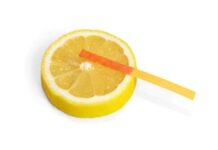
A solution is a homogeneous mixture of two or more components that do not react with each other. The proportions can vary. You have a solvent. You have a solute. The solvent is usually the larger part. The solute dissolves into it. This creates a uniform blend. You cannot see the individual parts with the naked eye. They form a single phase. No distinct layers appear.
The word comes from the Latin dissolutĭo. It refers to the action of dissolving. This process is fundamental to chemistry. It explains how substances interact at a molecular level. Understanding this helps explain everything from why salt melts ice to how fuel burns.
Types of Solutions by State of Matter
Solutions are classified by the state of their solvent. This creates clear categories. The state of matter changes the properties of the mixture.
Solid Solvents
When the solvent is solid, the mixture takes on unique forms.
- Solid in solid : Alloys are the common example. Copper and zinc mix to create brass. The metals blend at the atomic level.
- Gas in solid : Hydrogen dissolves in palladium. This is used for hydrogen storage. It traps gas within the metal structure.
- Liquid in solid : Mercury mixes with silver. This forms amalgams. Dentists use this mixture for fillings.
Liquid Solvents
Liquid solvents are the most familiar type. Most daily chemical interactions happen here.
- Liquid in liquid : Alcohol in water. The two liquids merge completely.
- Solid in liquid : Sugar in water. The sugar crystals disappear into the liquid.
- Gas in liquid : Carbonated beverages. Carbon dioxide is trapped in water under pressure.
Gaseous Solvents
When the solvent is a gas, the mixture behaves differently.
- Gas in gas : Butane in air. This creates a combustible mixture.
- Solid in gas : Naphthalene sublimated into air. The solid turns to gas and disperses.
- Liquid in gas : Aerosol products. Liquid droplets suspend in the gas propellant.
Concentration: Empirical vs. Quantitative
Concentration measures how much solute exists relative to the solvent. Two main groups exist. Empirical solutions are qualitative. They give an approximate proportion. Quantitative solutions are precise. They use specific measurements.
Empirical Solutions
These rely on estimation rather than exact calculation.
- Dilute solutions : The solute is minimal. Think of a little sugar in coffee.
- Concentrated solutions : The solute is considerable. Sea water has a high salt content.
- Saturated solutions : The solute and solvent are balanced. Carbonated drinks hold the maximum amount of CO2 at that temperature.
- Supersaturated solutions : The solute exceeds the normal limit. Syrup and hard candy have an excess of sugar dissolved in liquid.
Quantitative Solutions
These require exact data. Measurements use mass percentage, moles, volume in cubic centimeters, or grams per liter.
- Ionic solutions : Measure ions. The solute and solvent form ionic bonds. Cations have positive charges. Anions have negative charges.
- Elemental solutions : Extract components to pure states. Measure quantities separately.
- Formulated solutions : Consider the atomic weight of components.
Key Characteristics of Solutions
Solutions have distinct physical traits. These traits distinguish them from simple mixtures or chemical reactions.
First, a solution always has at least one solute and one solvent. Some contain multiple solutes. The solute becomes part of the solvent. Sugar in water is no longer just sugar. It is part of the whole mixture.
Separation methods matter. You cannot separate components by centrifugation. Filtration fails too. The particles are too small or dissolved. You need crystallization or distillation. These methods allow retrieval of the original substances.
Volume behaves strangely. The total volume differs from the sum of individual volumes. The volumes are not additive. However, the proportion of solute to solvent remains constant throughout.
Solubility sets the limits. You can dissolve one spoon of sugar in a glass of water. A kilogram of sugar will not. The mixture depends on solubility.
Adding a solute changes the solvent’s properties. Vapor pressure decreases. The freezing point drops. The boiling point increases. These colligative properties are essential for real-world applications. From antifreeze in cars to preserving food, these changes drive utility.
The interaction between solute and solvent defines the solution. It is a balance of forces. Break that balance, and the mixture separates. Keep it stable, and you have a consistent chemical environment. This simplicity masks complex molecular dynamics.