The best disaster movies as ranked by #IMDb
Natural disasters always fascinate movie fans. There is something primal about watching the world fall apart on screen. It’s a mess we really don’t need to go through. The genre combines high-stakes action and survival drama to produce visceral thrills that keep audiences glued to their seats. Whether it’s a tsunami, an earthquake or a virus, these films explore the limits of human resistance to the forces of nature.
Here’s a selection of great disaster movies based on IMDb ratings. The selection spans decades and covers everything from classic shipwrecks to modern pandemics.
高风险的幸存者
这部引领潮流的电影重新定义了流媒体时代的灾难类型。
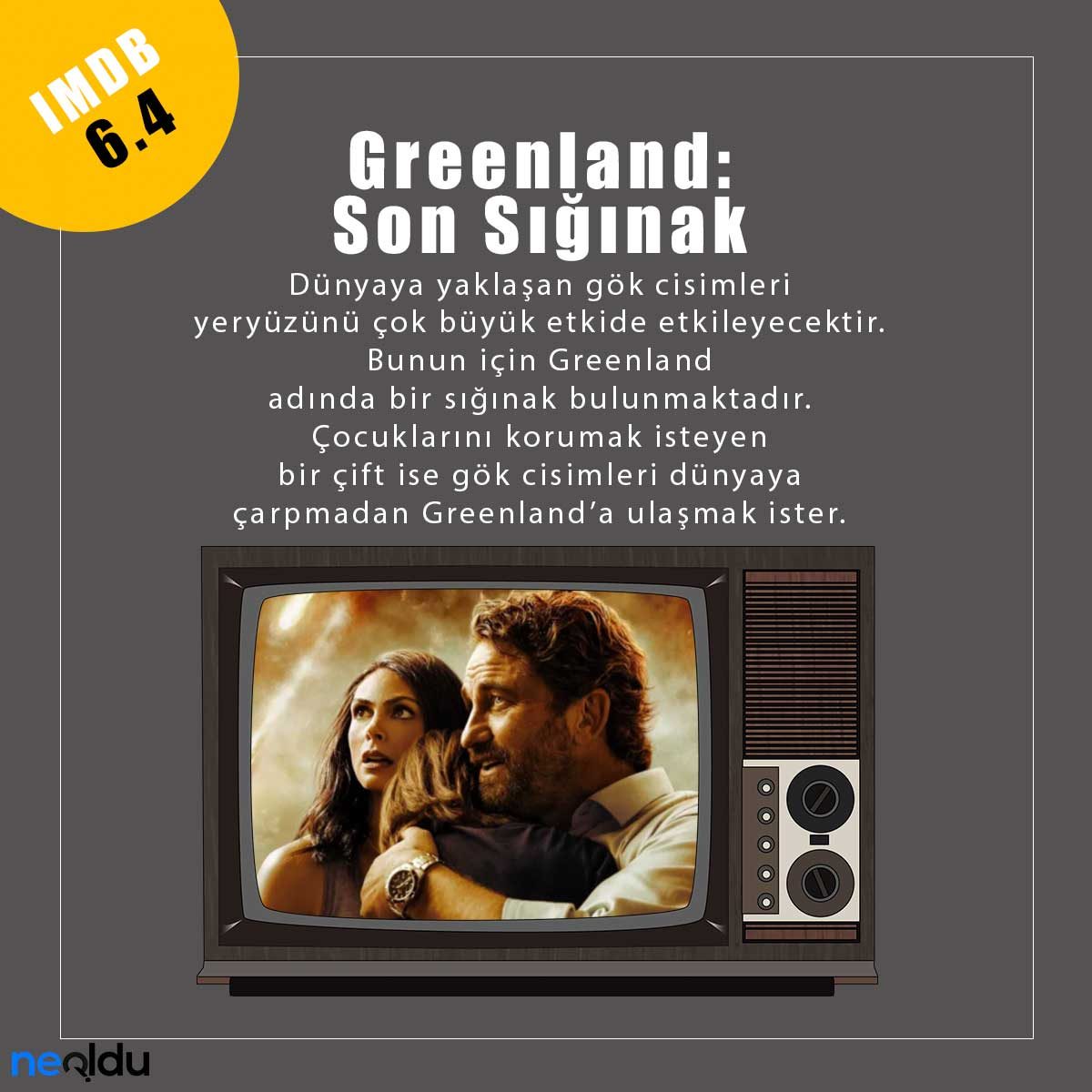
Greenland: A Personal Apocalypse (2020) – IMDb 6.4
While many disaster films focus on a global spectacle, Greenland focuses on one family’s desperate struggle for survival. This is the story of a father and son who struggle to get to shelter when a comet crashes into Earth. It has less to do with science and more to do with the heart. The tension is palpable. The chaos is real. The film earns its place with emotional weight, not computer graphics overload.
Films that combine historical accuracy with intense drama also make the top list.
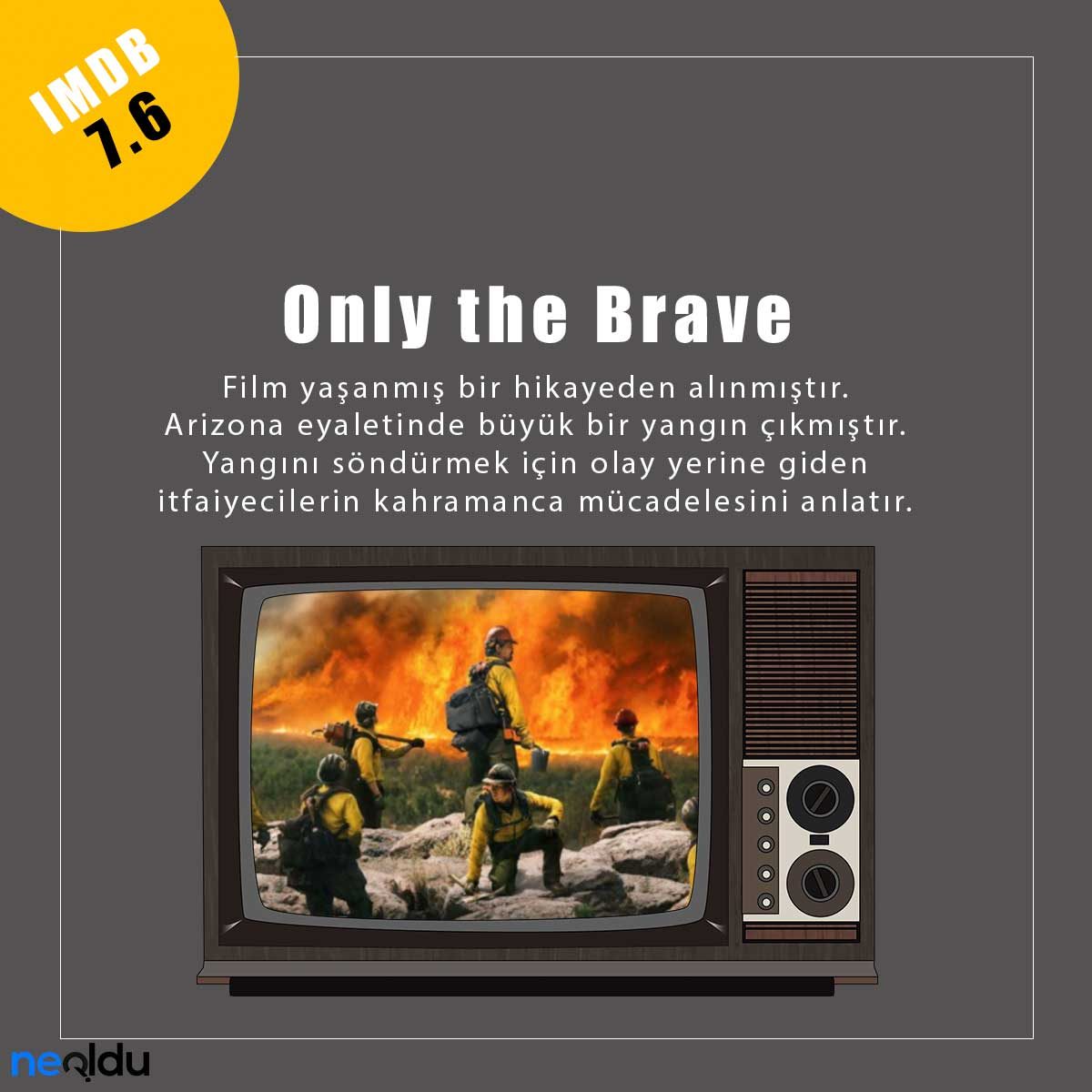
Only the Brave (2017) – IMDb 7.6
This is not just a disaster movie. It’s a tribute. This is the true story of the Granite Mountain firefighters who lost their lives fighting the Yarnell Hill Fire. This disaster is not a single event, but the unrelenting nature of wildfires. The performances are raw. Respect for these men is evident in every frame. This proves that real-life heroism often surpasses fictional extremes.
Lo Imposicable (The Impossible) (2012) – IMDb 7.6
The film captured the horror of the 2004 Indian Ocean tsunami Tied for the highest score. A family holiday in Thailand turns into a nightmare when a huge wave strikes them. The focus is still on the separation and reunion of the family. It’s harrowing. It is beautiful. It reminds us that behind every statistic is a human story.
Aftershock (2010) – IMDb 7.6
A film depicting the aftermath of the 1999 earthquake in Izmit, Turkey, Another tie for the top spot. It depicts the collapse of society and the struggle for water and shelter after a disaster. The realism is amazing. The description of the earthquake’s effects is both visceral and memorable.
中档惊悚片和科幻灾难片
列表的中间是该类型进行实验的地方。 有些电影严重偏向科幻小说,而另一些则坚持扎根的现实主义。
Melancholy (2011) – IMDb 7.2
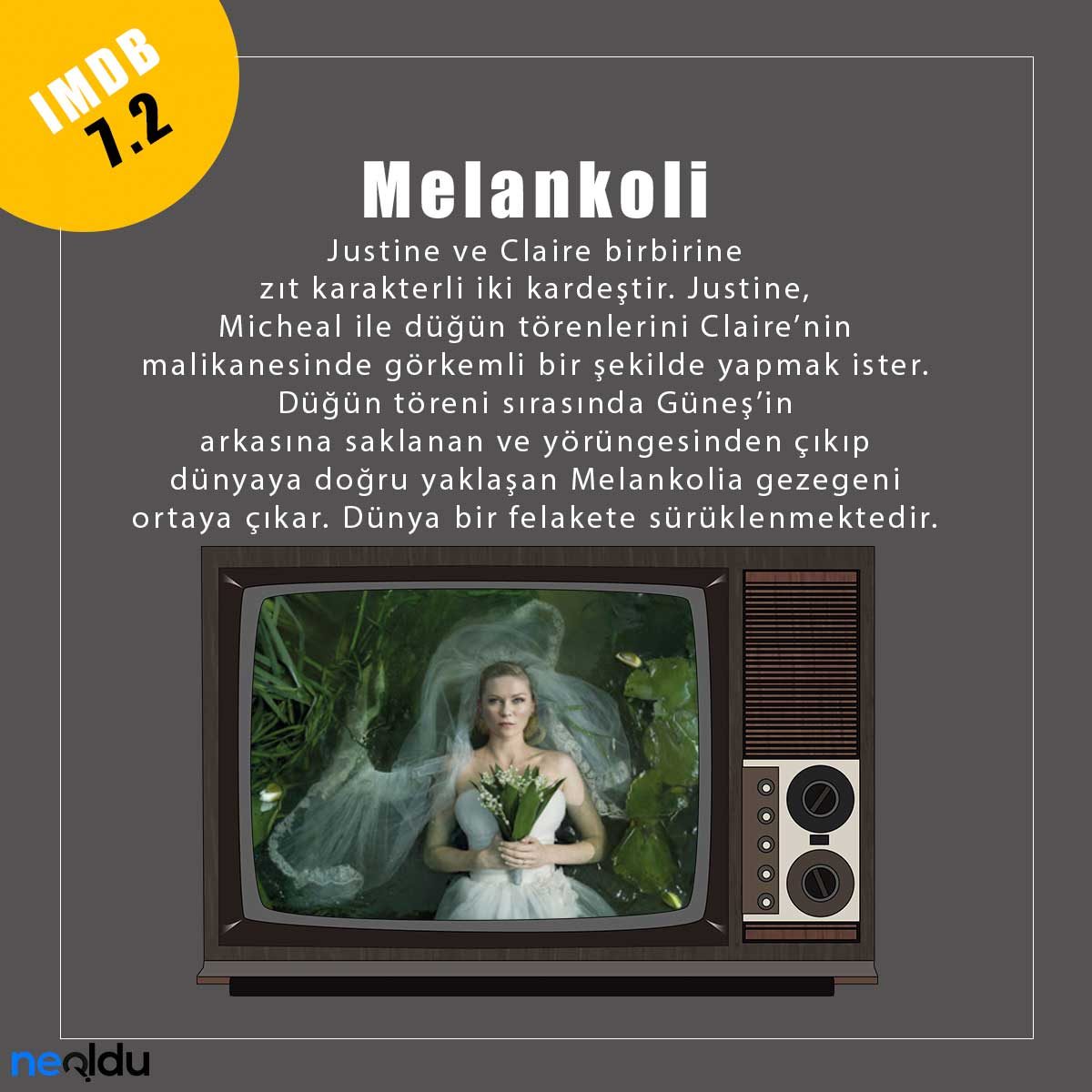
Lars von Trier’s entry is different. It’s not about running away from a comet. It’s about accepting it. A comet the size of a planet is on a collision course with Earth. The film explores how different characters react to the end of the world. Some party. Some despair. Some people are just trying to survive their last days. It is melancholic, artistic and deeply disturbing.
I Am Legend (2007) – IMDb 7.2
Space debris is getting closer. And it’s not just going to make a mess on the ground. It’s going to cause a global collapse. That is the premise of a film that leans hard into apocalypse fever. A couple tries to keep their kid and spouse alive before the impact hits. Their only hope? Reach a shelter in Greenland.
The movie is one of the bigger disaster flicks recently. It thrives on tension. You feel the clock ticking.
Here are the details:
- Genre: Sci-Fi, Thriller
- Director: Ric Roman Waugh
- Cast: Gerard Butler, Morena Baccarin, Roger Dale Floyd
- Release Year: 2020
2. Crawl (2019 – IMDb: 6.2)

The evacuation order was clear. Florida was being swallowed by a hurricane, and everyone had to get out. But one young woman refused to leave. She wasn’t running for her life alone. She was looking for her father.
This premise drives Crawl, one of the most tense entries in the natural disaster genre. It’s not just about flooding. It’s about what swims in the dark water. The film pits a home against tides and teeth.
Genre: Horror, Thriller
Director: Alexandre Aja
Cast: Kaya Scodelario, Barry Pepper, Morfydd Clark
Year: 2019
The story unfolds in a submerged house. The water rises. The creatures wake up. The struggle is immediate and visceral. You can feel the pressure building in the walls.
Why Crawl Works as a Disaster Film
People often ask which natural disaster films deliver the highest adrenaline spikes. Crawl answers that by keeping the threat close. The crocodiles aren’t distant monsters. They are in the room with the characters. The tension doesn’t come from wide shots of destruction. It comes from narrow hallways and rising water levels.
Kaya Scodelario plays the daughter who ignores the emergency protocols. Barry Pepper plays the father she must find. Their dynamic adds emotional weight to the physical danger. It’s not just survival. It’s reconciliation in real-time.
The film was released in 2019. Director Alexandre Aja uses claustrophobia as a weapon. The setting is a single location. That constraint forces creativity. Every scene feels urgent.
Only the Brave (2017) – IMDb: 7.6
Shifting from water to fire, Only the Brave tells a different kind of survival story. It’s based on true events. The Grantham Canyon Fire took the lives of the Hotshots. The film honors their bravery without glorifying the tragedy.
IMDb gives it a 7.6. That rating reflects respect for the storytelling. It’s not a blockbuster spectacle. It’s a character-driven drama. The focus is on the men who chose to stay behind.
The film captures the intensity of wildfire suppression. It shows the training. The camaraderie. The heartbreak. It’s a stark contrast to the horror of Crawl. One is fictional terror. The other is historical tribute.
Both films explore human resilience. They show what people do when nature turns against them. In one, they fight monsters. In the other, they fight flames. The outcome is different. The spirit is the same.
33 (2015) – IMDb: 6.9
The film depicts the harrowing experiences of 33 Chilean miners who were trapped about two miles underground. This is a true story of resilience when the world above has given up hope.
- Genre: Drama, Biography
- Director: Patty Jenkins
- Actors: Antonio Banderas, Juliette Binoche, Rodrigo Santoro
- Date: 2015
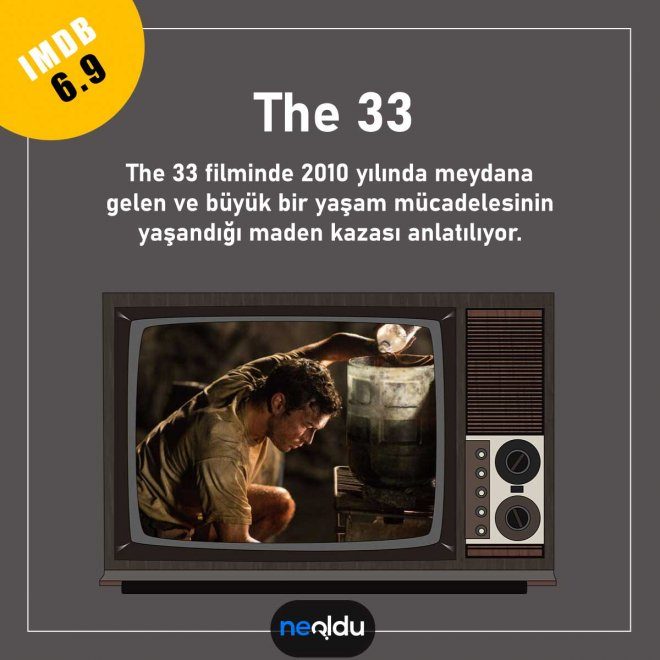
The 2010 Atacama Desert disaster wasn’t just a statistic. It was a cage match against the earth itself. Thirty-three men went down. Sixty-nine days passed. Only one came out.
Patricia Riggen’s 2015 drama The 33 doesn’t shy away from the suffocating reality of that experience. The film tracks the grueling timeline of the underground ordeal. You feel the weight of the rock above them. You hear the silence.
Antonio Banderas leads the cast, bringing a grounded intensity to the role of Luis Urzúa. He’s the shift supervisor who stays calm when everything else is falling apart. Rodrigo Santoro plays Flavio Lozada, a man whose faith is tested by darkness. Juliette Binoche appears as Anne Gearhart, a journalist who becomes a lifeline for the families waiting above. She bridges the gap between the claustrophobic pit and the desperate world outside.
This isn’t a Hollywood action flick. It’s a biographical historical drama rooted in hard facts. The rescue operation was a logistical nightmare. Engineers worked around the clock. The drill had to be precise. One wrong move could have sealed their fate for good.
The film highlights the human spirit in its rawest form. It shows how ordinary workers became symbols of global hope. The coordination between the miners, the engineers, and the families was fragile. Tension ran high. Miscommunication happened. But the shared goal kept them moving forward.
Why does this story still matter? Because it proves that even in the deepest dark, connection survives. The 33 didn’t just survive; they maintained their humanity against impossible odds.
Rating: 6.3/10 on IMDb.
5. Into the Storm (2014) – IMDb: 5.8
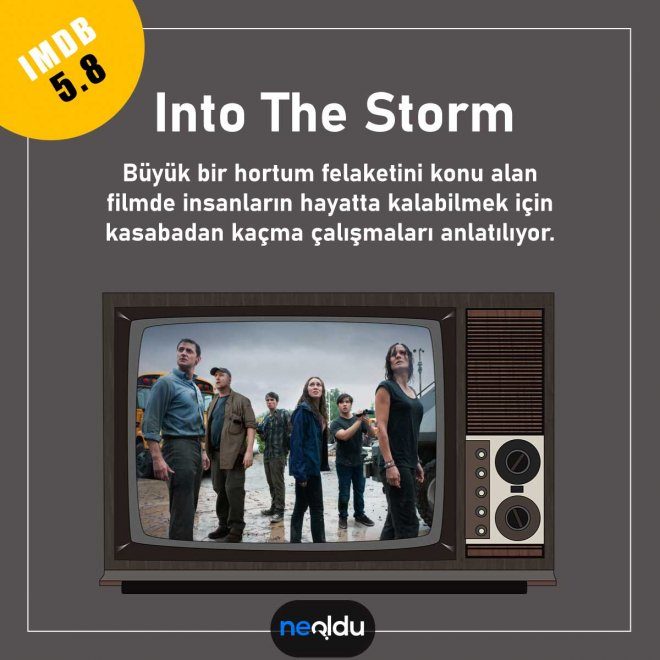
鉄球のような勢いで竜巻が発生し、静かな町が瓦礫の野原と化し、生き残ることが唯一の通貨となる。 一か八かの ゲリリム映画 のファンにとって、ここでの光景は否定できません。 画面が振動します。 鼓膜を引き裂くサウンドデザイン。 それは混沌としていて、騒がしく、容赦のない混沌です。
ただ逃げたいだけの登場人物もいます。 空が緑に染まる中、彼らは車や家族、その他命を繋ぐものを急いでつかみました。 しかし、その中には別のグループもいます。 彼らは逃げませんでした。 彼らは嵐を追っている。
彼らは嵐を追う者たちだ。 彼らは災害をチャンスとして捉えています。 彼らは史上最大の竜巻をフィルムに収めたいと考え、完璧なショットを撮るためにあらゆる手段を講じました。 これは危険な強迫観念です。 この物語は代償に見合う価値があるだろうか、と自問する必要があります。
この映画はまさにこのジャンルが約束するものを提供します。 破壊描写を控えることはありません。 実際的な効果により、恐怖が具体的な現実に定着します。 風を感じます。 あなたは恐怖を感じます。
ジャンル: スリラー、アクション
監督: スティーヴン・クエール
キャスト: リチャード・アーミテージ、サラ・ウェイン・キャリーズ、マックス・ディーコン
発売年: 2014
Why Storm Chasers take risks
The power relationship between those fleeing and those chasing the tornado creates tension in the center. The other side is fighting for its life. Another is fighting for his inheritance. Which approach is scarier: the immediate threat of death or the slow build-up of obsession?
The film explores this through its characters. You support survivors. しかし、追跡者たちの気持ちも理解できます。 They are driven by something deeper than curiosity. This is the need to witness the raw power of nature. 世界が崩壊する瞬間を記録しようとするのです。
This is not a story of good and evil. This is about people’s response to disasters. Some freeze. 一部は戦います。 Some looked away. Some look directly into the eye of the storm.
The real star here is the visuals. It’s not just a CGI display. These are immersive tools. Tornadoes don’t look like cartoon monsters. それは現実的な大気現象のように見えます。 It looks like it’s falling into the backyard.
This detail is important. これにより、 stakes が個人的なものに感じられます。 When the roof comes off, it feels like it’s happening to you. This is the power of a well-made disaster movie. It bridges the gap between fiction and reality.
キャストの演技もそれを支えています。 Richard Armitage brings a weary determination to his role. Sarah Wayne Callies adds emotional weight. Max Deacon shows the intensity of the young generation in the crossfire. They are more than just a face on a screen. They are people trying to understand things that don’t make sense.
The pace is relentless. There’s no time to catch your breath. The storm is moving fast. The character moves faster. Editing equals chaos. Cut fast. Shake the camera. Confusion is part of the experience.
This movie should not be watched to relax. それを見て、強烈な何かを感じることになります。 A reminder of how fragile our shields are. 地面がどれほど急速に崩れ去るか。
There are no easy answers to the ending. Survival is not guaranteed. Luck is more important than skill. This is a harsh reminder that nature doesn’t care about our plans. 私たちの準備。そして希望。
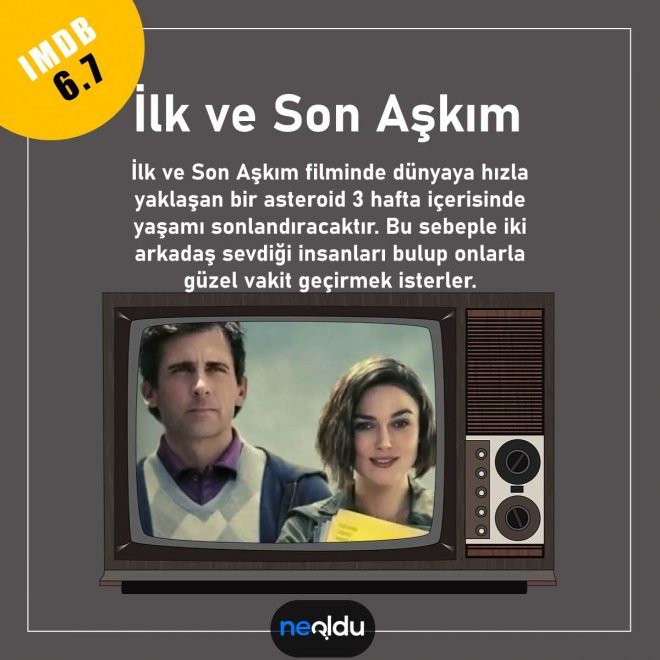
7. Contagion (2011) – IMDb: 6.7
The last article ended the story with a bittersweet farewell. contagion also brings impending doom, but takes away the romance. It is cold. Clinical. It’s a medical thriller that feels more like a documentary than a movie, which you might not dare to watch. This 2011 film directed by Steven Soderbergh describes exactly how a global pandemic works. It’s not just about people dying. This shows that the supply chain is collapsing. The stock market collapsed. Governments fail.
The story revolves around a virus called MEV-1. Jumping from bats to pigs to humans. And they jump from person to person. Quickly. The cast includes some heavyweights, but two names anchor the chaos. Kate Winslet plays a CDC scientist racing against time to find a cure. Matt Damon plays Mitch Emhoff, a father whose wife dies quickly. It is her job to protect the little children as society crumbles around her.
The film is known for its realistic approach. Soderbergh consulted epidemiologists before writing a single scene. The result is a frighteningly accurate description of panic. You see how quickly trust can be lost. A simple cough becomes a death sentence. People hoard food. They blame their neighbors. This movie asks some scary questions. “If you knew the end was coming, what would be the first thing you would do?”
Important details:
* ** Director: Steven Soderbergh
* Cast: Matt Damon, Kate Winslet, Jude Law, Gwyneth Paltrow
* Year: 2011
* Genre:** Thriller, Drama
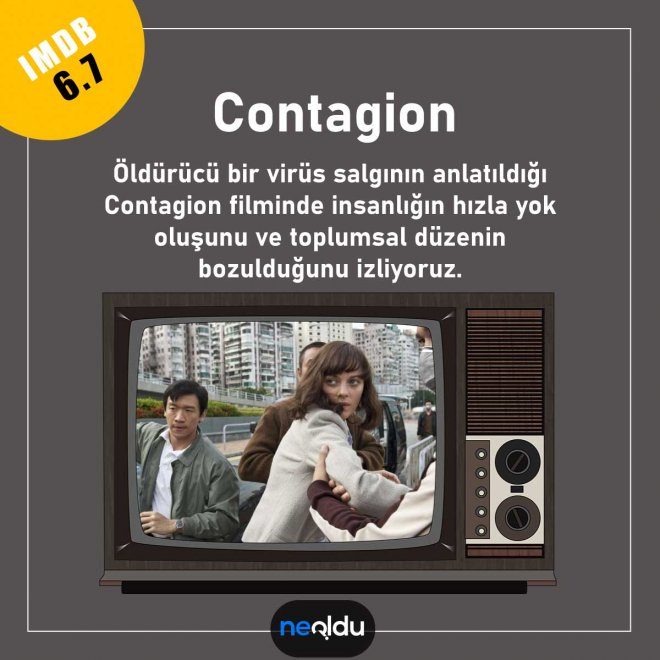
The Anatomy of an Outbreak
Steven Soderbergh’s Contagion doesn’t just show a virus killing people. It shows the social order unraveling in real-time. The premise is stark: a lethal pathogen threatens humanity, and science races against time for a cure while panic eats away at the foundations of civilization.
This 2011 thriller stands out among epidemic-themed movies for its unsettling realism. It avoids monster-movie tropes. Instead, it focuses on the logistics of failure. How does supply chain collapse? When do governments lose control? The film answers these questions with clinical precision.
The cast anchors the chaos. Matt Damon plays a everyman father trying to keep his family safe. Marion Cotillard portrays a scientist working under impossible pressure to develop a vaccine. Laurence Fishburne leads the CDC response team, navigating political and scientific minefields.
Why It Resonates Now
Critics praised the film for its documentary-like atmosphere. It feels less like entertainment and more like a simulation. The sound design is sparse. The pacing is relentless. This creates a sense of dread that lingers long after the credits roll.
Soderbergh reportedly consulted with epidemiologists and virologists to ensure the transmission mechanics were accurate. The result is a narrative that respects the science. It doesn’t dumb down the complexity of viral spread.
The movie explores how quickly trust erodes. Neighbors turn on each other. Governments hoard resources. The breakdown of order isn’t instantaneous. It’s a slow creep, marked by small failures that compound into catastrophe.
The Cast and Crew
- Director: Steven Soderbergh
- Starring: Marion Cotillard, Matt Damon, Laurence Fishburne
- Genre: Drama, Sci-Fi, Thriller
- Release Year: 2011
The ensemble cast works because no single character dominates the story. The virus is the true protagonist. The humans are just variables in a spreading equation.
Critical Reception
While not a box office giant, Contagion found a dedicated audience. It resonated deeply with viewers who appreciate grounded sci-fi. The film’s depiction of information spread—both factual and false—feels eerily prescient.
It remains a reference point for discussions about pandemic preparedness. Public health officials have cited it in training scenarios. Its value lies in its ability to visualize the invisible threat of a novel pathogen.
The ending offers no easy comfort. It suggests that while we may survive the immediate crisis, the systemic vulnerabilities remain. The film leaves you with a chilling question: if it happens again, will we be ready?
The silence in the theater often speaks louder than the plot. Viewers sit in the aftermath, thinking about their own fragile routines. That’s the power of the film. It doesn’t just entertain. It warns.
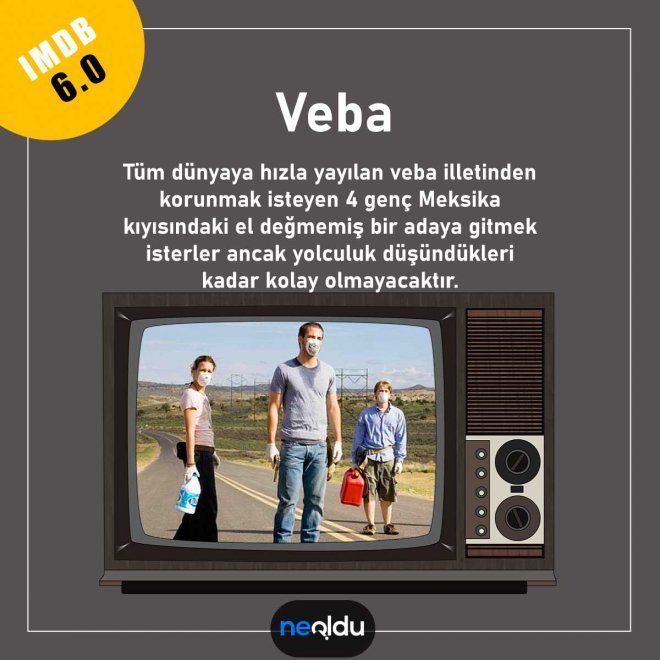
Four young people are running for their lives, fleeing a deadly plague that is spreading across the globe. Their only hope? An isolated island off the coast of Mexico. But the journey there is a nightmare. They have to navigate through cities gripped by the disease and face the desperate, chaotic crowds left in its wake. It’s a tense, high-stakes survival story that stands out in a crowded field of pandemic thrillers.
The genre mixes drama with horror, directed by the Pastor brothers, Àlex and David. The cast includes Chris Pine, Piper Perabo, and Lou Taylor Pucci. The film hit theaters in 2009.
9. Geostorm (2017) – IMDb: 5.3
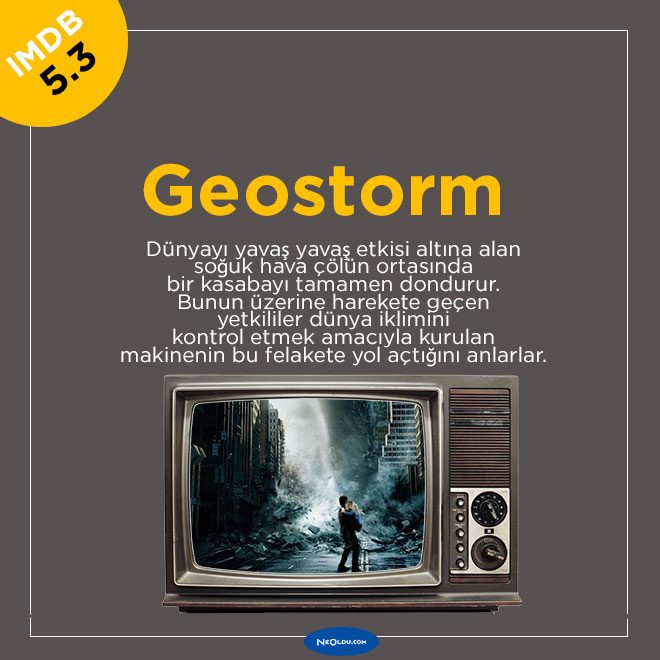
This starting point seems to be the ultimate assurance of humanity. A global network of satellites designed to control Earth’s weather. We should be able to stop hurricanes, end droughts and keep the planet healthy. Then, the system glitches. Suddenly, instead of control, you get chaos. Snowfalls in the Sahara. Tornadoes in London. The climate system doesn’t just break; it turns against us.
This is Geostorm, a 2017 sci-fi action film that tries to balance scientific language with pure spectacle as a high-stakes premise. This is not subtle. It’s loud and fast and completely focused on the idea that our technological fixes may be the cause of our demise.
The film stars Gerard Butler as Jack Hall, an experienced astronaut and former Weather Control Network test pilot. When the system goes wrong, he is pulled back into orbit to find out why. He is joined by his son (Jim Sturgess), the local chief investigator, and Abbie Cornish as a key government official trying to save the world from panic. They don’t just have to fight the storm; They fight a conspiracy that uses the weather as a weapon.
Why Geostorm Fits the Natural Disaster Genre
If you’re looking for a “natural disaster movie” that focuses less on emotional character development and more on destruction, this is it. It has the same DNA as movies like The Day After Tomorrow, but with a technical twist. The visuals are also amazing, depicting an ice age attacking a tropical city and a super hurricane tearing the city center apart.
The chemistry between Butler and Sturgess is the emotional backbone, but the real appeal is the “how did this happen?” part. Mystery. Is it a hacker? A rogue AI? Or just bad engineering? The movie doesn’t give enough time to think about the science before the next explosion.
The Verdict on the 2017 Release
It’s a B-movie with an A-list cast. You won’t find a detailed philosophical discussion of climate change here. Instead, we see fast-paced conversations, satellite zooms, and wind-flattened cities. This is a popcorn movie. If you want to see Gerard Butler staring out into a blizzard and looking tough, watch this. Don’t expect “interstellar” depth.
10. “colony” (2013) – IMDb: 5.3
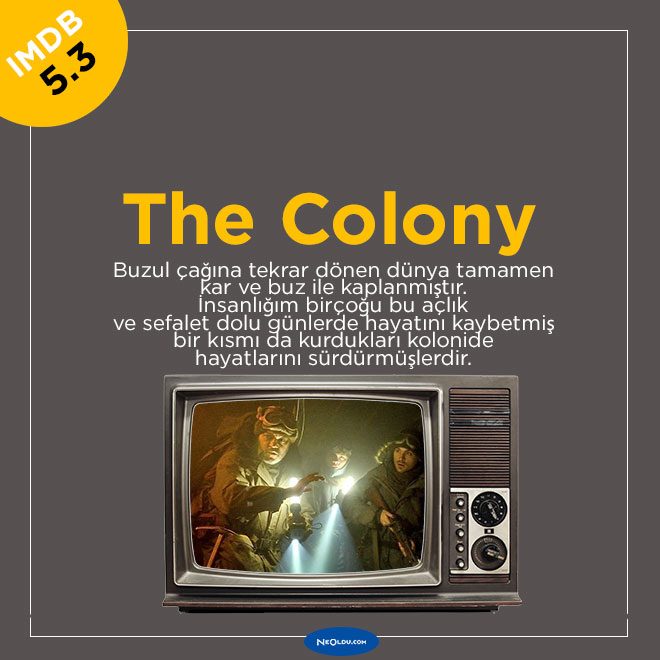
The ice is coming back. Not slowly. It’s a full-scale planetary reset that turns Earth into a frozen wasteland where survival is the only law. In this harsh, new environment, scattered communities huddle together in fragile colonies, trying to keep the darkness at bay. But they aren’t alone. Something else is out there. Something worse.
This isn’t just about cold. It’s about the breaking point of the human spirit when the ground beneath you freezes solid. The film doesn’t shy away from the gritty reality of adapting to a world that wants you dead. It’s brutal. It’s loud. And it forces you to watch people make impossible choices just to see another sunrise.
The Cast and Crew Behind the Freeze
Jeff Renfroe directed this chilling tale, keeping the tension high and the action relentless. He’s known for working within genre constraints to deliver punchy, atmospheric thrills. Here, he leans hard into the visceral horror of exposure and the paranoia that sets in when trust is a luxury no one can afford.
The ensemble cast brings weight to the story. Laurence Fishburne anchors the film with his usual stoic intensity, playing a character who has seen too much and still has to keep going. Kevin Zegers adds a layer of youthful desperation, while the late Bill Paxton brings his signature rugged charm to a role that demands both physical toughness and emotional vulnerability. Their chemistry feels lived-in, not manufactured.
Released in 2013, the film taps into a very specific cultural fear. It’s not just a monster movie or a disaster flick. It’s a survival drama wrapped in the aesthetics of a post-apocalyptic thriller. The setting is stark, the stakes are lethal, and the pacing never lets up.
11. Pompeii (2014) – IMDb: 5.5
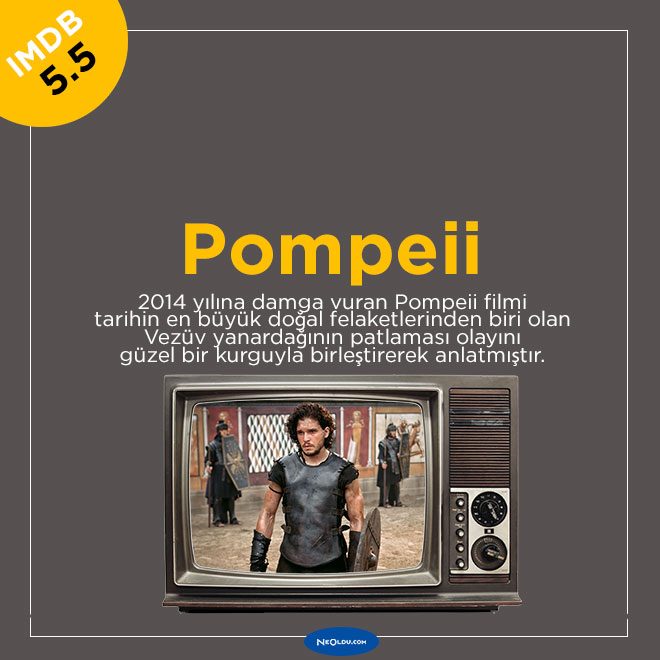
The eruption of Vesuvius remains one of the most destructive volcanic events in history. Not only did it destroy Pompeii; It buried it. Hidden beneath the ash and lava was director Paul W.S. Martin. Anderson’s decision to bring it to the screen. He focuses on an unlikely romance between a slave and an aristocratic woman. This angle gives the disaster a human heart, even if the execution is just a popcorn spectacle.
For fans of intense action movies, this movie offers exactly what you would expect. This is a fast-paced adventure that prioritizes speed over nuance. The cast includes Kit Harington, known for his role in Game of Thrones, as well as Carrie-Anne Moss and Emily Browning. The chemistry is there, but the real star is the impending doom. Released in 2014, the aim of the film is to capture the scale of the tragedy and at the same time weave a fictional love story to move the plot forward.
The film trades historical accuracy for adrenaline to convey a realistic picture of the day the sky fell.
The structure of the story is simple. You have the privileged woman and the man with nothing to lose. Their paths cross in a world on the brink of collapse. As the mountain begins to rumble, the social barriers they relied on to survive begin to crumble along with the town itself. It’s a classic setup, executed with modern CGI technology that emphasizes the sheer horror of a volcanic eruption.
The romance provides the emotional backbone and the action scenes provide the spectacle. Anderson knows how to create chaos. The film does not waste time with long expositions. It drops you into the rising tension and keeps the pace relentless until the final scene. For viewers looking for a historical disaster movie that focuses on entertainment rather than education.
### 2012 (2009) – IMDb: 5.8
Roland Emmerich’s 2012 (2009) offers a different kind of apocalyptic fantasy, moving from ancient Rome to present-day geopolitical tension. It has a 5.8 rating on IMDb, but it’s not trying to be a cinematic masterpiece. It’s going to be a rollercoaster. The premise is simple. The world is coming to an end. Not slowly. Not gradually. In a matter of days.
Emmerich, the world’s king of destruction, returns here. He takes the theories of the end of the Mayan calendar. The film asks a simple question: What would happen if the earth’s crust shifted, causing tsunamis, earthquakes and volcanic eruptions around the world? The answer is a lot of running.
The story revolves around John Cusack’s character, a writer trying to save his family. He secures a spot on an ark, a ship built by a secret society of elite and wealthy people. This is a critique of the class distinction associated with disaster. The rich get saved. The rest… well, they were swept away by 1,000-foot waves.
Why 2012 Stands Out in Disaster Cinema
与许多依赖单一威胁的灾难电影 不同,2012 将一切都抛给了观众。 你
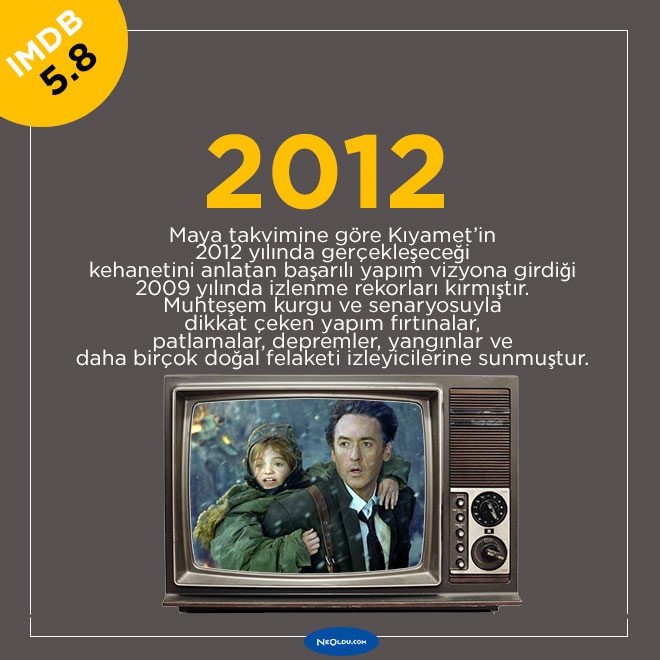
The idea that the world would end in 2012 because of the Mayan calendar wasn’t just a party trick. It became a blockbuster. Roland Emmerich took that superstition and turned it into a high-octane disaster movie. The film arrived at a time when everyone was nervously checking their horoscopes. It promised exactly what the title suggested: the end of the world.
Volcanoes erupt. Mega-quakes shake the crust. Tsunamis swallow cities. The on-screen chaos happens fast. There is no time to breathe. This 2012 Mayan apocalypse movie relies on relentless pacing. It is pure action and sci-fi spectacle.
Here is the breakdown of the chaos:
- Genre: Action, Sci-Fi
- Director: Roland Emmerich
- Cast: John Cusack, Chiwetel Ejiofor, Amanda Peet
- Release Year: 2009
13. Noah (2014) – IMDb: 5.8
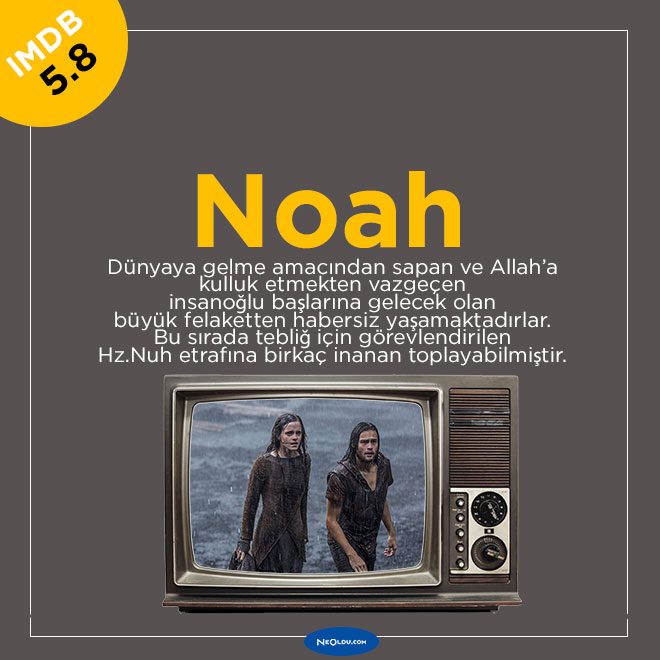
人性正在从内到外腐烂。 这就是诺亚在洪水上涨之前所面临的严峻现实。 上帝给族长一个直接的命令:建造一艘方舟。 这不仅仅是生存问题。 这是关于判断力的。 洪水即将来临。
达伦·阿罗诺夫斯基从不手软。 他执导的这部奇幻冒险片的视觉风格极具冲击力。 图像令人震惊。 它将圣经神话置于一种坚韧、几乎压抑的气氛中。
演员: 罗素·克劳、詹妮弗·康纳利、艾玛·沃特森
导演: 达伦·阿罗诺夫斯基
发布年份: 2014 年
类型: 奇幻、冒险
这部电影在奇观与沉重的道德分量之间取得了平衡。 这不是一个简单的儿童故事。 克劳给这个角色带来了狂躁的强度。 康纳利提供了情感深度。 沃森挑战了故事僵化结构的现状。 你看着雨开始下,你感受到它的重量。
Why San Andreas is important as a disaster movie
Fast forward to 2015 and we are faced with another shocking event. The San Andreas Fault is more than just a line on a map. It’s a ticking clock that looks like something out of a Hollywood disaster movie.
Title: San Andreas
Year: 2015
IMDb rating: 6.1
The film is strongly based on spectacles. This begs the obvious question: what if something big happened today? The answer is confusion. Pure, pure chaos.
The story revolves around Ray Gaines played by Dwayne Johnson. He is a rescue helicopter pilot. His family was scattered all over Los Angeles when the earthquake hit. The goal is simple. Go to your family. Please bear with the aftershocks. Save the day.
This is a classic dish. But it delivered on its promise of destruction. The CGI is top notch. Fingered buildings look very real. The shock waves of the tsunami took on a frightening sense of reality. The vibration is transmitted through the screen.
かなりの大惨事です
ノアとサンアンドレアスはどちらも大災害を利用して人間の回復力を探求しています。しかし、彼らのやり方は異なります。
ノアは中にいます。 それは信仰、狂気、そして救いの重荷についてです。この災害は聖書的なものです。 これは道徳的です。
サンアンドレアスは外部です。 それはアクション、アドレナリン、そして身体的な危険についてのものです。この災害は地質災害です。 それはすぐです。
なぜ私たちは救われる資格があるのかと尋ねる人もいます。 別の人は、自分自身を救うことができるかどうか尋ねました。 どちらも楽しいです。 どちらにも欠陥があります。 しかし、彼らはコントロールを失うことへの恐怖を表現しています。
サンアンドレアス断層はカリフォルニアを縦断しています。 ここは本当の場所です。 これにより、恐怖の層が追加されます。 私たちは、このようなことが起こり得ることを知っています。 そうならないことを祈りましょう。 ジョンソンは我々が望むヒーローを演じている。 強い。 信頼性のある。 壊れない。
サポートキャストには、カーラ・グジーノ、アレクサンドラ・ダダリオなどが含まれます。彼らは訴訟に賭け金を持ち込む。 それらがなければ、それはただの爆発です。 彼らにとって、それは時間との勝負だ。
Visual scale
Aronofsky’s “Noah’s Ark” combined practical effects and CGI to create a world that felt like you were living inside it. The sheet is a character in itself. It’s huge. Explain in detail. You can see the grain of the wood. You can feel the moisture.
exist *
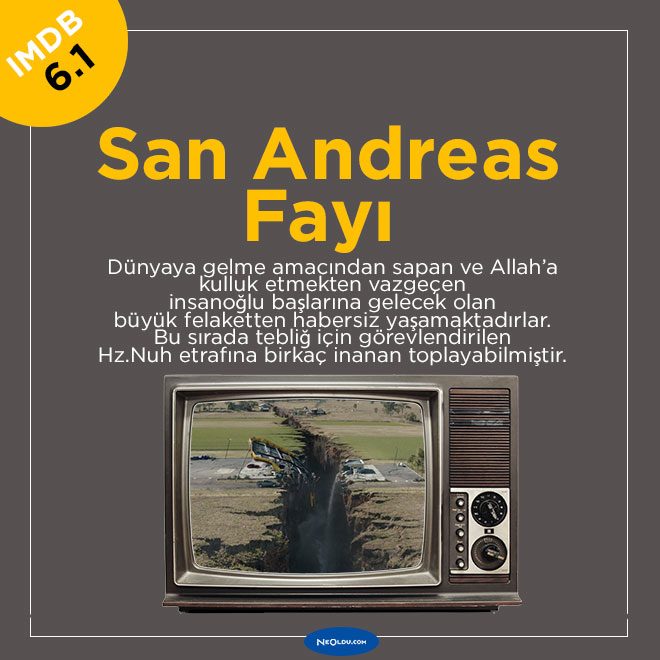
If you’re looking for high-stakes survival in the harshest of conditions, the mid-2010s delivered some heavy hitters. Take Brad Peyton’s 2015 earthquake thriller. Dwayne Johnson stars as a search and rescue pilot named Tom who must navigate the devastated California landscape to save his family. Focusing on the chaos caused by a magnitude 9 earthquake, the film offers visceral horror and adrenaline-pumping action that will captivate adventure lovers. Carla Gugino and Alexandra Daddario support this tale of love and loss.
15. Perfect Storm (2000) – IMDb: 6.4
Before the digital age of instant disaster information updates, there was The Perfect Storm. Released in 2000, the film is still the benchmark for disaster movies, despite only having an IMDb rating of 6.4. Based on the non-fiction book by Sebastian Junger, this film remains a benchmark of the F/V Andrea Gail, a commercial fishing vessel that encounters rough seas and a historic storm off the coast of Gloucester, Massachusetts.
Why is it still relevant? Because it captures the unpredictability of the ocean in a direct and brutal way. The film doesn’t just show the storm. This film introduces us to the men behind the wheel, their families and the industry where they must risk everything for a catch. Diane Lane and Mark Wahlberg star in this film that uses practical effects and early CGI to create a sense of dread that lingers long after the credits roll. It reminds us that sometimes the most dangerous enemy is not a villain with a gun, but a wave with a name.
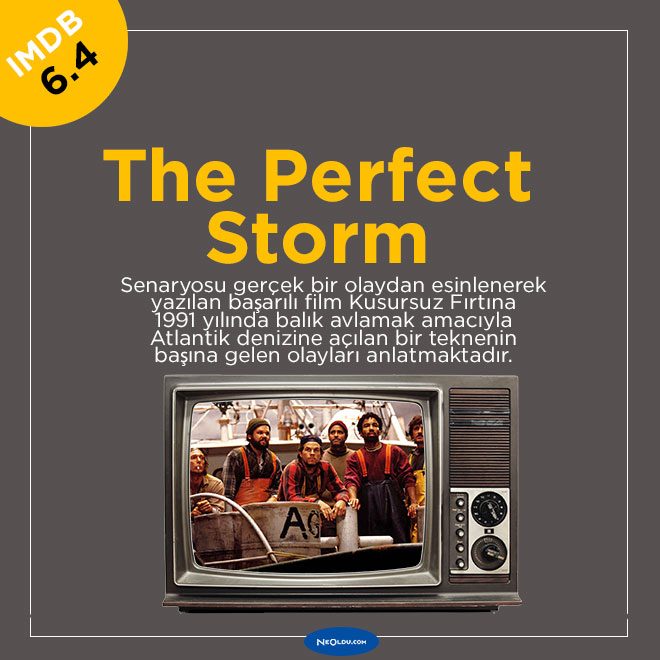
The story kicks off in 1991, when a fishing crew heading out into the Atlantic for a standard haul gets swallowed by a hurricane of biblical proportions. It’s a gritty, realistic look at nature’s cruelty. The film, directed by Wolfgang Petersen, doesn’t just show a storm. It shows the sheer, terrifying weight of the ocean against human fragility.
It’s an action-thriller. A survival epic.
The cast includes George Clooney, Mark Wahlberg, and Diane Lane. It came out in 2000. The movie holds its own among the best thrillers ever made. You can still feel the wind. You can still hear the ice.
The science fiction deluge
A few years later, the stakes got higher. Or at least, more cinematic.
16. The Day After Tomorrow (2004) – IMDb: 6.5
Here, the weather isn’t just bad. It’s apocalyptic.
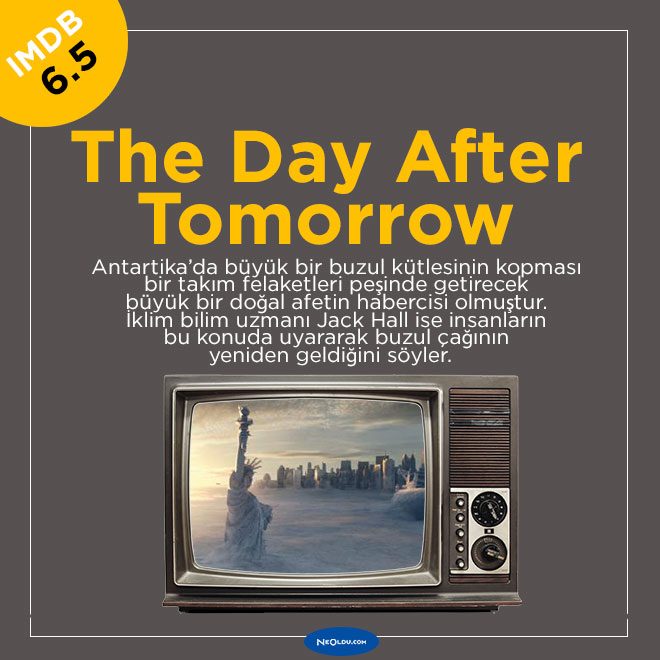
The story kicks off in Antarctica, where a massive chunk of ice shelf calves off into the ocean. This isn’t just a scenic disaster; it’s a trigger. The freshwater influx disrupts the Atlantic Meridional Overturning Circulation. The result? Global temperatures plummet. We are talking rapid onset of a new ice age. Jack Hall, an climatologist, sees the signs before anyone else. He knows the storm coming is unlike anything in recorded history. His personal stake in this global catastrophe? His son, Sam, is stuck in New York City when the first blizzards hit.
The race against time begins. Jack has to cross a continent of frozen chaos to reach the East Coast. The movie blends high-concept science fiction with pure adrenaline-fueled adventure. Visually, it was groundbreaking for its time. The swirling tornadoes over cities, the sudden freezing of harbors—these images stuck in the collective consciousness. It’s not just a disaster movie; it’s a family drama wrapped in a climate thriller.
Key Details on the 2004 Disaster Epic
- Genre: Sci-Fi, Adventure, Disaster
- Director: Roland Emmerich
- Cast: Jake Gyllenhaal, Dennis Quaid, Emmy Rossum
- Release Year: 2004
Then, just as the ice was settling in our memories, the sky opened up.
17. Armageddon (1998) – IMDb: 6.6
If The Day After Tomorrow was about the Earth fighting back, Armageddon was about us fighting the sky. A decade earlier, Bruce Willis led a team of roughneck oil drillers to space. Their mission? Save the planet from a dinosaur-sized asteroid. It’s pure Hollywood spectacle. No subtle science here. Just big explosions and bigger egos.
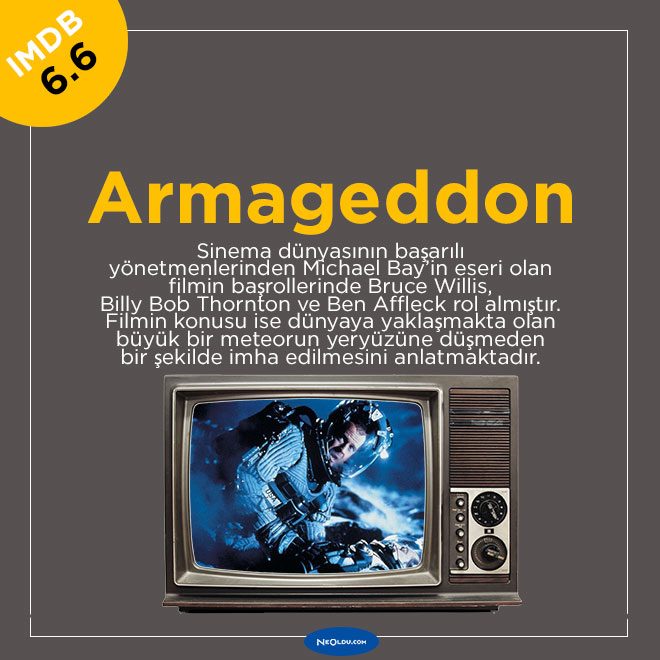
マイケル・ベイの「アルマゲドン」は単なる映画ではありません。それは文化的な遺産です。 それは 1990 年代後半の行き過ぎた文化の産物です。 物語の前提は純粋な災害映画の金字塔だ。巨大な小惑星が地球に衝突し、地球規模の絶滅の危機に瀕している。 解決策は何でしょうか? 石油掘削業者のチームを宇宙に送り、岩石を半分に分割します。 ばかばかしいし、うるさいし、効果的です。
ブルース・ウィリスがタイトルロールで主演し、90年代の映画界の著名人から支持を受けています。 ベン・アフレックが陰気な若いパイロットを演じ、ビリー・ボブ・ソーントンがgritty intensityをもたらしている。 この映画は、その迫力あるアクション シーンと感情的なストーリーで知られ、SF 史におけるその地位を確固たるものとしています。
基本:
- ジャンル: SF/アクション
- 監督: マイケル・ベイ
- キャスト: ブルース・ウィリス、ビリー・ボブ・ソーントン、ベン・アフレック
- 発売年: 1998
18. The Wave (2015) – IMDb: 6.7
The The Wave (2015) moves from space to society and offers a frightening picture of how quickly democracy can be eroded. Based on the true story of the Third The Wave Experiment at a high school in California, the film tells the story of a history teacher who tries to demonstrate the power of an authoritarian movement. What started as a classroom exercise quickly spirals out of control, showing how easily people can be manipulated with promises of community and order. This is a tense psychological thriller that feels more and more relevant as time goes on.
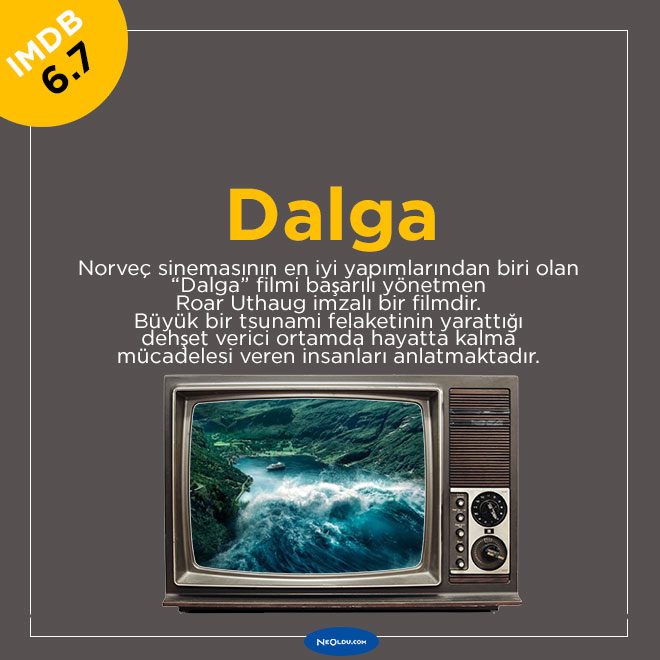
Tidal terrorism in #Norway: the true story behind the waves
Norwegian cinema has a way of turning geography into a weapon. For example, the film The Wave (or Bølgen) not only hints at disaster, but also simulates the suffocating weight of one. The film is based on the chilling premise of a landslide that causes a tsunami that threatens the entire city. The stakes are tangible, immediate and terrifyingly believable.
Director Roar Uthaug handles the action and thriller elements sharply. He doesn’t rely on flashy computer graphics to achieve spectacle. Instead, he focuses on realism. These scenes are impressive because they convey a sense of possibility. The characters get trapped, and the tension is built not by jump scares, but by the inevitability of natural forces.
The actors anchor this chaos in human emotions. Performances by Kristoffer Joner, Thomas Bo Larsen and Ane Dahl Torp imbue this high-concept disaster with relatable fear. they are not superheroes. They are parents, officials and neighbors trying to understand this illogical situation. Released in 2015, this film proves how Nordic horror combines scientific validity with visceral fear.
This is a masterclass in suspense. Why do some disasters feel more real than others? The Wave answers this question by stripping away the supernatural. All that remains is water, rock and time.
19. World War Z (2013) – IMDb: 7.0
World War Z moves from geological horror to global horror. Starring Brad Pitt, this zombie epic portrays the undead as an overwhelming force of nature rather than a slow-burning curse. Think of it more like a war documentary than a horror movie.
This film is famous for its grand scale. The infection is not limited to one city. Gerry Lane (Pitt) follows the outbreak of the epidemic on the continent from Philadelphia to Jerusalem in South Korea and finally to the Philadelphia bunker. The scope is massive. The budget is huge. The result is a film that feels more like a blockbuster than a niche genre entry.
Critics were divided, but audiences embraced it. The IMDb rating is 7.0. It’s not a cinematic masterpiece, but it’s effective entertainment. Zombies move very fast. They swarm. They act like a hive mind. This was a departure from the solitary, shambling infected of previous franchises. The threat here is collective.
The history behind the production of this film is almost as famous as the film itself. Extensive rewrites and reshoots led to a dramatic change in tone. The original ending was darker, more bleak. The released version leans towards heroism. Does this damage the film? Maybe. But it also makes it accessible. It’s a ride.
Why is World War Z so resonant? Because it touches on a particular fear: the fragility of our global systems. What happens when the power grid goes down, when borders close, when supply chains break? The film asks this question, but doesn’t offer a comfortable answer. Ends with a warning. It is not a resolution. This is a warning.
That’s the point. The threat never really goes away. It just retreats.
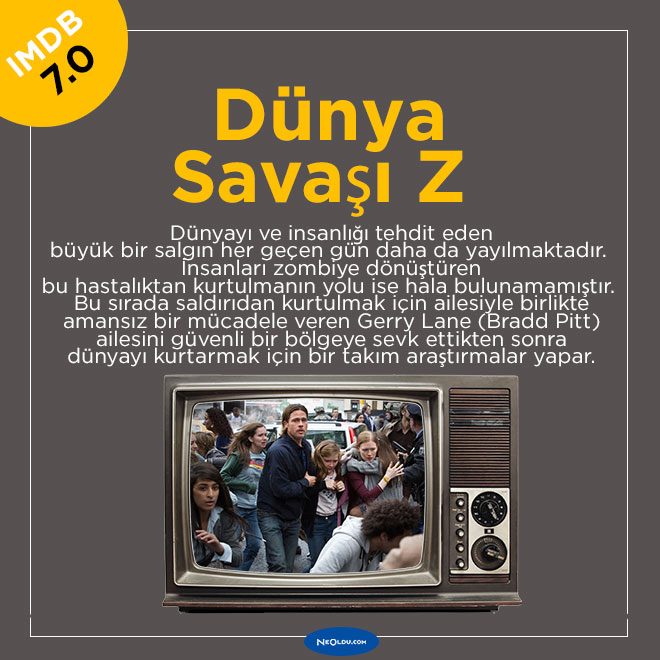
We’ve seen this metaphor before. The rapidly spreading virus is turning our neighbors into mindless predators. But rarely do attacks come with such ferocious speed and terror as World War Z. It’s not just about bloodshed. It’s the scale. panic. Infections seem to defy logic and spread across borders like wildfire.
Brad Pitt’s Gerry Lane is not a soldier. He is a former UN researcher. This distinction is important. He’s a man trying to keep his family safe in a crumbling world, and he’s forced to explore the world to find a cure. The film moves. It’s relentless. Director Marc Forster understands that excitement comes from speed, not just jump scares.
The cast anchors the chaos. Mireille Enos plays a wife who holds her emotional center together as the world burns. Elyes Gabel adds to the scientific urgency. Released in 2013, the film created its own niche in the sci-fi action genre. It’s based on more than just a loose retelling of the source material. It creates a visual language for modern disasters.
The atmosphere is thick with dread. You feel the weight of the collapsing societies. The action scenes are carefully choreographed to feel more desperate than heroic. The balance between personal stakes and global catastrophe is what keeps it relevant. This is one of those rare disaster movies that makes you think about your neighbors a little differently.
The Legacy of the Infected Hordes
《僵尸世界大战》在众多僵尸电影中脱颖而出的原因在于它对感染者的治疗。 他们不是步履蹒跚、缓慢的目标。 他们是一群。 有目的的生物武器。 这一选择立即增加了赌注。 生存并不在于射击,而在于射击。 这是关于奔跑、隐藏和智胜不肯停下的潮水的故事。
这部电影的成功在于它能够将荒谬的事物植根于人类的恐惧之中。 皮特的角色是由父爱驱动的,这种简单的动机催生了复杂的情节。 这提醒人们,即使面临灭绝,人们仍然试图拯救他们所爱的人。
Everest (2015) – IMDb: 7.1
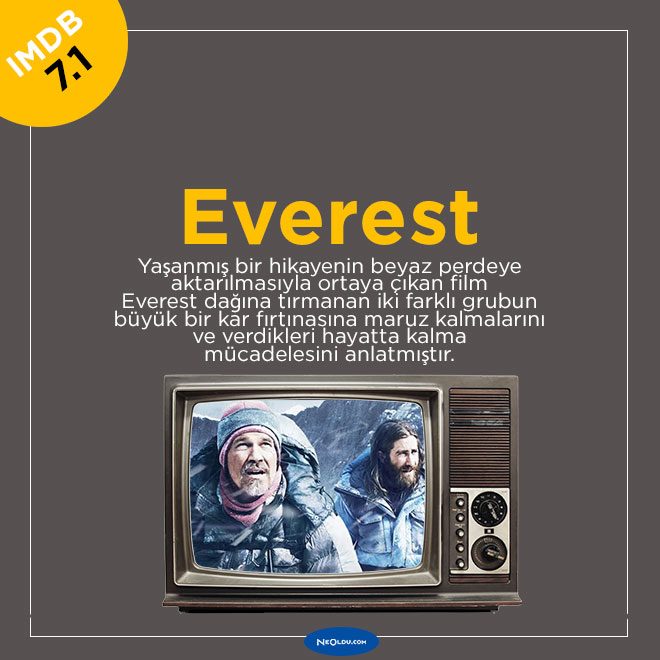
Far from the undead, we found ourselves on the roof of the world. Everest brings a different kind of terror. Not supernatural. The kind that comes from thin air, freezing winds, and human error.
An IMDb score of 7.1 reflects an solid, if somewhat conventional, reenactment of the 1996 disaster. This is a film about ambition and nature’s indifference. The mountain doesn’t care about your plans. It doesn’t care about your gear. It just is.
The actors’ performances emphasize vulnerability rather than heroism. We think of climbers as individuals climbing a slope, each with their own baggage. The cinematography captures the brutal beauty of the Himalayas, and the landscape feels like a character in itself.
This is in stark contrast to the urban chaos of World War Z. Here the threat is silent. It’s the cold. The altitude. Decisions are made in seconds. This movie reminds us that nature is the ultimate boss. And it never misses.
21. Melancholia (2011) – IMDb: 7.2
Baltasar Kormákur’s “Everest” packs no punches. Based on true events. Two competing mountain climbing teams aim for the top of the world. A heavy snowstorm suddenly hit without warning. Survival becomes your only goal. This movie is a combination of adventure and heavy drama. The result is visceral. I feel cold. You feel the fear.
The collision of the planets of melancholy
Change gears completely. I fell to number 21. The genre shifts from physical endurance to existential dread.
Title: Melancholia
Year: 2011
IMDb rating: 7.2
A film directed by Lars von Trier. This is not a story about climbing a mountain. It’s about the end of the world. A rogue planet called Melancholia, to be exact. It is on a collision course with Earth. Physics is accurate. Destruction is inevitable.
The film splits its focus. We have two different views on the end of the world. One character try to maintain a fragile sense of normalcy. Another embraces chaos. Which approach is more sane? Maybe neither. Maybe both.
Why Melancholia stands out
视觉上令人惊叹。 冯·提尔使用慢动作和广角镜头让灾难变得亲密。 音乐很沉重。 Gustav Holst’s《行星》强调了即将发生的崩溃。 令人难以忘怀。
表演具有分量。 克尔斯滕·邓斯特饰演贾斯汀。 早在地球到来之前,她就在与抑郁症作斗争。 她内在的崩溃反映了外在的崩溃。 约翰·赫特饰演父亲。 他试图计划一场告别晚宴。 这很尴尬。 这很痛苦。 这是人类。
Critical reception and legacy
批评者意见不一。 有些人觉得它很自命不凡。 其他人称其为杰作。 邓斯特凭借该片获得了戛纳电影节最佳女主角奖。 2011 年的视觉效果是开创性的。它们至今仍然有效。
这是一个缓慢的燃烧过程。 如果您想要像珠穆朗玛峰 这样的活动,请看看其他地方。 忧郁症 要求您坐得不舒服。 看着时钟滴答作响。 没有救援。 No deus ex machina. 只是结束。
在片尾字幕滚动后的沉默中? 你可能会意识到这个星球一直在你的内心。
I Am Legend (2007) – IMDb: 7.2
Apocalyptic horror has its limits, but none are more unnerving than the loneliness of I Am Legend. The 2007 sci-fi drama starring Will Smith has become a cult classic and currently holds a 7.2 rating on IMDb. This is not just a matter of survival. It tells about the silent fear of being the last person on earth.
The premise is terrifyingly simple. The virus kills 90% of the population. Those that survive are transformed into light-sensitive predators. Smith plays Dr. Robert Neville, the last known immune person in New York City. He hunts infected people during the day and locks himself in his mansion at night. The film perfectly captures the loneliness of the world that ended during his lifetime.
Why does it work so well? It eliminates the noise often found in action movies. There is no army. There is no government. Only a man and his dog fight against the approaching darkness. Although the science is loose, it provides an excellent background for psychological unraveling. Neville tries to cure the plague, but the real battle is keeping him sane.
The visual of Times Square filled with nature and tranquility remains one of the most memorable images from the film. It’s a stark contrast to the bustling metropolis of yesteryear. When the infected finally reveal the hive’s intelligence, the stakes shift from survival to something more personal.
Smith carries the film on his shoulders. His performance balances sadness, madness and determination. You feel lonely every night. Every failed experiment. Every moment of hope disappeared quickly. The third act twists the story in a way that re-contextualizes everything that happened before. It’s the kind of spoiler-free shock that lasts long after the credits roll.
If you’re looking for a way for a zombie apocalypse movie to also be a character study, this is the blueprint. This is more than just a monster movie. It is a meditation on loneliness. This is one of the best ways to spend a rainy weekend.
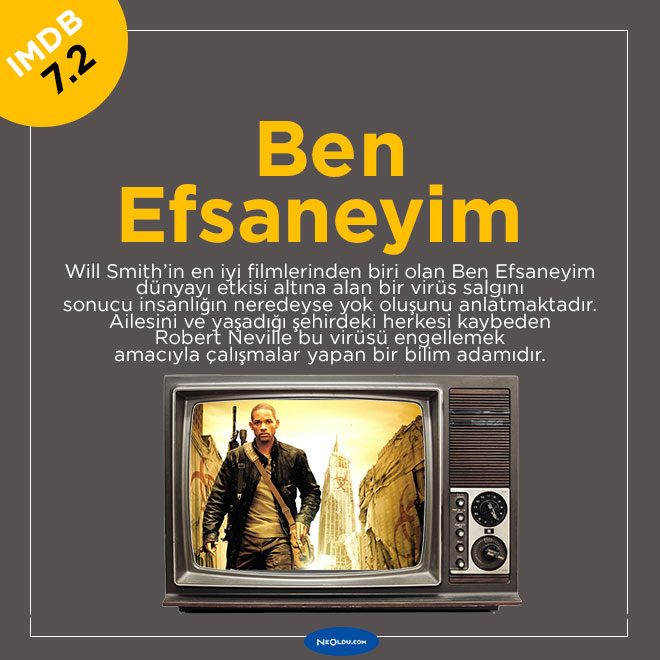
威尔·史密斯的《我是传奇》仍然是后末日的黄金标准。 它捕捉到了病毒消灭了大部分人类后纽约市可怕的安静,一名科学家在这座充满变异、僵尸般威胁的城市中为治愈方法而奋斗。 这不仅仅是行动; 这是一项关于孤独的研究。
- 类型: 动作、冒险
- 导演: 弗朗西斯·劳伦斯
- 演员: 威尔·史密斯、爱丽丝·布拉加、查理·塔汉
- 发布年份: 2007
为什么《海啸奇迹》在灾难片中脱颖而出
了解真实的海啸灾难
The Impossible (2012) tells the tragic true story of the Belón family, whose vacation in Thailand turned into a nightmare on December 26, 2004. Directed by J.A. Bayona, the film strips away the supernatural elements of disaster movies and focuses on raw, human survival. This is not about saving the world. It’s about finding your family amidst the ruins.
- IMDb rating: 7.6
- ** Director:** J.A. Bayona
- Cast: Ewan McGregor, Naomi Watts, Tom Holland
- Based On: 2004 Indian Ocean Tsunami
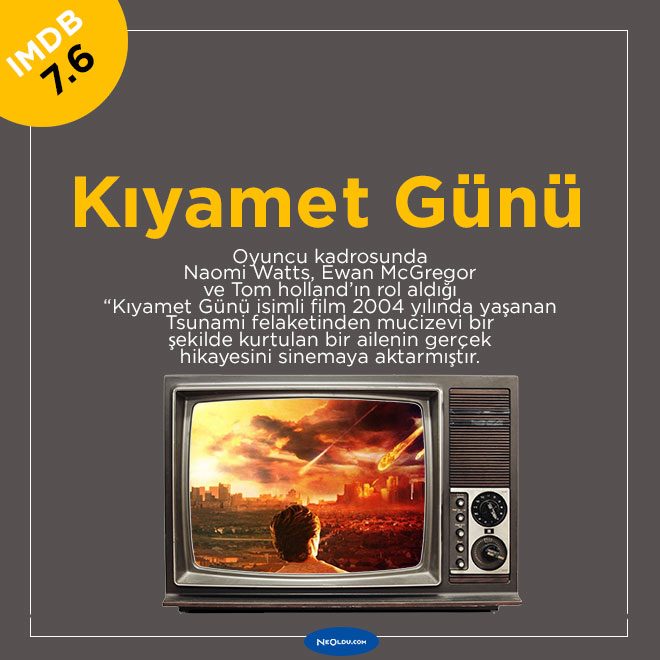
The 2004 tsunami that devastated Thailand remains fresh in the memories of survivors. It also provides a dark backdrop to one family’s desperate struggle for survival. Based on a true story, this story gained worldwide attention through Naomi Watts and Ewan McGregor. They brought raw emotions to the screen, and the film quickly became one of the best natural disaster films. Directed by Juan Antonio Bayona. Tom Holland also appears. It was released in 2012 as “The Impossible”.
However, there is another film that depicts the aftermath of a major earthquake. Aftershock (2010) has a rating of 7.6 on IMDb. It belongs to the adventure and mystery genre. “The Impossible” focused on the power of the ocean and “Aftershock” focused on the earth crumbling beneath our feet. Both films depict how ordinary people are thrown into extraordinary chaos.
Why do these stories resonate so deeply? Maybe it’s because it muffles the noise of everyday life. What remains is the basic instinct to protect those we love. In “Aftershocks,” the tension builds slowly before the ground shakes. The real drama begins after that.
The audience often compares the two films. It is visceral. It is immediate. Aftershock is grounded in the long-term struggle. This shows that even though the earthquakes have stopped, the disaster is not over.
Who will survive? How do they rebuild? These are the questions that will keep your audience focused. The answer is never simple.

K-19: Widowmaker (2002)
The Cold War was a time of silent threat. Nuclear submarines patrol the dark depths of the ocean. They are floating coffins waiting to happen. One of them is K-19. It soon got a scary nickname. The crew calls it the Widowmaker.
The film tells the true story of the first major Soviet submarine crisis. A reactor coolant leak threatened to turn the ship into a radioactive graveyard. The captain is very young. He was not prepared for the magnitude of the disaster. The crew must make an impossible choice. You can either evacuate and let the reactor melt down, or you can stay put and try to repair it manually.
“They are fighting a silent enemy. The radiation is invisible. The stress is devastating.”
Director Kathryn Bigelow captures the claustrophobia perfectly. The water outside is frozen. The atmosphere inside was full of fear and radiation. The performances of the actors seem raw and desperate. Harrison Ford plays Cap. The director is played by Liev Schreiber. Their conflicts drive the story. It’s not just about physics. It’s about pride, responsibility and the weight of command.
Technical information is accurate. The shortcut was created when the Soviet Union rushed to build nuclear submarines. These shortcuts lead to fatal failures. The film does not shy away from human sacrifice. A person dies slowly. Their bodies stopped working. The mental burden is heavy.
IMDb users gave it a rating of 6.7. By today’s standards, this was not a bomb. But it still works. The tension never lets up. Feel the heat of a nuclear reactor. It smells like ozone and sweat. This is a piece that brings back fond memories of that era. At that time, world peace rested on the shoulders of young people holding iron pipes.
The end is dark. There are no heroes here. A mere survivor. They make a living from their work. And what they saw. The story of K-19 is just one of many. But this one sticks.
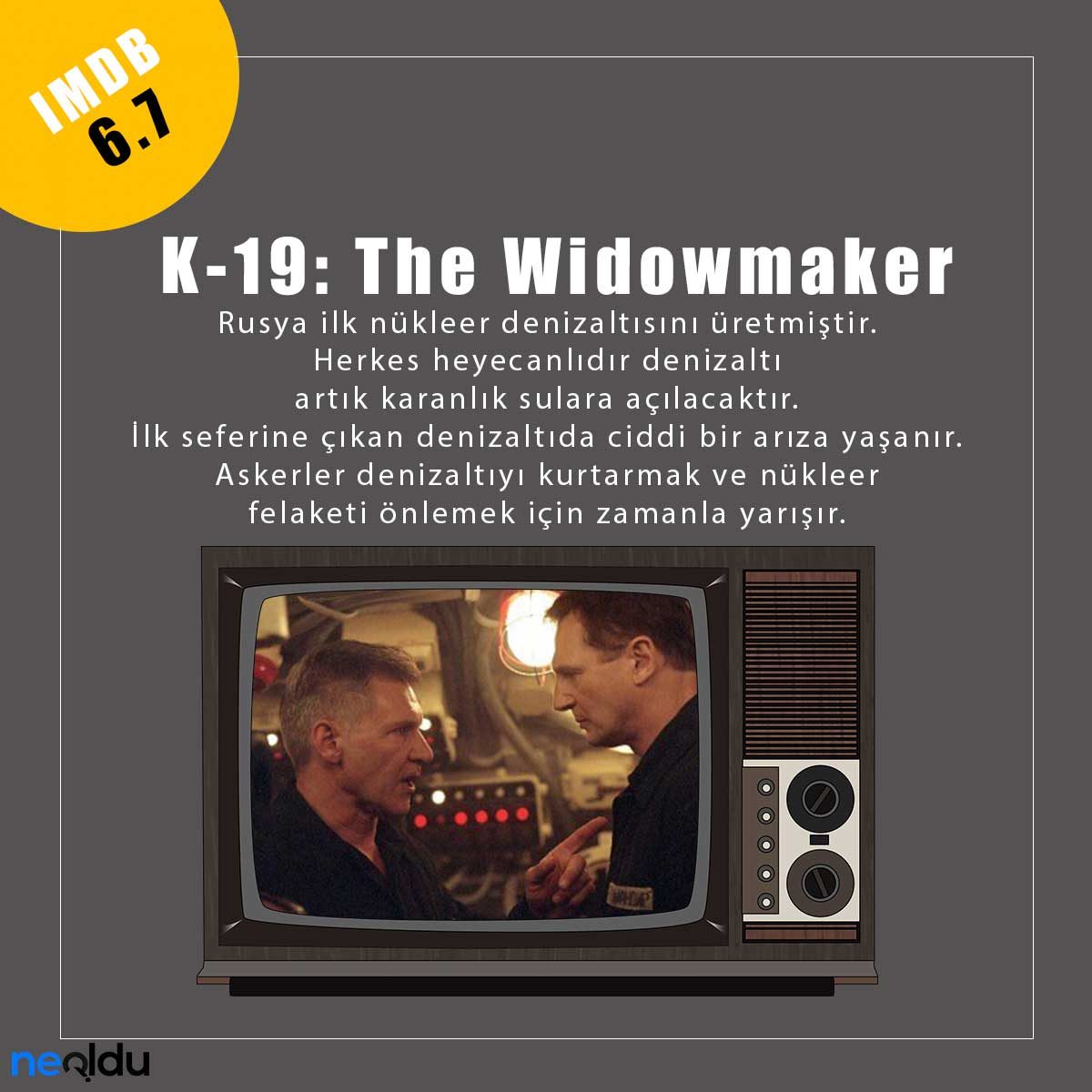
キャスリン ビグロー監督の 2002 年の歴史スリラー映画では、賭け金が非常に高くなります。 この作品は、ソビエト連邦初の弾道ミサイル潜水艦である K-19 と、核災害を引き起こしかけた壊滅的な原子炉事故を中心にしています。 チームメンバーは時間との戦いです。 たった一度の計算ミスで、何千人もの命が失われる可能性があります。 この映画は現実の緊張感と歴史的事実を融合させており、ハリソン・フォードの素晴らしい演技に基づいています。 批評家も観客も一様に、滅亡の樽を見つめる乗組員の重みを彼がどのように支えたかを賞賛した。
この映画は、歴史、ドラマ、スリラーのジャンルに完全に分類されます。 ビグロー監督は、gritty intensity, directs with a steady hand。 サム・スプルーエル やピーター・ステビングス などのキャストが彼女をサポートしており、彼らは単なる専門用語ではなく人間の恐怖に物語を根付かせるのに役立っています。 2002 年に公開されたこの映画は、冷戦の歴史や潜水艦戦争に興味がある人にとって、依然として優れた映画です。
それは損傷した原子炉の仕組みだけではありません。 鋼鉄の棺に閉じ込められた人々が、自分たちの間違いが波紋を広げ、何千マイルも離れた都市を破壊する可能性があることに気づく物語です。 深海の静寂が船内のパニックをより大きく響かせた。
26. Miracle Mile (1988) – IMDb: 7.0
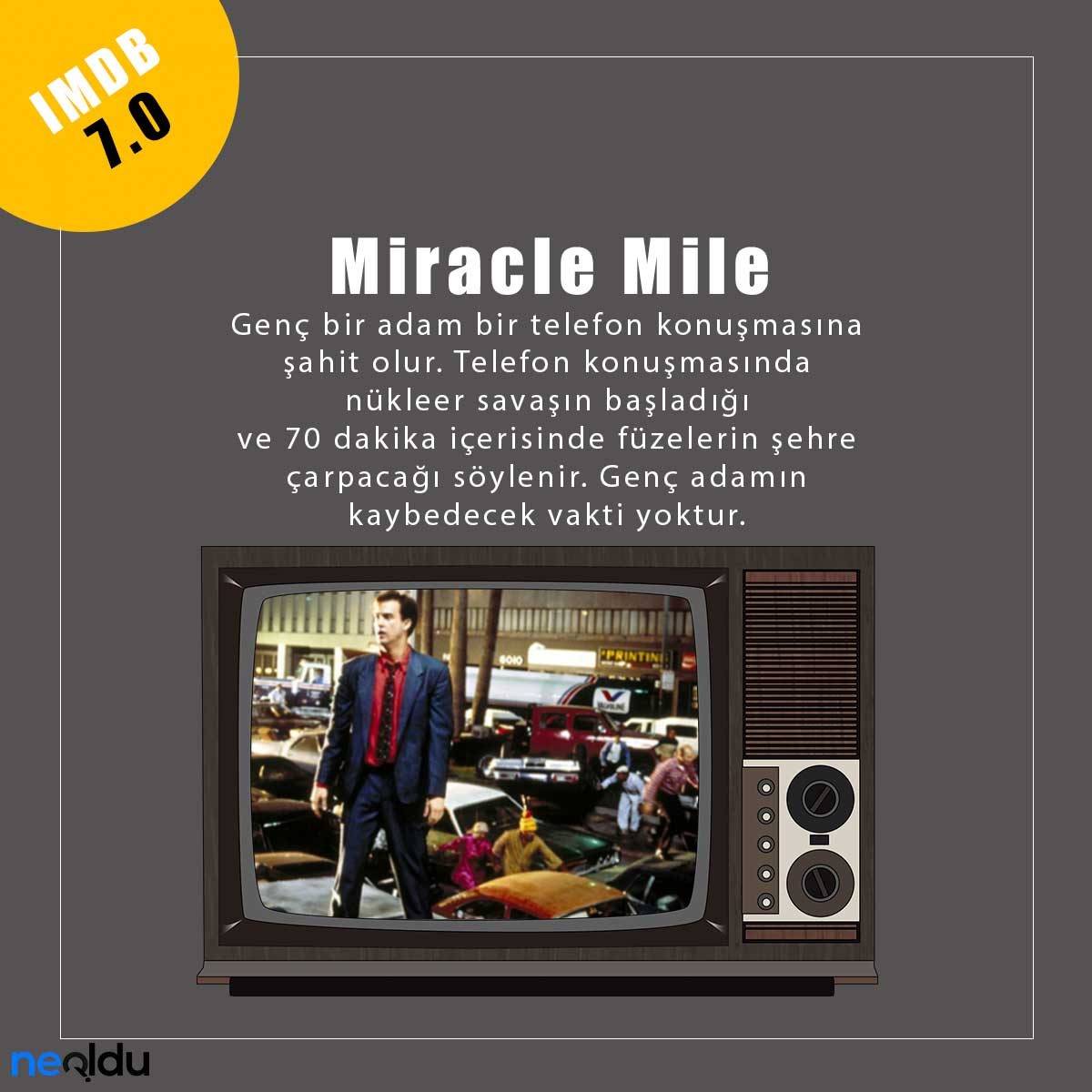
From the depths of the sea to the streets of Los Angeles, we face different kinds of nightmares. Miracle Mile is a 1988 cult classic that somehow feels more important now than it did then. This is not a submarine movie. これは分が尽きかけている都市の話だ.
The story follows Harry (Anthony Edwards), a physics graduate student who dials random numbers on a rotary phone. He talks to a strange man named Julie (Mary Stewart Masterson). This one phone call connects them. It connects them to the end of the world. Government officials breached security boundaries and made it clear that a nuclear attack was imminent.
Heroes cannot save the world. 秘密兵器はない. The couple tries to spend their last hours together. This film captures the absurdity of panic. People are robbing electronics stores. Some people were sitting in the park and looking at the sky. This is a scathing critique of how quickly normality can disappear when the threat becomes real.
The IMDb user rating is 7.0. これは「もしも」のシナリオをどのように扱っているかの証左だ. 多くの核スリラーはアクションに依存している. This is based on fear. The tension is not built by the explosions, but by the passage of time and the growing understanding that help is not coming.
Why do we keep creating stories like this? Maybe it’s because the fear never goes away. We’re good at pretending it’s not happening to us.
27. Poseidon (1972) – IMDb: 7.1
The math is simple, but scary. The man hears the phone ringing. A nuclear war has begun. The missiles hit the city in 70 minutes. That’s the whole premise of this 1988 thriller, which plays like a race against the clock. Directed by Steve De Jarnatt, the film depicts the early panic of Anthony Edwards as he tries to save his loved ones before the sky falls. It’s a mix of action, drama and romantic stakes. The cast also includes Mare Winningham and John Agar. It’s a tight, intense story about what you do when the ending is written.
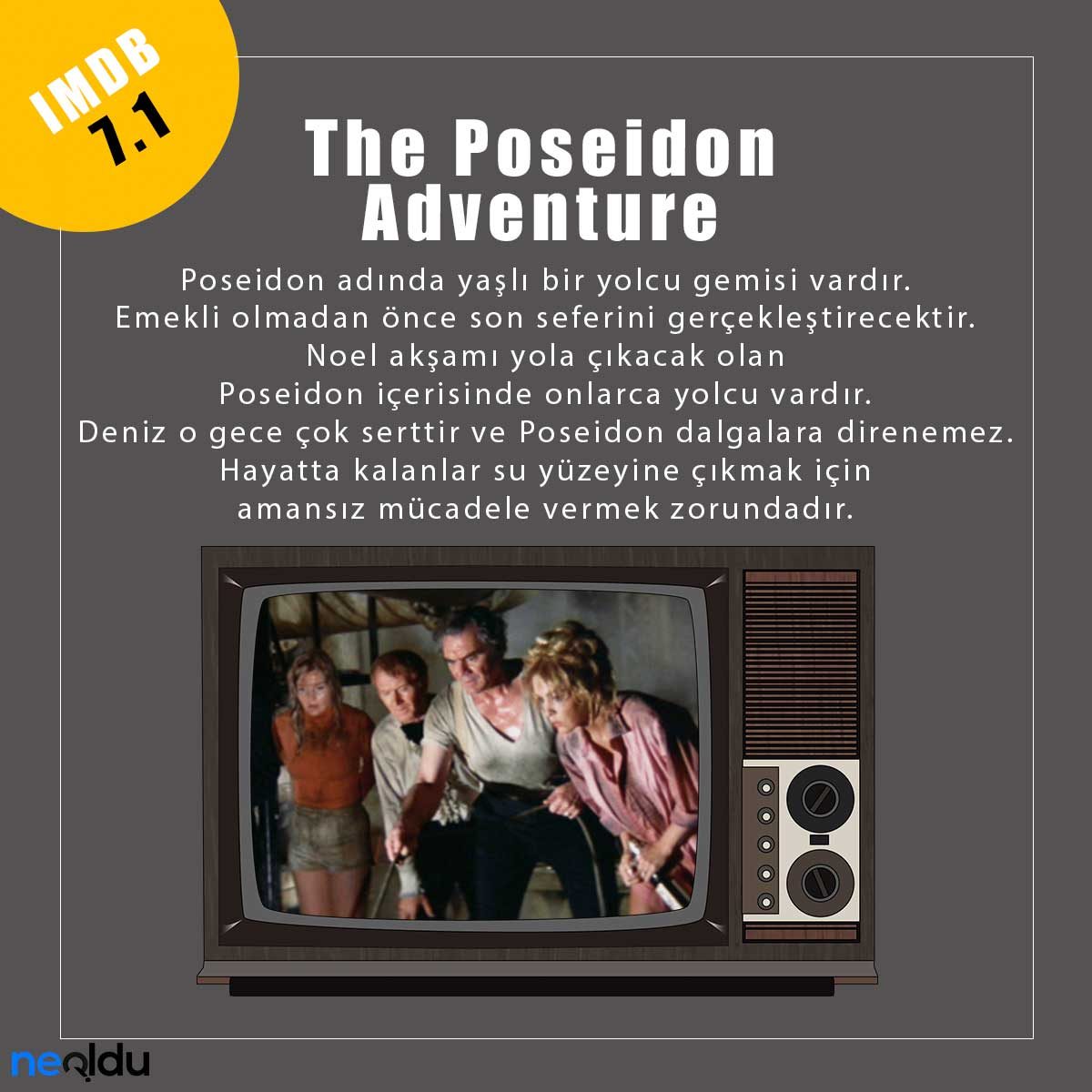
And there’s another classic. The 1972 disaster epic. The IMDb rating is 7.1. This has nothing to do with phones. It’s about the ship. The SS Poseidon capsized during New Year’s Eve celebrations. A tsunami is coming. A crack appeared in the frame. The passengers were trapped in the upside down ballroom. They had to climb into the engine room to get to the lifeboats, which are now at the bottom of the ship.
Why is this old movie still relevant? It is the blueprint. Every disaster movie since 1972 has been inseparable from this one. The practical effects was groundbreaking at the time. Stunt work involving spinning sets is dangerous. Starring Gene Hackman. Shelley Winters. Red Buttons. Ernest Borgnine. They are more than just characters. They are archetypes of survival. The religious fanaticism. The cowardice. The bravery. All this happens in the dark.
Which is scarier? Is it a phone call telling you to leave now, or is the ship rolling silently with no lights? The 1988 film is based on outside information. The 1972 film is set in immediate physical danger. One is about information. The second is about machines. Both are related to people.
The 1972 version is longer. It breathes. You see the social dynamics break down before the physical dynamics break down. The 1988 one is leaner. It cuts straight to the chase. There is less time for dialogue. You have more time to run.
Did the 1972 film foretell contemporary anxieties or merely provide language? We’re still talking about “Seventy Minutes.” We are still looking for a lifeboat. The boat is gone. War is theoretical. But the fear is real.
The cast of the 1988 film is smaller. The stakes are personal. It’s not nationwide. It’s not global. It’s just your mom. Your love. Your dog. It is intimate. The 1972 film is a crowd. It is chaotic.
Or do they? In the 1972 version, a new day begins for the survivors. It is hopeful. In the 1988 version, the ending is ambiguous. Did he make it?
1972 年版は、Just watch it to see. 1988 年版は、Just watch it to feel the tension. 一个はななたですでゆたは葬儀です。
The 1972 movie has a song.
28. The Day the Earth Caught Fire (1961) – IMDb: 7.2
Let’s move from the catastrophe of the open sea to the horror of the atmosphere. Before The Day the Earth Caught Fire, the genre was physical destruction. This 1961 British science fiction film does something a little different. It keeps the characters dry and terrified. The threat is not water. It’s the sky itself.
The plot is based on a mistake during the Cold War. Two nuclear tests. One is in the United States. One in the USSR. they happen at the same time. target? A show of force. result? disaster. These experiments caused the Earth to shift off its axis. The planet is tilted. A seasonal mix. We will have an endless summer. The temperature has risen. The ice cubes are melting. The panic started.
It’s not just about special effects. This is the atmosphere. Director Val Guest and screenwriter Wolf Mankowitz have created a story that feels eerily real. It touched on the particular concerns of the early 1960s. The Cuban Missile Crisis is imminent. Everyone knew the bomb was coming. This movie simply asks: What if we mess up the timeline?
The film stars Edward Judd as a journalist trying to make sense of the chaotic situation. he is not a hero. He is a man watching the end of the world in real time. Leo McKern and Wilfrid Hyde-White star in supporting roles. They play editors and scientists. They are all trying to find solutions that don’t exist. The dialogue is sharp. The tension was almost suffocating.
Why is this movie still relevant? Because it’s a decade before modern disaster movies. There are no explosions here. No chases. It was a slow and inevitable realization of climate change. The heat is intense. The water level rises. People die silently. This is a kind of psychological horror wrapped in a science fiction shell.
The IMDb user rating is 7.2. Not a bad result for a black and white film. This proves you don’t need CGI to scare people. All you have to do is show them that their own fears are reflected. The Day the Earth Caught Fire is a chilling reminder of how fragile our systems really are.
The fever continues to rise. The coverage got even crazier. How does it end? Well. It gives no hope. It offers resignation. This is probably the most realistic part.
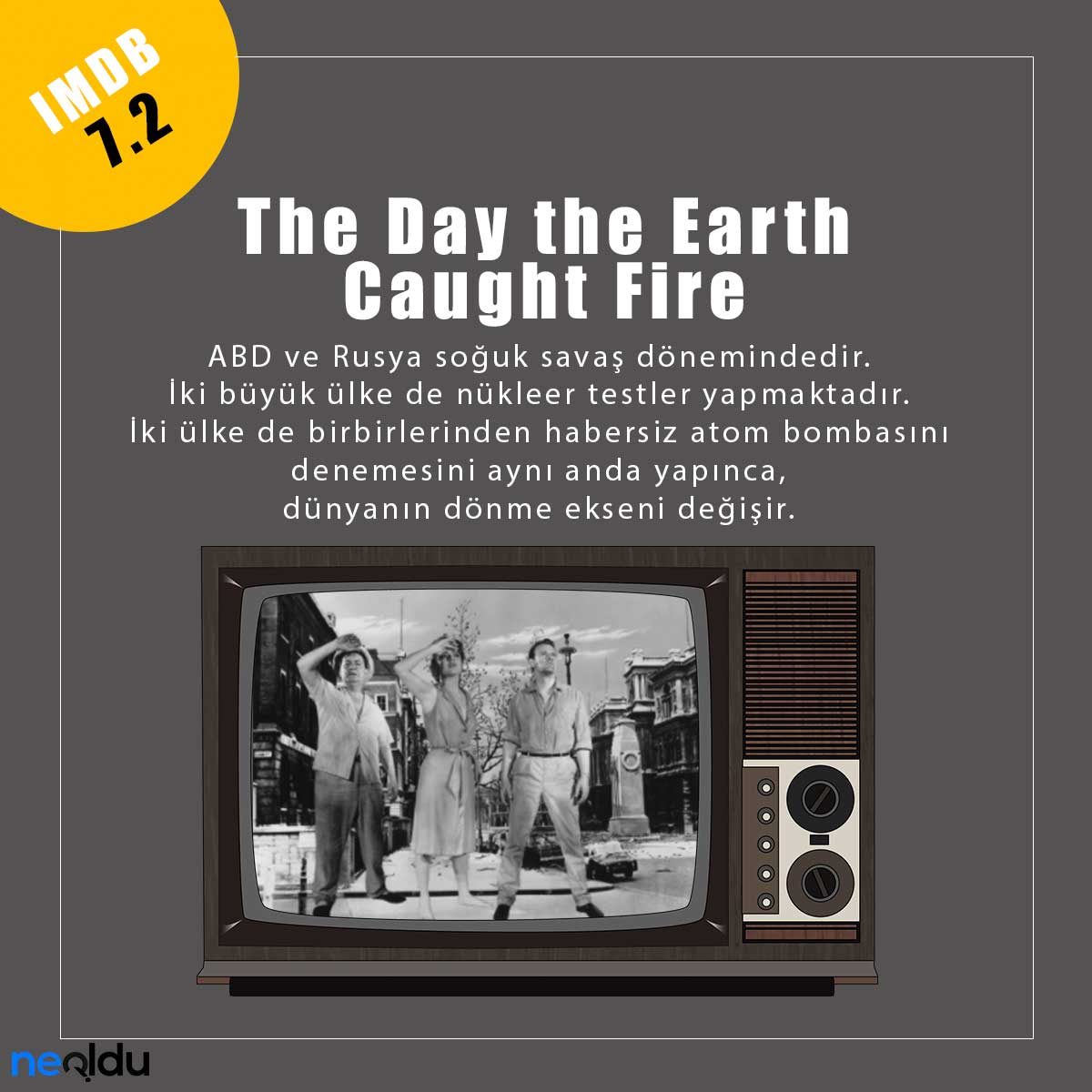
The earth’s axis shifted. Not with a whimper, but with a violent lurch triggered by simultaneous nuclear tests conducted by the US and Russia during the height of the Cold War. The result wasn’t just political fallout. It was planetary catastrophe. The world spiraled toward doom in a narrative that blends science fiction and drama so tightly it’s hard to tell where the romance ends and the apocalypse begins. Critics still cite it as one of the most striking disaster scenarios of its era. The film, directed by Val Guest, stars Edward Judd, Janet Munro, and Leo McKern. It dropped in 1961.
The 1958 Standard: A Night to Remember
Then there is the other giant in the room. Released four years earlier, A Night to Remember holds a steady 7.9 on IMDb. It doesn’t rely on geopolitical thriller mechanics. It sticks to the historical record. It tells the story of the Titanic with a documentary-style restraint that feels heavier than any special effects could.
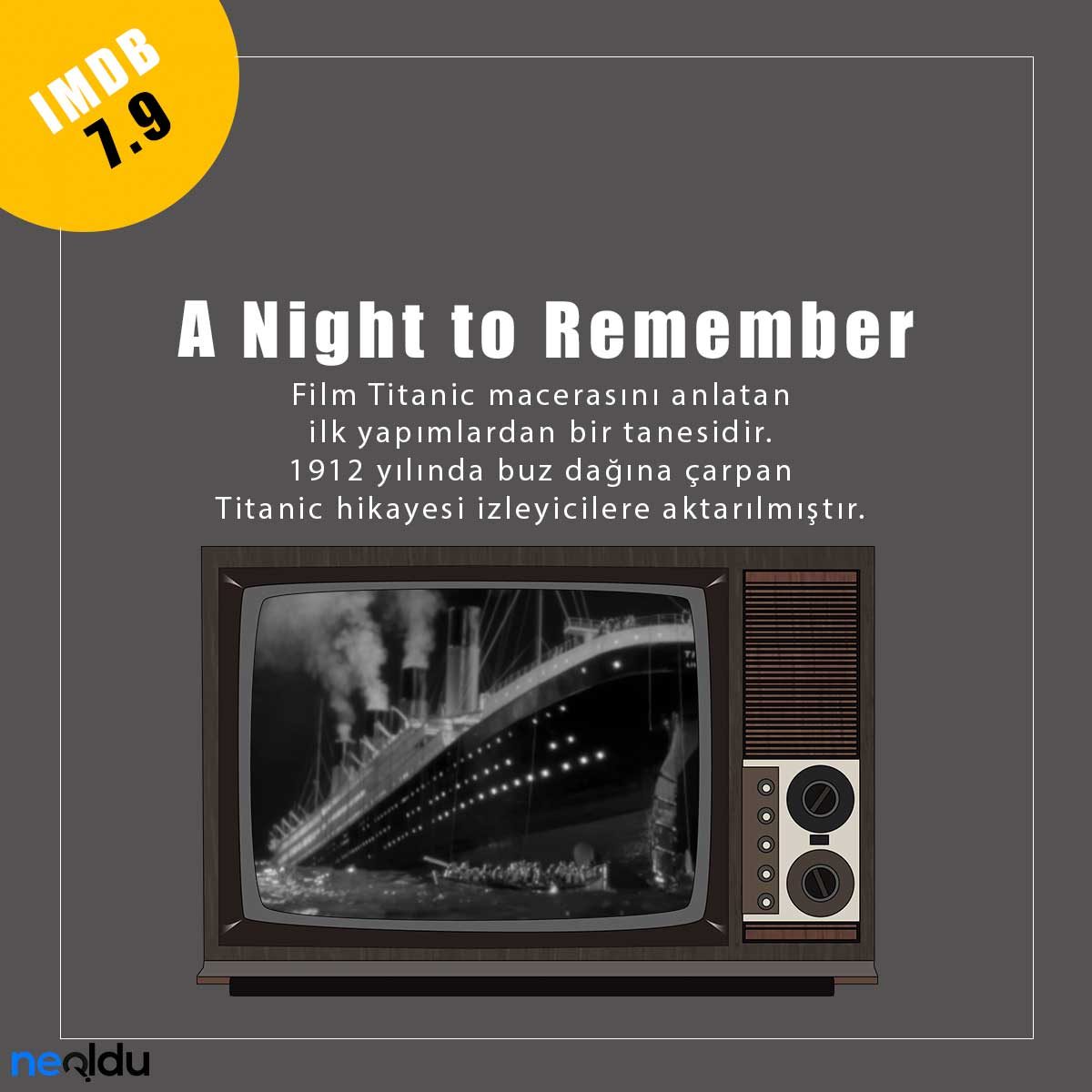
Titanic Disaster Movie Plan
You can trace almost any sinking ship to a specific location in the movie. A Night to Remember is not just a new release in this genre. That’s the plan. The film was released in 1958, long before James Cameron’s success dominated the box office, and yet it has a strange, lasting power.
Directed by Roy Ward Baker, the film eliminates the romance. It focuses on the mechanisms of disaster. The result is a bleak, lackluster view of the sinking of the RMS Titanic on April 15, 1912, after hitting an iceberg in the North Atlantic.
The actors anchor the chaos with grounded performances. Kenneth More leads the band together with Ronald Allen and Robert Ayres. They don’t play superheroes. You play people who face an impossible situation.
The film combines biography and gripping drama. It deals with the tragedy with serious, historical weight. This approach secured its place among the classics of maritime cinema. It proved that you don’t need CGI to create suspense. You just have to show the human cost.
“The ship didn’t sink because of bad luck. It sank because of several decisions.”
That’s why it’s still relevant. It asks hard questions about hubris and design. It offers no easy answers. It just shows how the water rises.