


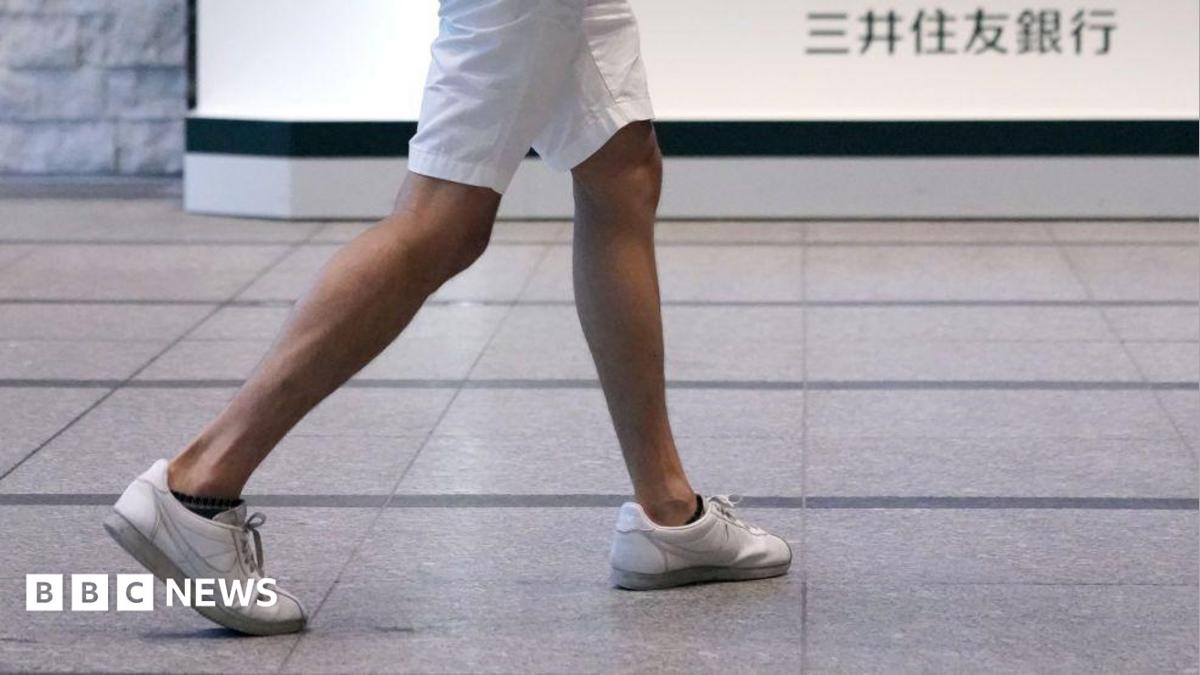
Tokyo is boiling. Literally. The mercury is climbing, energy prices are spiking, and the heat is brutal.
So, what’s the solution? Take off the pants.
The Tokyo Metropolitan Government has issued a directive this summer that sounds like a casual Friday on steroids: men are encouraged to ditch the suit jacket and tie for t-shirts, sneakers, and yes, shorts.
It’s part of the “Tokyo Cool Biz” initiative, a heat-management strategy originally launched by Governor Yuriko Koike in 2005 when she was environment minister. The goal? Cut down on air conditioning use to save energy. It’s worked before. Back in 2011, following the Tohoku earthquake, the program was upgraded to “Super Cool Biz.” Back then, former PM Junichiro Koizumi strutted around without a tie, making it socially acceptable to dress down for the sake of the grid.
This year, the guidelines are even looser. Or so the government thinks.
The ‘Sunehara’ Backlash
Here’s the catch. While the policy is technically gender-neutral in its push for comfort, the reality on the ground is messier.
Short four months after its April launch, the acceptance is fractured. A June survey by Gorilla Clinic showed 53.5% of respondents oppose wearing shorts to work. Only 46.5% are in favor.
And it’s not just about style preferences. A significant portion of the opposition comes down to one visceral, uncomfortable word: sunehara.
It’s an online slang term derived from sune (shin) and hara (stomach/intestine, used here metaphorically for distress). It refers specifically to “leg hair harassment.”
“We want to give people more options in the severely hot weather… There should be no issue as long as work attire is not offensive to anyone,” Noboru Watanabe, an official with the Tokyo Metropolitan Government, told the BBC.
But offensive? That’s subjective.
Many women argue the policy creates an unfair dynamic. While men are baring their shins, women are still expected to adhere to traditional corporate dress codes that often mandate hosiery or long skirts. The sight of a colleague’s bare, hairy legs is described by some women as deeply uncomfortable—a forced intimacy they didn’t ask for.
A Grooming Industry Boom
The backlash has sparked a surprising trend. Laser hair removal clinics are reporting a surge in clients, not for vanity, but for professional survival.
Akifumi Funatsu, director of Gorilla Clinic, notes a shift in motivation. It’s no longer just about aesthetics. It’s “social etiquette.”
“Women believe that men should have less leg hair,” Funatsu explained. “It has prompted them [men] to seek laser hair removal so as to not offend those around them.”
The clinic’s data is skewed toward female respondents, suggesting women are the ones feeling the most friction from this policy shift. For men, the concern is mixed between body image and the sheer awkwardness of workplace visibility.
Why Heat Is Killing Japan (Literally)
This isn’t just a fashion feud. The urgency behind Cool Biz is driven by a climate emergency that feels increasingly personal.
Japan has been grappling with record-breaking heat, compounded by soaring energy costs linked to Middle Eastern instability. The Japan Meteorological Agency has coined a new term for the current reality: kokusho-bi.
Brutally hot day.
Specifically, when temperatures exceed 40°C (104°F).
The stats are grim. In a single week (July 6–12), the Fire and Disaster Management Agency recorded seven deaths from heatstroke and over 4,500 hospital admissions.
Humidity in Japan makes this worse. Sweat doesn’t evaporate. The body’s cooling mechanism fails.
Beating the Heat: Gadgets and Biology
Government advice remains basic: drink water, turn on the AC.
But people are buying into the panic. Sales of specialized heat-beating gear are through the roof. You can pick up disposable wet towels, UV-blocking umbrellas, clothes woven with tiny built-in fans, and handheld portable fans at any konbini.
It’s a consumerist response to a physiological limit.
Experts from the Japan Academic Network for Disaster_reduction are pushing back against the gadget hype. Their advice? Acclimatization.
It takes weeks for the body to adapt to sustained high temperatures. The key is to start preparing now, during the rainy season, before the real summer heat hits. Wait until you’re gasping for air in July, and it’s already too late to build your heat tolerance.
The Unfinished Fit
Back in the office, the shorts debate rages on.
Tokyo officials want comfort and energy savings. Men want to survive the humidity. Women want a workplace that doesn’t feel like a public bathhouse.
The policy exists to save energy, yes. But it’s exposing a cultural disconnect. We can tell men what to wear on their legs. We can’t easily tell them what their colleagues are allowed to see.
For now, the heat continues. The air conditioners hum. And somewhere, a man is nervously shaving his shins, hoping it’s enough.


