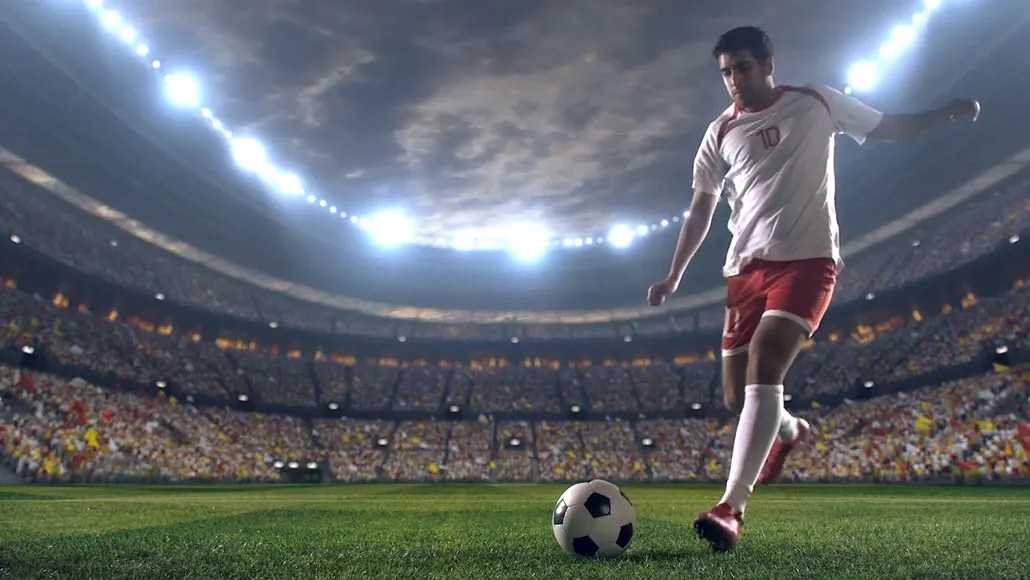
The roar of 90,000 fans at the 2022 World Cup final was deafening. For Aurélien Tchouaméni, a star midfielder for the French national team, the noise was secondary to the silence in his head. He stood 11 meters (12 yards) from the goal, the ball placed on the penalty spot. France and Argentina were tied 3-3 after extra time. The winner would be decided by a penalty shoot-out.
France was trailing 2-1 in the shoot-out. Tchouaméni’s kick could save them; a miss could seal their fate. He took a deep breath, ran up, and struck the ball. It sailed wide left. France lost the match and the World Cup title.
This moment, watched by 1.4 billion people, was not just a sporting tragedy—it was a textbook case of psychological collapse under extreme pressure.
The Psychology of the Penalty Spot
While Tchouaméni’s miss was a singular event, it fits a broader pattern studied by experts like Geir Jordet, a psychologist at the Norwegian School of Sport Sciences in Oslo. Jordet and his peers analyze high-stakes penalty kicks to understand how human performance degrades under stress.
“Everything has to do with handling the anxiety of the moment — and handling the pressure, individually and collectively,” Jordet explains. “It’s not penalty-specific or even soccer-specific. It’s about how humans tolerate, cope with and handle these situations.”
Why Pressure Causes Failure
At the elite level, penalty kicks are statistically reliable: 75% to 80% result in goals. Yet, as stakes rise, success rates drop. Players are more likely to score during regular gameplay than in shoot-outs. Furthermore, success rates plummet in late-stage tournaments where a single miss means elimination.
Sports psychologists identify two primary mechanisms for this decline:
- Overthinking: Under stress, athletes shift from intuitive, automatic execution to conscious, step-by-step control. This disrupts the “flow state,” causing experts to perform like beginners.
- Distraction: Anxiety draws attention away from the task. Worries about failure, crowd noise, or a goalkeeper’s trash talk fragment focus, reducing cognitive resources available for physical execution.
This phenomenon extends beyond sports. “Math anxiety,” for example, causes students to underperform not due to lack of knowledge, but because worry consumes the mental bandwidth needed to solve problems.
The Myth of the “Choking” English Team
Few examples illustrate the power of psychological burden better than the history of the English national soccer team. For decades, England suffered a reputation for “choking” in penalty shoot-outs, losing nearly every major international shoot-out from the 1990s through the early 2000s.
However, data suggests this was not a skill deficit. A 2023 study by Daniel Memmert of the German Sports University in Cologne analyzed over 1,700 penalty kicks across nations. English players scored at the same rate as their international peers.
“There is no theory [that English players are bad at penalties]. And, of course, it’s not true,” Memmert states.
The issue was psychological legacy. Players carried the weight of historical failures. Michel Brinkschulte, also of the German Sports University, notes: “Most probably, every English player who walks up to the mark is going to have the next headline in their head, about losing it for England.”
The Power of Suggestion
Experiments confirm that this narrative harms performance. In a study by Bournemouth University, 130 soccer players were divided into groups before taking penalty kicks. Those reminded of England’s poor shoot-out history scored significantly fewer goals than those who were not reminded—or those who were told the history proved nothing about current ability.
The mere suggestion of past failure induced anxiety that physically impaired performance.
Reading the Nerves
Goalkeepers have learned to exploit this vulnerability. Research shows that goalkeepers can detect signs of anxiety in penalty takers, such as:
- Turning their back to the goalkeeper after placing the ball.
- Rushing the kick after the referee’s whistle.
- Visible physical tremors or erratic breathing.
In the 2022 World Cup final, Argentina’s goalkeeper Emiliano Martínez deliberately increased pressure on French players. He gestured, spoke to them, and even tossed the ball away to disrupt their routine. After Tchouaméni’s miss, Martínez noted: “I saw that he was dead in front of goal… He was very nervous.”
By waiting an extra split second to observe these cues, goalkeepers can improve their save probability. Distraction tactics further degrade the kicker’s focus, turning a physical challenge into a mental battle.
Training for Mental Resilience
Historically, many coaches dismissed penalty shoot-outs as “a lottery” based on luck. However, in the last decade, top teams have begun integrating sports psychology into training.
England’s turnaround began before the 2018 World Cup, when the team established a penalty kick task force working with psychologists like Jordet. For 18 months, players practiced under simulated pressure. The result: England won its first major shoot-out since 1998 and has since won two of three subsequent attempts.
Practical Strategies for High-Stakes Performance
Experts recommend specific techniques to mitigate anxiety and maintain focus:
- Establish a Routine: Create a consistent pre-kick ritual (e.g., specific breathing patterns, ball placement steps). This automates actions, reducing the cognitive load during execution.
- Controlled Breathing: Deep, diaphragmatic breathing helps regulate heart rate and calm the nervous system.
- Positive Self-Talk and Visualization: Replacing negative thoughts with constructive imagery helps neutralize worry.
- Pressure Simulation: Practice should mimic real conditions. Coaches can create distractions, impose time limits, and add audience pressure to help athletes acclimate to stress.
“It’s important to train under pressure and to practice techniques that might help under pressure,” says Louise Ellis, a sports psychologist at the University of Huddersfield.
Conclusion
The penalty kick is a microcosm of high-stakes performance in any field. While luck and skill matter, the decisive factor often lies in how individuals manage anxiety. By understanding the psychology of pressure—and training specifically to withstand it—athletes and professionals alike can transform potential failure into focused execution.