For over half a century, humanity’s view of the Moon has been defined by grainy black-and-white photography and distant robotic sensors. The prevailing perception was of a static, monochromatic sphere. However, NASA’s Artemis 2 mission in early April shattered this long-held illusion. As four astronauts flew around the lunar far side—the first humans to do so since the Apollo era—they did not just see a grey rock. They witnessed a landscape rich in color, texture, and geological history, providing scientists with data that orbiters simply cannot replicate.
The mission highlighted a critical gap in lunar science: while we have vast amounts of robotic data, we lacked the immediate, comparative human perspective on the Moon’s surface variations. By training astronauts to observe like geologists rather than just travelers, NASA has unlocked a new layer of understanding about the Moon’s—and by extension, Earth’s—origins.
The Lunar Science Passport: Teaching Astronauts to See
To prepare for this unique vantage point, NASA scientists Jacob Richardson and Amber Turner developed a specialized training tool known as the Artemis 2 Lunar Science Passport (LSP). This 90-page guide served as a “cheat sheet” for the crew, transforming them into active participants in geological discovery.
The LSP focused on the “Big Fifteen” —a curated list of diverse geological targets distributed across the lunar surface. These sites were chosen not only for their scientific importance but also as navigational waypoints during the flyby. The guide taught astronauts specific terminology to describe what they saw, moving beyond vague impressions to precise scientific observation.
Key concepts included:
* Color and Albedo: Identifying variations such as “swirls” and “mare basalt contacts.”
* Crater Morphology: Describing features like “terraced rims” and “hummocky ejecta blankets.”
* Tectonic Features: Recognizing structures such as “wrinkle ridges” and “scarps.”
“Our current data is based on robotic explorers… but this unique vantage point let the Artemis 2 crew compare across the moon in a blink of an eye, which is something an orbiter can’t do,” explained Richardson, a planetary geologist at NASA’s Goddard Spaceflight Center.
The Surprise of Color
Despite rigorous training, the crew was still taken aback by the visual reality of the Moon. During simulations, astronauts had questioned why they needed to report on color, assuming the Moon was uniformly grey. Scientists insisted, knowing that color variations reveal critical information about surface composition.
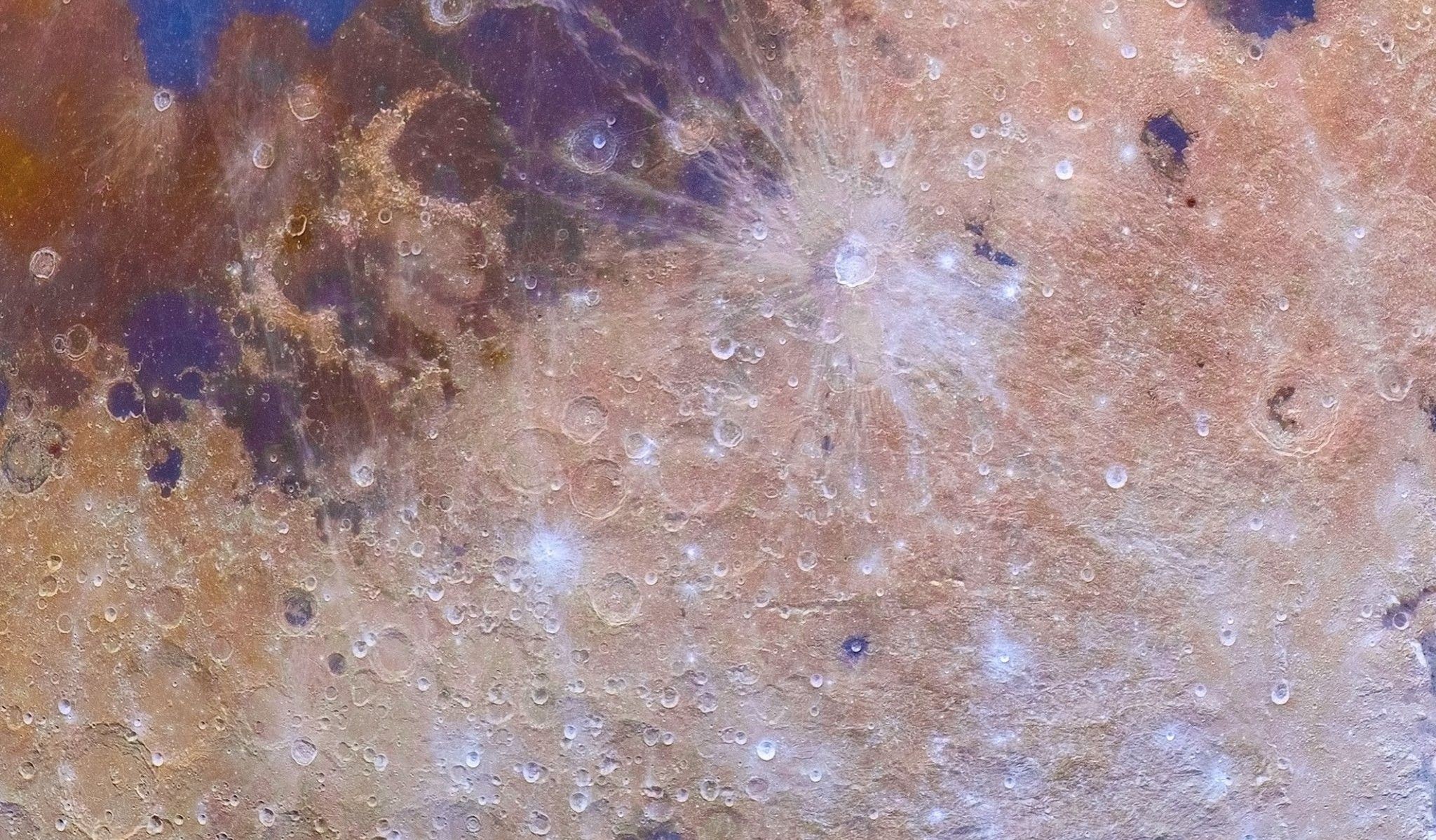
The observations confirmed their hypothesis. The Moon is not monochromatic; it is a canvas of subtle hues that indicate different mineralogies.
One standout observation occurred at the Aristarchus Plateau, a region Richardson describes as a “volcanic wonderland.” Astronaut Victor Glover reported seeing distinct shades of brown and green, which faded as they looked toward the north pole and the far side.
- Scientific Significance: These green hues likely indicate the presence of olivine or pyroxene minerals. Such minerals provide clues about the chemistry of the magma beneath the surface.
- Historical Context: While Apollo astronauts previously noted orange soil hues, the Artemis 2 orbital perspective allowed for a broader comparison of these color variations across different geological units, offering a more comprehensive view of the Moon’s volcanic history.
Human Eyes vs. Robotic Sensors
A major theme of the Artemis 2 mission was the irreplaceable value of human observation. While NASA’s Lunar Reconnaissance Orbiter (LRO) provides high-resolution imagery, its data often lacks the fidelity needed to detect subtle color differences without significant processing. Furthermore, long-term satellite data can accumulate noise or calibration drift, making direct comparisons between different lunar regions difficult.
To enhance the visual data, Artemis 2 commander Reid Wiseman collaborated with astrophotographer Andrew McCarthy. Using a technique called image stacking, they combined hundreds of photos taken at different exposures to reduce digital noise.
- The Result: The stacked images revealed a “true-color” view of the far side, showing brilliant shades of blue, red, green, and brown that are invisible to the naked eye in single exposures.
- The Insight: McCarthy described this process as giving the camera “cyborg eyes,” allowing scientists to see granular geological differences in the regolith (lunar soil) that standard satellite imagery misses.
Crucially, NASA prioritized audio recordings of the astronauts’ observations over images during the mission. These verbal diaries provided immediate context and qualitative data that scientists could begin analyzing while the spacecraft was still in space, offering a narrative depth that raw data files lack.
Why the Moon Matters to Earth
The Artemis 2 observations are not just about the Moon; they are a window into Earth’s deep history. Richardson emphasized that the Moon acts as a time capsule for the early solar system.
- Preserved History: Ninety-nine percent of lunar volcanoes are older than 99% of Earth’s volcanoes. Because Earth’s surface is constantly recycled by tectonic activity and erosion, much of its history from over 3 billion years ago is lost. The Moon, lacking these processes, preserves ancient materials.
- Planetary Origins: Studying lunar geology helps scientists understand how Earth formed, how it was shaped by giant impacts, and how water was delivered to the early planet.
- Future Exploration: Understanding the Earth-Moon system is essential for future missions. If volatiles (like water ice) are found at the lunar south pole, it could provide clues about the delivery of water to Earth and serve as a resource for future human settlement.
Eclipse Observations and Future Data
Beyond geology, the Artemis 2 crew made significant contributions to understanding the space environment. During a total solar eclipse, when the Orion spacecraft passed through the Moon’s shadow, the crew observed at least five micrometeor impact flashes on the dark lunar far side.
These observations, made possible by the faint glow of sunlight from behind the Moon, provide rare data on the frequency and energy of small space rock impacts. This information is vital for assessing risks for future lunar habitats and spacecraft.
Conclusion
The Artemis 2 mission has demonstrated that human presence in space offers more than just symbolic milestones; it provides unique scientific insights that machines cannot replicate. By training astronauts to observe with “different eyes,” NASA has collected a treasure trove of data—over 12,000 images and extensive audio logs—that challenges the old perception of a static, grey Moon.
As scientists spend the next six months analyzing this data, the preliminary findings promise to refine our understanding of lunar geology and early solar system history. This mission marks a shift from simply visiting the Moon to deeply understanding it, laying the groundwork for the next generation of explorers who will walk its surface.