The dream of finding neighbors among the stars is powerful. The methods we use to find them? Potentially flawed.
Artificial intelligence struggles with things it hasn’t seen before. Two researchers from Michigan State University, Christoph Adami and Ankit Gupta, proved this in a simulation. They tested AI’s ability to spot life outside our planet’s boundaries.
The result wasn’t pretty for the machine.
AI has an “Achilles heel.” It’s the tendency to misclassify unfamiliar data. Adami calls these “out-of-distribution” samples. Put an alien microbe in front of a bot trained only on Earth’s biology? It won’t know what’s happening. The machine might just hallucinate a life form out of nowhere.
“We had previously seen that AI has a huge blind spot when dealing with data unlike its training set,” Adami explained. It’s incredibly easy to trick the algorithm into seeing life where there is none.
Digital Biology as a Stress Test
How do you test for the unknown? You need a ground truth.
Adami uses Avida, a digital evolutionary environment. Launched in 1993, it houses computer programs that behave like organisms. They replicate. They compete for CPU cycles. They evolve. It’s code masquerading as carbon life, but for testing purposes, it provides a massive, labeled dataset.
The life forms and non-life programs share very similar coding structures. The differences are subtle. This mimics the reality of astrobiology. Aliens likely wouldn’t look like us. They might not even use DNA. But the computational fingerprint might still look suspiciously similar to us.
The duo spent three months analyzing 1,000 parallel machines. Their task? Teach an AI to distinguish code representing life from code that didn’t.
They started with random molecular sequences. Then they tweaked one thing at a time. The goal was foolproof: make the non-life sequence look more and more like life to the algorithm.
“Within about 15 changes… we could get the AI to be perfectly confident in a life classification,” Adami said.
Confidence peaked. Accuracy bottomed out.
At 100% confidence, the program was never identifying actual life. It was seeing ghosts. It happened consistently across all starting sequences.
The Apple, The Banana, and The Microbe
Why does this matter?
AI is fantastic at processing patterns in data we understand. It’s invaluable for sifting through noise. But it requires context.
“If you ask an AI about something from its training data, it’s usually correct,” Adami noted. Train it to identify apples. Show it more apples? It works. Show it bananas? Confusion. The banana is “out of distribution.” Different shape. Different features. The AI lacks the reference points to make a valid judgment.
We face the exact same problem with extraterrestrial microbes.
We have no idea what alien life will look like biologically. It could be radically different from terrestrial organisms. Therefore, it represents “out-of-distribution” data to our current AI models. There is no training data for that. The AI has no context to verify if a specific cluster of molecules is actually alive or just chemically noisy.
“You need to know your training data,” Adami said. “If the testing data is from the same distribution as training, you’ll be fine. You can’t guarantee that with extraterrestrial biology.”
Space Missions and Mass Spec Traps
This isn’t just a theoretical risk. It affects upcoming missions.
Imagine a rover on Mars drilling into a rock. It finds a structure. If the robot sees a recognizable cell-like blob, we can verify it. We can test it with chemical baths and microscopy. The data is direct.
But direct visualization is the exception, not the rule.
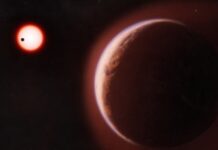
Future searches rely on mass spectrometry. They look for molecular processes in atmospheres like Venus, under the ice of Europa’s oceans, or on distant exoplanets viewed by NASA’s planned Habitable Worlds Observatory (targeted for the 2040 launch window).
The data will be complex chemical signatures, not high-resolution photos.
“If an AI on a mission analyzes mass spectrometry data… it could return a positive verdict for life with absolutely no relation to actual life,” Adami warned. The machine will confidently announce a discovery. The discovery will be false. The signal is a non-biological mimicry, and the AI, lacking context for true alien biology, gets fooled.
Next Steps in the Lab
The conclusion?
AI cannot replace human caution. It cannot replace the requirement for traditional, hands-on verification.
Adami and Gupta are taking this research out of the purely digital realm next. They plan to run the same tests using real-world chemical and biological datasets. The hypothesis remains: without understanding the full distribution of possible biological forms, AI will continue to trip over its own blind spots.
They are scheduled to present these findings in August at the 2a026 Conference on ArtificialLife in Waterloo, Canada.
For now, the search continues. We trust our machines because they process faster. But faster processing of wrong assumptions is just a faster path to disappointment. We might look through the noise and find patterns that feel like friends, when really they’re just static.
Does a pattern become a partner the moment our computers say “yes”?
Maybe we should double-check.