New images from the surface of Mars make scientists think again. It’s not just red dust and rocks. There are surprising shapes. The latest photos shared by NASA about the planet resonated on social media and in scientific circles. Experts examined the details in these images. The results are open to debate.
Is the Image of a Crab Fossil on Mars Real?
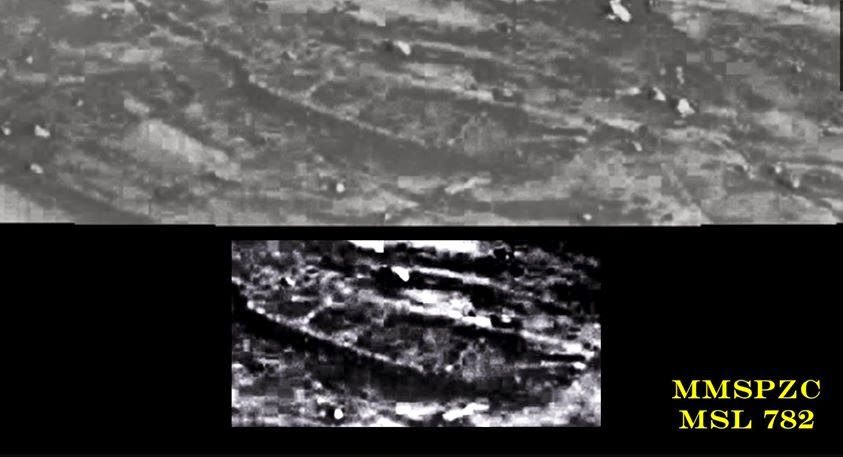
For many people, finding life on Mars is a dream come true. But some photos make this imaginary dream seem like a reality. One image in particular attracted attention. In this photo, there is a shape similar to a fossil crab. Eyes? Side legs? Uncertain. But at first glance, it resembles a familiar creature.
“Could the shape in the image indicate a biological activity?”
This question has stimulated researchers in the field of astrobiology. Fossil-like structures may provide clues as to whether there was water on Mars in the past. Water is the basic necessity of life. If this shape is really a fossil, it could help unravel the mysteries of Mars’ past.
Boat-Shaped Rock: A Joke of Nature?
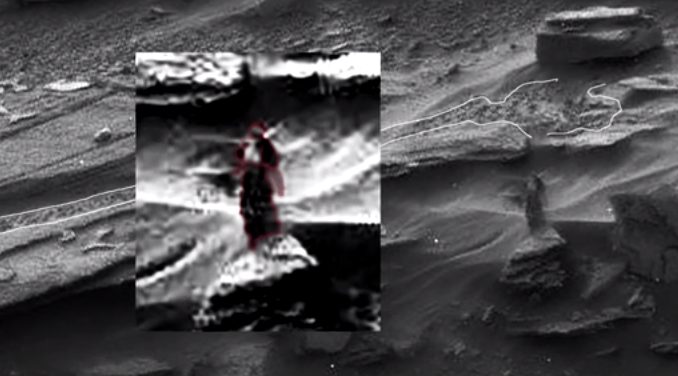
Another claim, as interesting as the crab, is a “boat” shaped rock formation. In one image, a tall, straight structure stands out. The edges are smooth. The middle is slightly sunken. It looks like a boat. Or like a wing. Or like a robot part. The eye looks for patterns. The human brain tries to find order even in chaotic nature.
This phenomenon is known as pareidolia. Pareidolia is the mind’s transformation of random shapes into familiar objects. Finding faces in the cloud. Finding animals in stones. Is this also true on Mars? Yes. But every example of pareidolia contains the potential for discovery. Perhaps what at first glance seems like a boat is a different form of erosion.
Why Are These Images Important?
Mars exploration is not just about collecting soil samples. It is about making sense of visual evidence. Each new image is a piece of the planet’s geological past. Shapes such as crabs or boats may be a result of this geological process. Wind. Water currents. Time.
These images suggest that Mars is not just a barren rocky dwarf. If the biological trace
The excitement about the mysterious images on Mars never ends. Claims of boat and crab fossils on Mars have re-circulated on social media. This time the image is not a human silhouette, but as before, it is interpreted as a strange reflection of nature.
A clear female silhouette appeared in a photo taken on the surface of Mars last week. Experts made their examinations and confirmed that there was no digital tampering or forgery in the images. At that moment, everyone was ready to believe. Then came the statement from the scientific world. That silhouette was not a person. It was the mark of a creature.
The topic had a great impact.
Then NASA got involved. It was stated that the photo was taken during a sandstorm. A reflection occurred in that area due to the shadow and light refraction created by the storm. After long discussions, the issue was closed.
But are Mars’ secrets over? No.
New images have brought Mars back to the agenda. This time the claim was even more ambitious. It was claimed that there was a boat image on Mars and a crab fossil.
Ufogos and image analysts examined the photos one by one. The result was the same. Another reflection.
There was a different detail. That boat-like shape was tried to be explained with explanations that failed to convince people. Social media users were skeptical. From where? Because there were similar situations in the past. People did not readily accept that the image of the boat on Mars was a reflection.
It is debated how convincing the image is. A real discovery? Or is it again a game of light and sand?
The answer is clear. But curiosity continues.
Dr. Brandenburg paints a much darker picture when interpreting the evidence for Martian history. According to him, the soil structure on the planet is not a coincidence. Substances such as thorium, uranium and radioactive potassium, which are densely found on the surface of Mars, bear the traces of an ancient disaster. Brandenburg thinks these traces could help solve the tragedy of beings that once lived on Mars.
According to the scientist’s thesis, radioactive traces on Mars are the residue of an atomic bomb explosion. Centuries ago there was an advanced civilization on the planet. This civilization was brutally destroyed by a different race. Brandenburg is looking for the cause of this extinction in these radioactive residues.
In this view, Mars was a battlefield. And this war resulted in a destruction unimaginable to modern man. That powerful atomic weapon buried under the planet wiped out civilization overnight. Brandenburg states that the distribution of radioactive elements on Mars is compatible with such an explosion.
Why is there so much radioactive material on Mars?
The question is: Why are these elements found at such depth and density?
Normally, such materials are concentrated in the cores of planets. However, the rates of radioactive potassium and uranium detected on the surface of Mars indicate a phenomenon that is also affected by the outer layers. Brandenburg argues that this is due to a large nuclear interaction.
This view says that Mars was not just an arid and desert place, but had a much more complex dynamic in the past. If Brandenburg is correct, radioactive traces on Mars prove evidence of a past assassination or war. This calls into question not only the geological but also the historical dimension of Mars research.
A different race?
The most striking part of Brandenburg’s claim is his emphasis on the “different race” that carried out the massacre. This is a scenario that goes beyond external factors or internal conflict among the Martians. The beings on the planet were eliminated by a force with superior technology rather than a conflict among themselves.
This scenario also explains why radioactive pollution on Mars is so unevenly distributed. The explosion of an atomic bomb penetrates the ground with radiation released into the environment. thorium and uranium concentrations seen in Martian soil indicate that such a distribution is not expected.
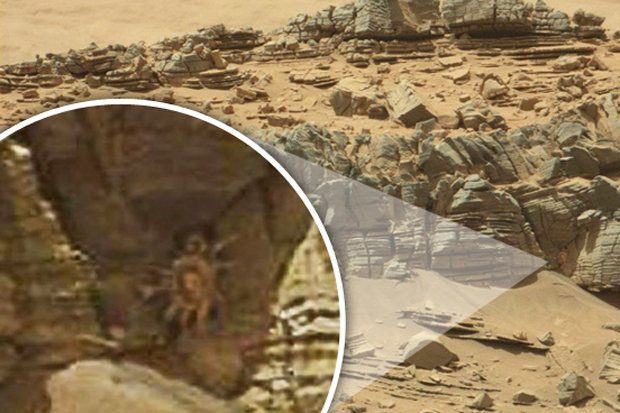
Dr. Brandenburg stared at the image, squinting at the jagged silhouette. To him, it wasn’t just a rock. It was a crustacean.
He described what looked like a crab fossil struggling to survive the harsh, unforgiving conditions of Mars. The terrain was brutal. The environment was hostile. Yet, this creature—frozen in stone—seemed to defy the odds.
But it wasn’t just about the geology. It was about the cover-up.
Brandenburg didn’t just believe the images. He believed what they implied. He pointed a finger at NASA. His accusation was sharp: the agency was hiding the truth. Specifically, they were keeping the existence of extraterrestrial life from the public.
Why hide it?
The implication was clear. If life existed there, even in fossil form, everything we thought we knew about our place in the universe would shift. And maybe, just maybe, that was too uncomfortable for the powers that be to handle.