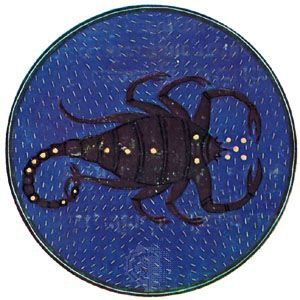
Look up into the southern sky and you will find a shape that looks less like a scorpion and more like a curved question mark or a hook. This is Scorpius, a zodiacal constellation sitting comfortably between Libra and Sagittarius. If you are trying to track it down, you can use its coordinates to pinpoint its location. The constellation hovers around 16 hours and 30 minutes right ascension, sitting at a declination of about 30 degrees south. It is a prominent feature for astronomers in the southern hemisphere.
The heart of this celestial creature beats with a red glow. That heart is Antares, also known as Alpha Scorpii. It is the brightest star in the constellation and ranks as the 15th brightest star visible in the entire night sky. Its magnitude sits at 1.1, making it easy to spot even with some light pollution. The name itself tells a story. It comes from the Greek phrase for “rival of Ares.” Ares is the Greek god of war, who we know as Mars. The star earned this title because of its distinct red color and intense brightness. It looks like a rival star challenging the red planet Mars itself.
But Scorpius is not just about pretty stars. It holds a secret that defies its peaceful appearance. Buried within the constellation’s boundaries is the brightest X-ray source in the entire sky. This object is called Scorpius X-1. While Antares gives off visible light, Scorpius X-1 pumps out high-energy radiation. This makes it a critical object for studying how black holes and neutron stars interact with their surroundings.
The contrast is striking. You have a massive red supergiant star named Antares staring down the red planet. Then, hidden nearby, is a compact object emitting X-rays that outshine anything else in the cosmos at that frequency. Understanding where Scorpius sits in the sky helps astronomers locate these diverse phenomena. It is a region of the sky that offers both historical myth and modern astrophysical discovery. The red of Antares matches the red of Mars, creating a visual duel that has lasted for millennia. Yet, the real drama happens in the X-ray spectrum.
“Scorpius X-1 is the brightest X-ray source in the sky, found within this constellation.”
For anyone interested in the science of stars, the position of Scorpius matters. It provides a clear reference point for locating both bright optical stars and faint, high-energy sources. The constellation’s location at 30 degrees south declination means it is a permanent fixture for observers in the southern half of the globe. It rises and sets with a regularity that allows for consistent study. The red hue of Antares is not just a curiosity. It indicates the star’s stage in its life cycle. It is aging, expanding, and preparing for its eventual end.
Meanwhile, Scorpius X-1 reminds us that the sky is filled with invisible violence. The X-rays are not just light. They are evidence of matter being crushed and heated to extreme temperatures. This is the reality of space. It is not just empty darkness. It is a place of intense energy and conflict. The constellation Scorpius captures both aspects. It has the mythic weight of its name and the scientific weight of its brightest X
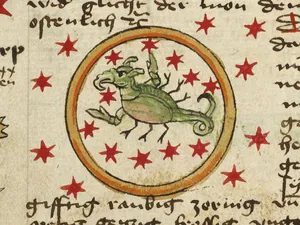
The Celestial Sting of Scorpius
Astrology places Scorpius as the eighth sign in the zodiac. It covers a specific window. Roughly October 24 to November 21.
The symbol is a scorpion. This ties directly to Greek myth. Specifically, the tale of Orion.
Orion was a giant hunter. He boasted he could kill any beast. The earth goddess Gaia responded with a scorpion. It stung him to death.
This myth explains a celestial mechanic. Why does Orion set when Scorpius rises? The scorpion chased him down. So they never appear together. When one rises in the east, the other sets in the west. They are eternally separated by the horizon.
Another story adds complexity.
Phaeton was the son of Helios. The sun god. Phaeton asked to drive the sun chariot for a day. He lacked the skill. The horses bolted. They drifted too close to earth.
A scorpion intervened here too. It stung one of the horses. The chariot careened out of control. Zeus had to strike Phaeton with a thunderbolt to stop the chaos.
This myth links the scorpion to cosmic order. It also explains why the constellation is where it is. The sun passes through Scorpius in late October. But ancient astronomers noted a gap. A gap between the claws of the scorpion and the sting.
Why is there a gap?
The myth suggests the scorpion struck too hard. It left a mark. Or perhaps the gap is where Phaeton’s chariot nearly crashed. The exact reason is lost. But the void is real.
For those tracking dates, Scorpius rules late October and early November. The stars shift. The scorpion moves across the sky. It is not just a symbol. It is a warning.
Sting carefully.