


Walking down a Manhattan sidewalk, you usually don’t worry about aerial ballistics. But look up near the Empire State Building. A gray streak drops from the sky. It looks like a bomb. It moves faster than a car on the FDR Drive. You duck. By the time you lift your head, the “torpedo” has vanished, talons clamped around a pigeon that didn’t stand a chance.
That is a peregrine falcon. And it just broke the sound barrier of your personal comfort zone.
We like to think of cheetahs as the kings of speed. They’re fast on the ground. But if you want raw velocity, you look up. Peregrine falcons are the fastest animals on the planet. In a hunting dive, known as a stoop, they hit speeds over 200 mph (322 km/h). That is more than three times the top speed of a sprinting cheetah.
The Anatomy of an Aerial Missile
How does a bird pull off physics-defying speeds? It isn’t just willpower. It’s engineering.
Their bodies are built for one thing: dropping fast. They have massive flight muscles anchored to a large keel bone. Their wings are long and pointed, with stiff feathers that minimize drag. They don’t flap much during a dive. They tuck and fall.
Their respiratory and cardiovascular systems work like high-performance engines. They can handle the massive g-forces that would black out a human pilot. Blood keeps flowing to the brain even when they’re pulling 25 Gs.
High-Rise Hunting in Cities
You might expect these birds to live in remote wilderness. But in the US, they thrive in cities. Why?
Skyscrapers are just artificial cliffs. Peregrines nest on high ledges. Tall buildings give them the height they need to gain momentum. Drop from 1,000 feet, and the air turns into a solid wall of resistance. They have to manage their speed carefully. If they dive too long, they risk injury. So they pull up at the last second, snatching prey mid-air.
This adaptation has helped them survive in urban centers like New York, London, and Toronto. They use the same hunting technique they used on prehistoric cliffs, just with steel and glass instead of stone.
The DDT Crisis
Speed didn’t save them from pesticides.
In the 1940s, DDT became widespread. It killed pests. It also killed peregrines. The chemical weakened their eggshells. Eggs cracked before hatching. Populations collapsed. By 1975, only 324 nesting pairs remained in the US. The species teetered on the edge of extinction.
The Endangered Species Act stepped in. DDT was banned. Conservationists worked to restore habitats. The recovery was slow but steady.
Today, there are about 2,000 to 3,000 breeding pairs. They are no longer endangered. But they are still rare. Most people will never see one up close.
Identifying the Ghost of the Skies
If you do spot one, how do you know it’s a peregrine and not a hawk?
- Blue-gray back
- White belly with black spots
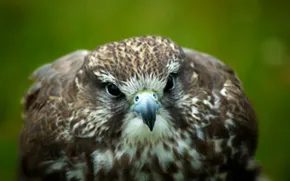
- Black “mustache” stripes on the face
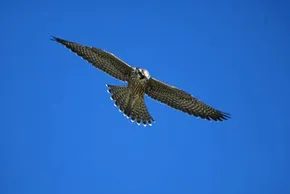
- Long, pointed wings
They look like a blur. But when they hover or glide, the features stand out. They are everywhere except Antarctica, deserts, and dense jungles. They adapt to almost any environment.
Why Speed Matters
Their speed isn’t just for show. It’s how they eat. Without it, they starve. Without conservation, they disappear.
The story of the peregrine falcon is a story of resilience. They survived the pesticide war. They adapted to cities. They are still diving at 200 mph, silent and deadly.
Next time you see a shadow pass over a building, look up. You might miss it. But it was there. Fast. Invisible. Gone.

The Anatomy of the Dive
Most birds cruise at a leisurely 19 to 37 mph. It’s a respectable pace for lollygagging through the jet stream. The peregrine falcon doesn’t lollygag. It hunts.
That distinction comes down to one specific question: what allows the peregrine falcon to fly so much faster than other birds?
It isn’t just adrenaline. It’s engineering.
The primary driver of this speed is the size of its keel. Located on the breastbone, the keel acts as the anchor for the flight muscles. In a peregrine, this structure is massive. The muscles attached to it are powerful enough to beat the wings at dizzying speeds. But power is useless without aerodynamics.
Cutting Through the Air
A peregrine’s body is built to slice, not push.
Its wings are pointed. The feathers are slim, stiff, and unslotted. This creates a streamlined silhouette that minimizes drag. Drag is the enemy of speed. When broad-winged birds rush through the air, loose feathers catch the wind. That resistance slows them down. A peregrine needs zero resistance when it spots a pigeon on the ground.
But anatomy only gets you so far. You can have the fastest wings in the world, but if your heart can’t keep up, you stall.
Fueling the Fast
The peregrine falcon’s aerobic fitness is where the real magic happens. Flight power comes from metabolic activity in muscle fibers. Birds have two main types:
- Red muscle fibers: Designed for oxygen uptake. They allow for efficient energy metabolism and prolonged flight.
- White muscle fibers: These fatigue quickly. They are for short bursts.
Peregrines are packed with red muscle fibers. They also possess large, strong hearts and highly efficient lungs and air sacs. This system keeps their muscles flooded with oxygen. Other birds simply cannot breathe effectively at the speeds a peregrine achieves. Half that speed is often enough to make them gasp.
Gravity is a Co-Pilot
Where the dive begins matters.
Peregrines often live on high cliffs or tall buildings. These heights provide a starting point for accumulation. As they descend, gravity and the upward rush of wind naturally increase their speed and lift.
Dive from a building half a mile up, and you’d pick up some serious clip too. The physics are the same. The difference is the recovery. You might hit terminal velocity, but can you pull up, catch a pigeon, and fly back to your nest? Probably not. The peregrine can. The rest of us are just passengers in the fall.
Frequently Asked Questions
What is the typical diet of a peregrine falcon?
They primarily eat other birds. Pigeons, doves, and songbirds are the main course. They catch these prey items midair during high-speed dives.
How do peregrine falcons hunt their prey?
They spot targets from high altitudes. Then, they dive at incredible speeds to strike. It is an ambush tactic perfected by evolution.


