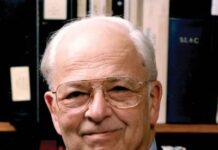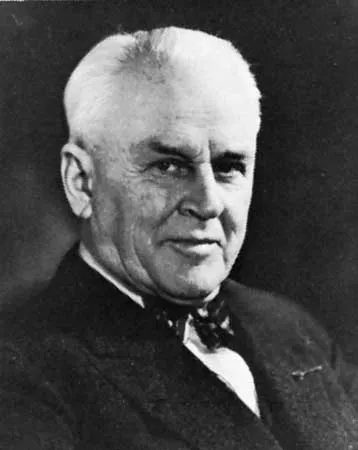
Robert Millikan wasn’t just a name in a textbook. He was the man who pinned down the exact charge of an electron. Born in Morrison, Illinois, in 1868, he grew up in the shadow of the American Midwest before moving to the academic centers of the East. His journey started at Oberlin College, where he graduated in 1891. Then came Columbia University, granting him a doctorate four years later in 1895.
The 1923 Nobel Prize in Physics didn’t come for speculation. It came for proof.
He landed an assistant position at the University of Chicago in 1896. It wasn’t long before he climbed the ladder, becoming a full professor in 1910. While teaching, he wrote physics textbooks. These weren’t dry, dusty volumes. They were used by high-school and college students widely. They shaped how a generation learned about the physical world.
But his real legacy wasn’t in the classroom. It was in the lab. Millikan is famous for two big things: studying the elementary electronic charge and exploring the photoelectric effect. The photoelectric effect had been a puzzle for decades. Light hitting metal could knock electrons loose. But how much energy did it take? And how fast did the electrons move? Einstein had proposed an explanation, but it needed proof.
Millikan provided that proof. And he went further. He wanted to know the exact value of the electron’s charge. This was a tiny number. Impossibly small for the tools of the time. Yet he found a way to measure it.
The Oil Drop Experiment
How did he do it? He used oil drops.
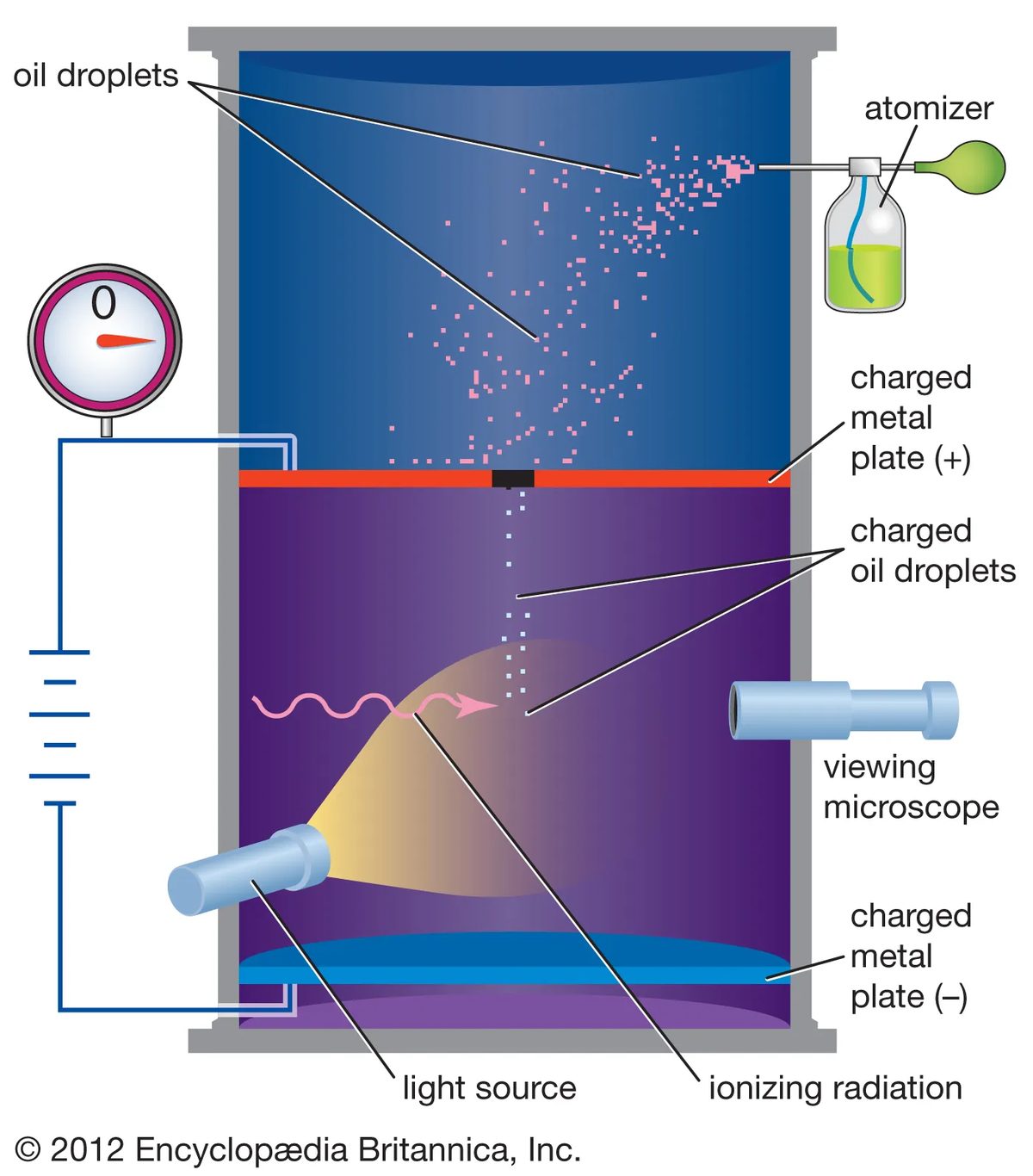
Millikan set up an experiment that looked simple but required precision. He sprayed tiny drops of oil into a chamber. These drops picked up a charge from friction. He then applied an electric field. The field pushed against gravity. He watched the drops hover.
By balancing the forces, he could calculate the charge. He repeated this thousands of times. The results were consistent. The charge always came in whole-number multiples of a base value. That base value was the charge of a single electron.
This was a turning point. It proved that charge was quantized. It wasn’t continuous. You couldn’t have half an electron’s charge. It was all or nothing. This confirmed the atomic theory of matter in a way that had never been done before.
Why It Matters Today
So why should you care about Robert Millikan?
His work didn’t just win a Nobel Prize in 1923. It laid the groundwork for modern electronics. Every time you charge your phone, every time a solar panel converts light into electricity, you are dealing with the principles Millikan helped define. The photoelectric effect is the mechanism behind solar cells. Millikan’s careful measurements made it possible to understand how much energy each electron carries.
Without his precise data, the quantum revolution might have taken much longer to gain traction. He turned a theoretical concept into a measurable fact.
Millikan died in 1953 in San Marino, California. He left behind a body of work that changed how we view the building blocks of the universe. We still use his numbers. We still rely on the certainty he brought to a field full of uncertainty.
The next time you

Pinpointing the Fundamental Charge
Millikan’s quest for the single electron charge began in 1909. He started by tracking charged water droplets in an electric field. The data hinted at a pattern. The charge on these droplets appeared to be a multiple of a fundamental unit. But the numbers were sloppy. The experiment lacked the precision needed to convince the physics community.
Water was the problem. It evaporated too fast. Too fast for accurate measurement.
So, in 1910, he switched tactics. He swapped water for oil. The oil-drop experiment became legendary. He suspended oil droplets between two metal plates. He adjusted the voltage until a drop hung perfectly still. Gravity pulled down. Electricity pulled up. The forces balanced. At that exact moment of suspension, he could calculate the charge. The results were sharp. Convincing.
Proving Einstein’s Radical Theory
By 1916, Millikan turned his attention to light. Specifically, the photoelectric effect. This phenomenon had baffled physicists. When light hit a metal plate, it ejected electrons. But why? How did it work?
Einstein had proposed a solution in 105. He treated light as a quantum phenomenon. His equation was simple but revolutionary: E = hf – φ. The energy of the ejected electron equaled Planck’s constant times the light frequency, minus the metal’s work function.
Many physicists dismissed this. It contradicted established wave theory. Millikan set out to disprove it. He applied the same rigorous experimental skill he used for the oil drops. He measured the photoelectric effect with extreme precision.
“Millikan’s measurements proved Einstein’s theory and obtained an accurate value of Planck’s constant.”
Ironically, he proved Einstein right. He also nailed down Planck’s constant. The theory that once seemed like heresy was validated by his data.
War Effort and Cosmic Rays
The context shifted in 1917. The United States entered World War I. Millikan stepped away from pure physics. He became vice chairman of the National Research Council in Washington, D.C. His role was practical. He helped scientists apply their research to the war effort.
He returned to academia in 1919, based in Chicago. But the pull of the West was strong. In 1921, he left the University of Chicago. He took a new role as director of the Norman Bridge Laboratory of Physics at Caltech in Pasadena.
There, he investigated a strange signal. Physicist Victor Hess had detected radiation coming from outer space. Was it terrestrial? Or extraterrestrial?
Millikan proved it was the latter. He identified its origin. He also named it. He called it cosmic rays. The term stuck.
Building a Research Empire
Millikan’s influence extended beyond the lab. He served as chairman of the executive council at Caltech. He held this position from 1921 until his retirement in 1945.
During those twenty-four years, he transformed the institution. Caltech rose to become one of the leading research hubs in the United States. The foundation he laid remained solid. The work continued. The questions were still out there.