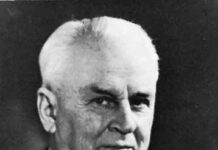
Sir William Maddock Bayliss changed how we understand the human body. He did this alongside his lifelong collaborator, Ernest Starling. The pair discovered hormones. This was the first time scientists identified a chemical substance that travels through the blood to trigger an action in a distant organ.
Bayliss was born in Wolverhampton in 1860. He studied at University College, London, and Oxford. His career took off when he joined University College as a teacher in 1888. Starling soon joined him. They worked together for decades. The collaboration was profitable for science.
Their early work focused on blood vessels. They studied how nerves control contraction and dilation. This led to a better device for measuring blood pressure. They called it a hemopiezometer. It was an improvement on existing tools. They also looked at how intestines move. They found the peristaltic wave. This is the rhythmic squeezing that pushes food forward.
But the big discovery came later. In 1902, they found secretin. This was the first known hormone. They used anesthetized dogs for the experiment. They mixed dilute hydrochloric acid with partially digested food in the intestine. The acid activated a chemical in the lining of the duodenum. The chemical was secretin. It entered the bloodstream. It traveled to the pancreas. There, it told the organ to release digestive juices.
The term hormone came from this work. Bayliss and Starling coined it. It comes from the Greek word horman, meaning to set in motion. They used it to describe chemicals that stimulate an organ from a distance.
Bayliss kept working. He studied how the enzyme trypsin is formed. It starts as inactive trypsinogen in the small intestine. He measured how long it takes for trypsin to digest protein. This was precise work.
During World War I, Bayliss investigated wound shock. He recommended gum-saline injections. These injections saved many lives. He wrote several books. Principles of General Physiology (1915) was his best known work. It was considered the best text on the subject at the time. He also wrote The Vaso-Motor System in 1923.
Bayliss died in London in 1924. He was knighted in 1922. His work laid the foundation for endocrinology. We still use the concepts he developed. The way we treat digestion and chemical signaling owes a debt to him. The body is a complex machine. Bayliss helped show us how its parts talk to each other.