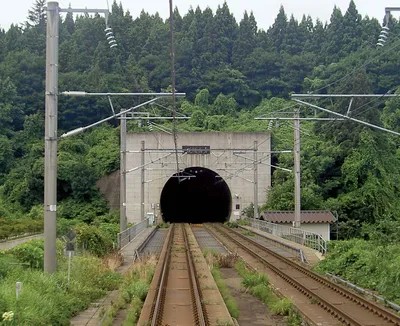
It sits under the stormy waters of the Tsugaru Strait, an artery of concrete and steel that connects Japan’s two largest islands. The Seikan tunnel is more than just a hole in the ground. It is a monument to tenacious ambition.
Completed in 1988, this undersea tunnel connects Honshu and Hokkaido. It is 53.8 kilometers long and has been the second longest tunnel in the world for several decades. Currently, only the Gotthard tunnel in Switzerland is longer. But length is only part of the story. The real achievement is in the water. This gigantic structure is 23.3 kilometers long and is located in the sea.
A Dark History of Construction
You can’t talk about the Seikan Tunnel without mentioning the blood that went into building it.
Construction began in 1964 and was completed 24 years later. It took a quarter of a century of digging, drilling and geological battle. At its peak, 3,000 workers worked underground at a time. They faced cave-ins. They faced flooding. The pressure of the ocean above them was immense.
Thirty-four men died during the project.
“The 1954 typhoon that sank a ferry in the Tsugaru Strait and killed more than 1,400 people accelerated plans to build the tunnel.”
The idea didn’t come from engineers initially. It came from grief. In 1954, a typhoon sank a ferry with more than 1,400 people on board. The public demand for a safer link was deafening. Japanese National Railways took on the sponsorship. The goal is simple. Stop people from dying at sea.
Why We Don’t Use It Anymore
It’s ironic. The construction of the tunnel solved the safety problem. It failed the convenience test.
When planners first created these maps in the 1950s, ferries were the only option. Trains were slow. Today, flying between Honshu and Hokkaido is quick. It is almost as cheap as taking the train through the tunnel. So if people just want to fly, why build 53 kilometers of underwater tunnels?
Passenger numbers did not meet expectations. Daily commuters no longer use the tunnel for its original purpose. It remains a hub for freight trains. Farmers rely on it to move agricultural goods north. But what about the average traveler? It’s rarely their first choice.
The Bullet Train Complication
In 2016, Seikan Tunnel changed again. It began accommodating Shinkansen bullet trains. This was meant to bring prestige back to the route. However, high-speed rail poses physical challenges due to limited space.
The Shinkansen produces shock waves. In a narrow tunnel, those waves bounce back. If freight trains are running on the same narrow gauge track, these waves can cause cargo instability. The logistics are a nightmare.
If a freight train is inside, the Shinkansen cannot run at full speed. The operator must coordinate movements with surgical precision. I can’t let them go free. The tunnel is too narrow for safe high-speed travel.
Immortal legacy
Is this a project failure? No, this is a victory of the 20th century.