Put on your detective boots. You are looking for thirty million pages of human knowledge that went missing on the moon last April. They didn’t vanish into the ether. They crashed.
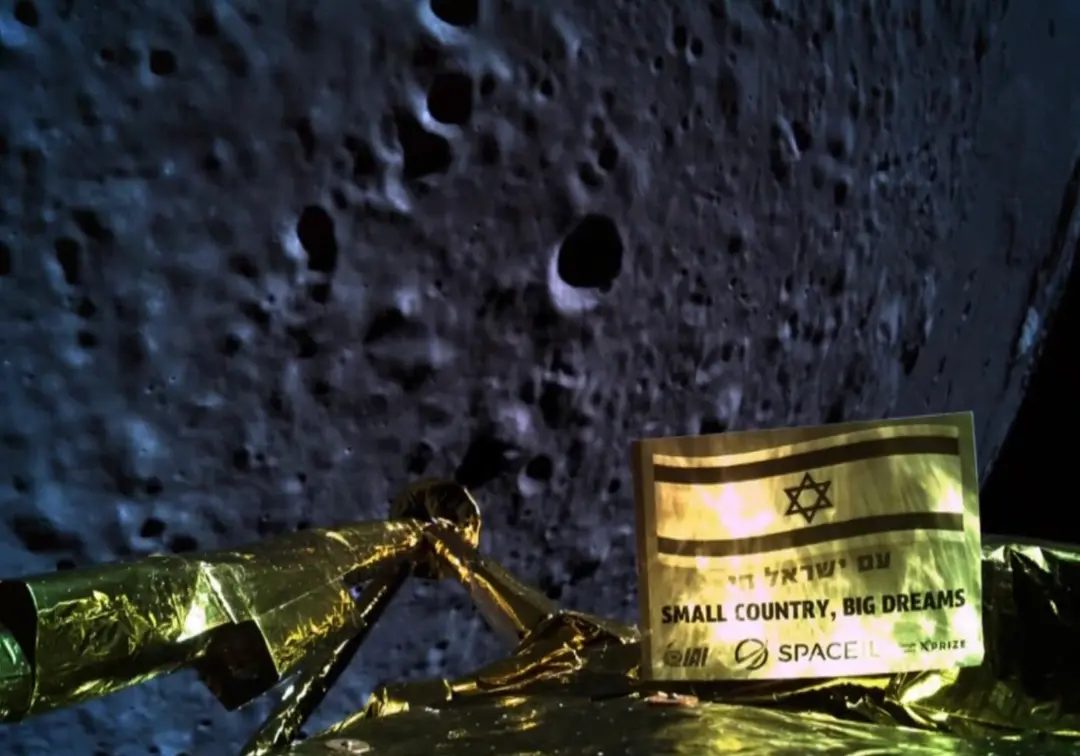
The documents rode aboard Bereshit, Israel’s first lunar lander. The mission failed. The spacecraft missed its landing target and smashed into the lunar surface. It was a public failure. A embarrassing one. But inside the wreckage lay something far more enduring than a working spacecraft.
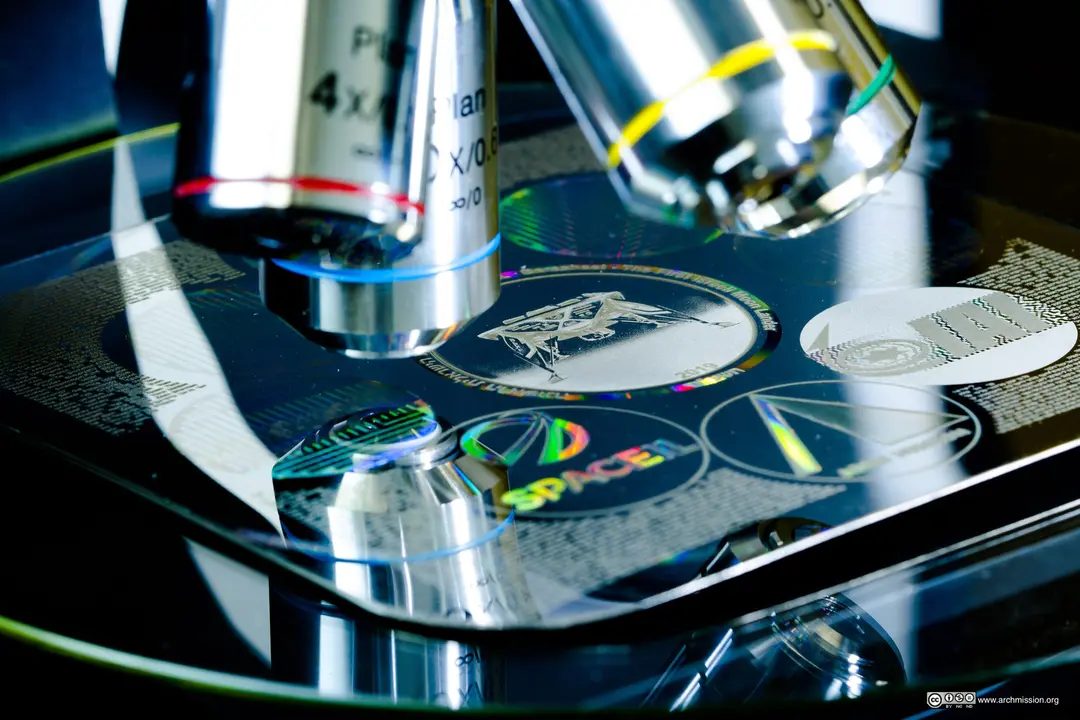
Twenty-five tiny disks made of nickel. Each one is microscopically small. Yet each holds a massive amount of data. Together they form what the Arch Mission Foundation calls a “lunar library.”
Founder Nir Shavit believes the library survived the impact. He compares it to an airplane’s black box. A black box is designed to withstand catastrophic failure. The same logic applies here. The disks were built to endure extreme heat and pressure. The crash itself might have buried them in a way that protects them for millions of years.
Now there is a treasure hunt.
Arch Mission Foundation is launching a search effort. They want to find the crash site. They want to retrieve the disks. The goal isn’t just recovery. It’s preservation. The moon is a harsh environment. Radiation batters its surface. Micrometeorites strike constantly. If these disks are exposed, they won’t last. But if they are buried under a layer of regolith or shielded by their own wreckage, they could outlast our current civilization.
Why nickel?
Nickel is tough. It resists corrosion. It handles vacuum conditions well. The data is stored using a technique that etches information into the metal at a microscopic level. It’s not digital in the way we think of hard drives. It’s analog. Physical. You need a microscope to read it.
This isn’t just about Israel. It’s about human memory. The Bereshit mission was a national milestone. Its failure didn’t erase the intent behind it. The mission carried more than just the disks. It carried the hope of continuity.
The search is difficult. The moon is big. The landing site coordinates were approximate. The terrain is rugged. Finding a specific spot where a craft impacted is like finding a needle in a haystack. A haystack made of dust.
Still, the mission succeeded in planting a seed. Literally. Along with the data, Bereshit carried seeds from plants like spinach, cotton, and flax. Those seeds didn’t survive. The environment was too hostile. But the data? The data might be waiting.
We are living in an age of digital fragility. Our libraries are in the cloud. Our history is in servers that can crash. They can be hacked. They can be wiped. This lunar archive is a backup. A physical backup. It doesn’t care about power outages. It doesn’t care about software updates. It just sits there.
For now, the disks are part of the lunar landscape. They are debris. They are also time capsules.
The Arch Mission Foundation is calling for help. They have a team. They have the coordinates. They need resources. The moon doesn’t offer much in the way of assistance. It offers cold. It offers silence. It offers a chance for our story to survive long after we are gone.
Will we
Tracing the Debris Field
The dispersion radius is the immediate concern. The French Astronomical Society (AMF) estimates that fragments from the crash site could have been ejected several kilometers in every direction. It’s a messy spread. The Israeli probe Bereshit didn’t just stop. It slammed into the lunar surface at several hundred kilometers per hour. A motor defect spelled the difference between a landing and a crater. The impact occurred in the Sea of Serenity, exactly where the team had hoped to touch down.
Tracking the Wreckage
To keep track of the chaos, the AMF president set up a shared Google Doc. This isn’t just a chat log. It integrates the specific technical specifications of the Bereshit probe with details about the so-called “lunar library” it carried. It also catalogs the known conditions of the crash itself.
The next clue lies in orbit. NASA’s Lunar Reconnaissance Orbiter (LRO) is poised to provide fresh data. All it needs to do is fly over the zone. The goal is simple but difficult: spotting a new impact crater or identifying scattered debris fields.
Why This Matters
You might wonder why tracking a few kilometers of debris matters. It’s not just about cleaning up. It’s about understanding how these small-scale missions fail. And more importantly, it’s about preserving the history attached to the metal.
The “lunar library” refers to the tiny chips or disks carried by the probe. These contain digital archives. If they survived the impact, they are now scattered across the lunar surface. Finding them would be a win for data recovery. Missing them means accepting the loss.
The Search Continues
Current models suggest the debris field is wide. This complicates the search. A single orbit by LRO might not catch everything. But it will likely reveal the size of the impact crater. That crater acts as a center point. Researchers can then work outward.
The shared document serves as the hub. It links the engineering specs to the physical reality of the crash. Without it, the scattered data points would remain disconnected. With it, there’s a path to reconstruction.
Is it possible to retrieve the disks? Probably not with current technology. The terrain is rough. The debris is fine. But knowing where to look is half the battle. LRO will scan. The AMF will analyze. The question is whether the lunar surface will yield its secrets quietly or hide them deep in the regolith.

The race to map the human genome has entered its final, most chaotic phase. It isn’t just about speed anymore. It’s about precision in the face of sheer volume.
The Reference Gap
Most people think we have a “complete” human genome. We don’t. The current reference sequence is a mosaic, stitched together from a handful of donors who didn’t represent the diversity of the species. It’s a good start. It’s useful. But it’s missing the dark matter of our DNA.
These gaps are filled with repetitive sequences. Long, identical stretches that act like landmines for sequencing machines. They confuse the assembly software. You get a jumbled mess instead of a clear map.
For decades, this was the bottleneck. We could read the easy parts. The gene-rich islands. We struggled with the repetitive swamps.
Now, with long-read technologies moving into the mainstream, the swamps are being crossed. But the question remains. Which version of us are we looking at?
Why Diversity Matters in Data
If your reference genome looks like a specific subset of the population, your diagnostic tools will be biased. You might miss a mutation that’s common in one group but rare in another. Or worse. You might flag a harmless variation as a disease marker because it didn’t match the “standard.”
This isn’t just academic. This affects who gets diagnosed. Who gets treated. Who gets left behind.
Researchers are now building pangenomes. Graphs of genomes rather than linear strings. They capture the variation. The insertions. The deletions. The structural variants that define human differences.
It’s messy. It’s complex. It’s necessary.
The Cost of Completeness
Building these comprehensive maps is expensive. And slow. The computational power required to assemble a pangenome is staggering. You’re not just aligning reads to a single line. You’re navigating a network of possibilities.
But the cost is dropping. The tools are getting better. We’re moving from a single reference to a library of references.
This shift changes everything for clinical genomics. It means a test done in a hospital in Ohio might finally account for ancestry-specific variants that were previously ignored. It means fewer false positives. Fewer missed diagnoses.
The Next Frontier
We are standing on the edge of a more accurate understanding of human biology. Not because we found new genes. But because we finally stopped pretending there’s only one way to be human.
The data is there. The machines are ready. The question is whether we can process it fast enough to matter.
Probably not soon. But that’s okay. Accuracy takes time.