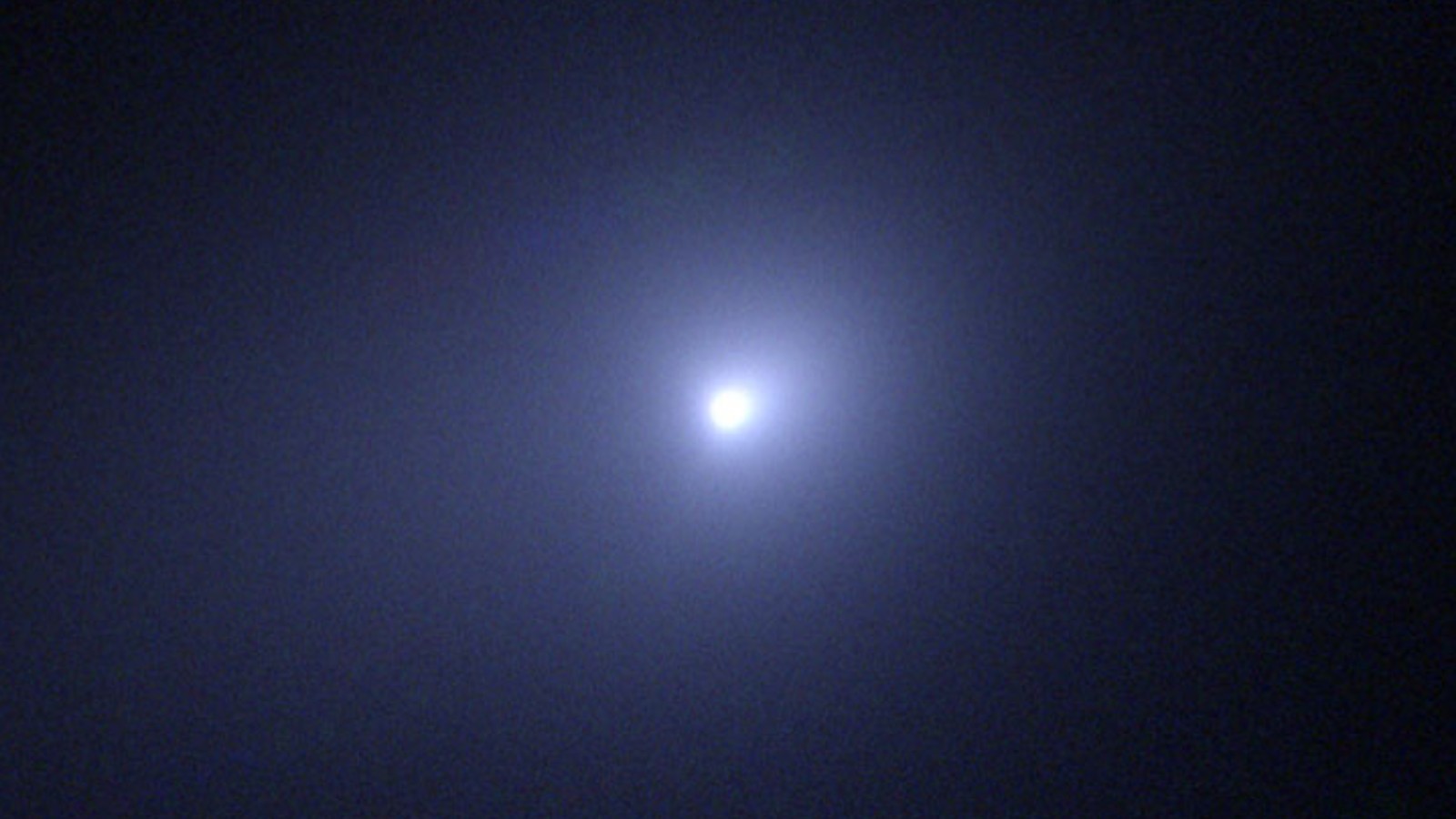
A recent study has revealed that the interstellar comet 3I/ATLAS underwent a significant chemical transformation as it made its close approach to the sun last autumn. By analyzing the object’s composition, researchers are gaining unprecedented insights into the building blocks of distant solar systems.
A Rare Window into Other Worlds
3I/ATLAS is a rare scientific phenomenon: it is only the third interstellar object ever detected passing through our solar system. Unlike local comets, which originate from our own sun’s neighborhood, 3I/ATLAS was born around a different star.
This distinction is crucial for astronomers. Because these objects act as “messengers” from deep space, they provide a direct sample of the raw materials—the gases and dust—that existed in alien star systems during the formation of their planets, asteroids, and comets.
Observing the Transformation
On January 7, 2026, a research team led by Yoshiharu Shinnaka of the Koyama Space Science Institute utilized the Subaru Telescope in Hawaii to conduct a detailed analysis of the comet.
The team focused their observations on the comet’s coma —the luminous envelope of gas and dust that surrounds a comet’s nucleus. By studying the specific colors emitted by this coma, the researchers were able to estimate the ratio of carbon dioxide to water surrounding the object.
The findings were unexpected:
– The chemical ratio has shifted significantly since the comet’s perihelion (its closest approach to the sun) on October 29, 2025.
– This change indicates that the comet’s chemical makeup is not static but is actively evolving as it reacts to solar heat.
Why These Changes Matter
The fact that 3I/ATLAS is changing chemically does more than just tell us what it is made of; it provides a “window” into its physical makeup.
“By applying the observational and analytical techniques we have developed through studies of solar system comets to interstellar objects, we can now directly compare comets hailing from both inside and outside the solar system,” noted team leader Yoshiharu Shinnaka.
The shifting ratio of carbon dioxide to water acts as a diagnostic tool. By observing how these gases are released, scientists can infer the internal structure of the comet—essentially determining whether it is a solid mass or a porous, loosely bound collection of ice and dust.
This ability to compare “local” comets with “interstellar” visitors allows astronomers to determine if the processes that create planetary systems are universal or if different stars produce fundamentally different chemical environments.
Conclusion
The shifting chemistry of 3I/ATLAS provides a vital clue to the internal structure of interstellar objects and offers a rare opportunity to compare the chemical evolution of our own solar system with that of distant, alien worlds.