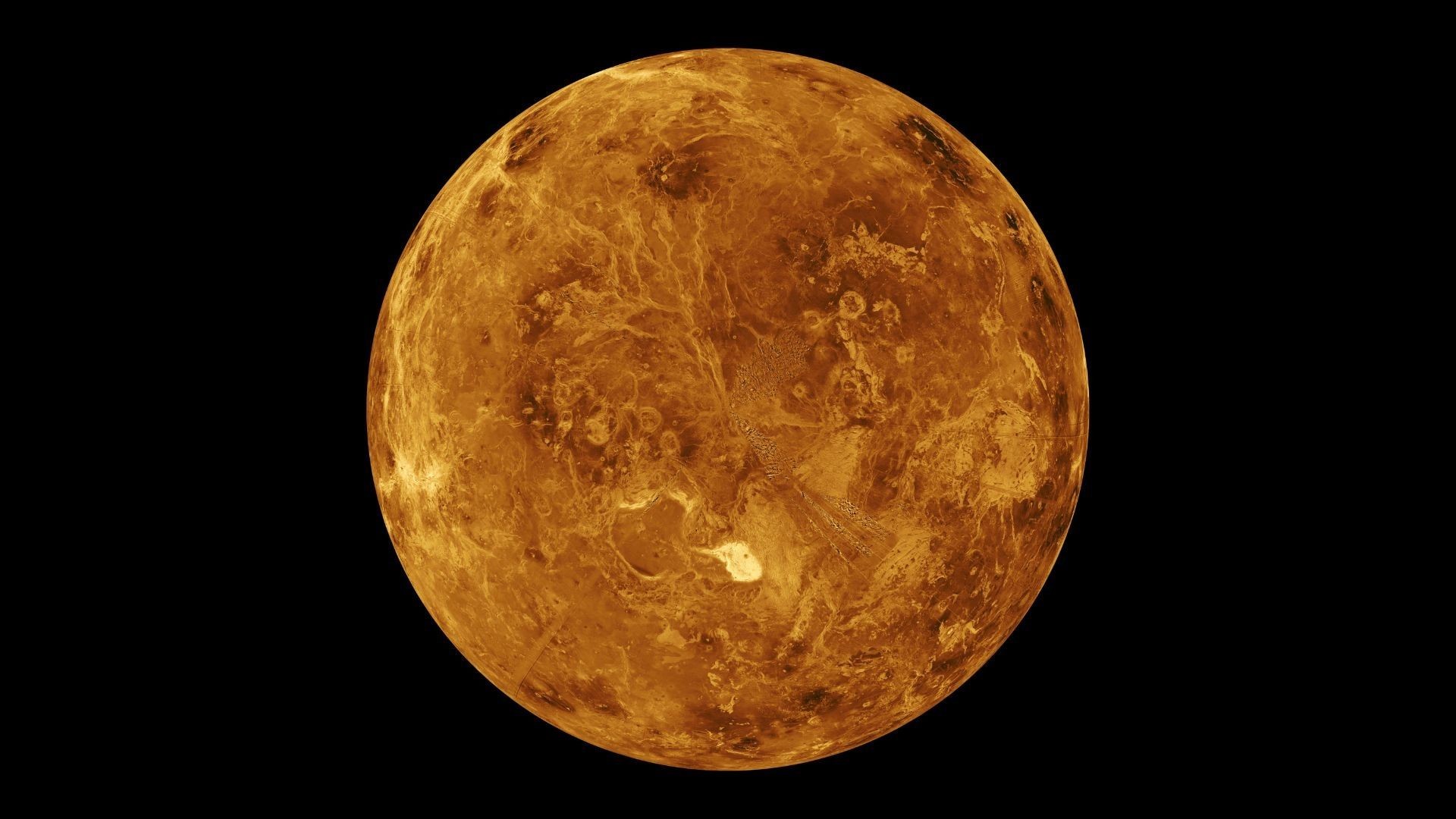
Coronae.
Strange, ring-like formations dotting the surface of our closest planetary neighbor. They are weird.
They might actually be the key to unlocking what lies beneath Venus’s thick, suffocating crust. For years, that interior remained a black box. Inscrutable. Now, Anna Gulcher is shaking the box open.
Gulcher is an earth and planetary scientist at the University of Freiburg in Germany. She’s digging through old data. Specifically, the radar readings from NASA’s Magellan spacecraft, which stopped talking in 1994. Old data, fresh eyes. Her team built 3D models of the biggest coronae to map out Venus’s puzzling geodynamics.
The Data Speaks
Magellan’s radar gave us the topography. The gravity signatures followed.
The team found a database of 741 coronae spread across the planet. They are not uniform. Some are big. Some small. Some sit on fractures. Others don’t. The variety is staggering. It suggests no single mechanism created them all.
Instead? A spectrum of dynamic processes.
“We think they are basically the surface expression of a hot plume moving upward from the interior,” Gulcher said.
Hot material rises. The crust buckles. A circle forms.
This matters for Earth, too. If we understand how Venus moves—or fails to move—we might see our own planet’s history differently. Gulcher and her colleagues argue this work identifies warm mantle upwellings under 52 specific coronae. It’s the strongest evidence yet for different plume-related tectonics there.
But there’s a catch. Current gravity data is blind to some active tectonic signals. The activity might be much wider than we see. Are we missing most of it?
Why The Rings?
The shape gives it away. Circular features imply circular causes.
Gulcher points to magma plumes. These are hotter than their surroundings. When they rise, they push the crust up. This uplift creates the rings we see from space.
It’s mantle convection at work. The rocky layer between the core and the crust moves. It spreads out. It drives lateral movement. It’s a slow, grinding cycle of rising and falling rock over billions of years.
This leads to the big question in planetary science: Did Venus ever have plate tectonics like Earth?
On Earth, yes. The lithosphere is split into giant, moving plates. They collide. They shake. They erupt.
It recycles carbon.
That’s the difference.
Water Is Everything
Earth got lucky. We have oceans.
Those oceans created hydrous rocks. Water-rich rocks. They get soft. They become pliable. They break easily into tectonic plates. This allows carbon to recycle back into the mantle efficiently. It keeps the atmosphere stable.
Venus?
Likely no oceans. Maybe never any large water bodies at all. That’s the conundrum. Upcoming missions hope to settle that score.
Without water, Venus lacks the lubrication for true plate tectonics. The rock stays hard. The carbon doesn’t recycle well. It probably relies on limited resurfacing processes instead. A stagnant lid, perhaps, punctuated by these violent coronae bursts.
A Mirror, Darkly
What haunts Gulcher isn’t just the data gaps.
It’s the similarity.
Venus looks like Earth in many ways. It’s roughly the same size. Same mass. But the differences in geological history are profound. With the data we have now, she can’t fully explain why two such similar planets evolved so differently.
“It can look so similar yet be so different.”
Earth’s plate tectonics has run steady for 3 billion years. It dumps heat. It recycles material. It made intelligent life possible. Venus? Still a mystery.
New eyes are coming.
The VERITAS and EnVision missions are preparing to launch. They will map the subsurface with unprecedented detail. They’ll resolve topography and gravity in ways Magellan never could.
We will see the cracks. We will see the plumes.
We’ll just have to wait and see what they mean.