This is astronomy. It’s the science of stuff that floats in the sky. Not just stars, but space itself. The whole physical universe. People doing this work? They’re astronomers.
Let’s talk about carbon. The stuff you’re made of. The base of all life on Earth right now. It sits around as graphite. It squeezes itself into diamond. Coal has it. Limestone has it. Petroleum definitely has it. Carbon is weirdly flexible. It bonds with itself to form molecules that matter, chemically or biologically. In climate chats, “carbon” gets lazy. People say “carbon” when they mean carbon dioxide. It’s a shortcut for warming worries.
Speaking of carbon dioxide or CO2. A gas. No color. No smell. You breathe it out every second. Animals do the same thing when oxygen reacts with their dinner. Burning organic stuff makes it too. Like fossil fuels. It traps heat. A classic greenhouse gas. Plants hate having too much? No. They eat it. They turn CO2 into oxygen via photosynthesis. They make food out of the air.
Don’t confuse that with carbon monoxide. Mono means one. Greek for single. One carbon atom hugs one oxygen atom. It’s toxic. Your lungs hate it. Where does it come from? Burning fossil fuels again. It’s everywhere, but dangerous.
What is a chemical? It’s two or more atoms sticking together in a strict pattern. Water? H2O. Two hydrogen friends hold hands with one oxygen. Simple. But “chemical” works as an adjective too. It describes how things react when different compounds collide.
Out there. Beyond our messy planet. There are comets. Balls of ice and dirt. A nucleus of junk. When one swings near the Sun, things get hot. Gas vaporizes. Dust flies off. Boom. A trailing tail.
Back to Earth. Elevation. Just the height. How high you are above sea level. The equator? An imaginary line. It slices the planet in half. Northern side. Southern side. Half and half.
Do you evaporate? Water does. It turns from liquid to vapor. Ghost mode.
A factor is just a helper. A contributor. It plays a part in what’s happening. One of many things moving the needle.
A field isn’t just a football grid. It’s an area of study. Like biology. Or it’s where you do the work. The woods. The ocean. A city street. Anywhere that isn’t a sterile lab. Real world research happens here.
Latitude. How far you are from that middle line. The equator. Measured in degrees. Up to 90. Low lat? Near the middle. Hot. High lat? Near the poles. Cold.
Here comes the heavy hitter. Methane. CH4. One carbon, four hydrogen. It’s natural gas, basically. Plants rot in wetlands and let it out. Cows belch it. Livestock is loud in the methane game. Climate-wise? Methane is scary. It traps 80 times more heat than carbon dioxide does. Very potent. Very bad news.
The molecule is the tiniest chunk of a chemical. The smallest you can cut it and still have it be that thing. Oxygen air is O2. Two oxygens locked up. Water is H2O again. Three atoms holding tight.
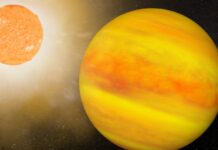
A planet is big. It orbits a star. It doesn’t make its own light. Unlike stars. Which are bright.
Poles. Top and bottom. The ends of the imaginary stick the world spins on. Cold places. Far from the equator.
Sea level. The ocean’s average height. Everywhere. Globally. They ignore tides for a moment to find the mean. It’s the baseline for everything.
Solar. From Sol. Latin for sun. It’s all about the Sun and the radiation it blasts at us.
The solar system. We’re in here. Eight big planets. Moons hanging around them. Plus dwarf planets. Asteroids. Meteoroids. Comets. It’s crowded out there.
Solid. Firm. Stable shape. Not a liquid sloshing around. Not a gas floating off. Solid ground.
And the star. The building block of galaxies. Gravity squeezes gas clouds until they’re hot enough to shine. They emit light. Electromagnetic radiation. We call them stars. The Sun is our local star. The closest one we’ve got.
It’s not magic, it’s physics. 🌠