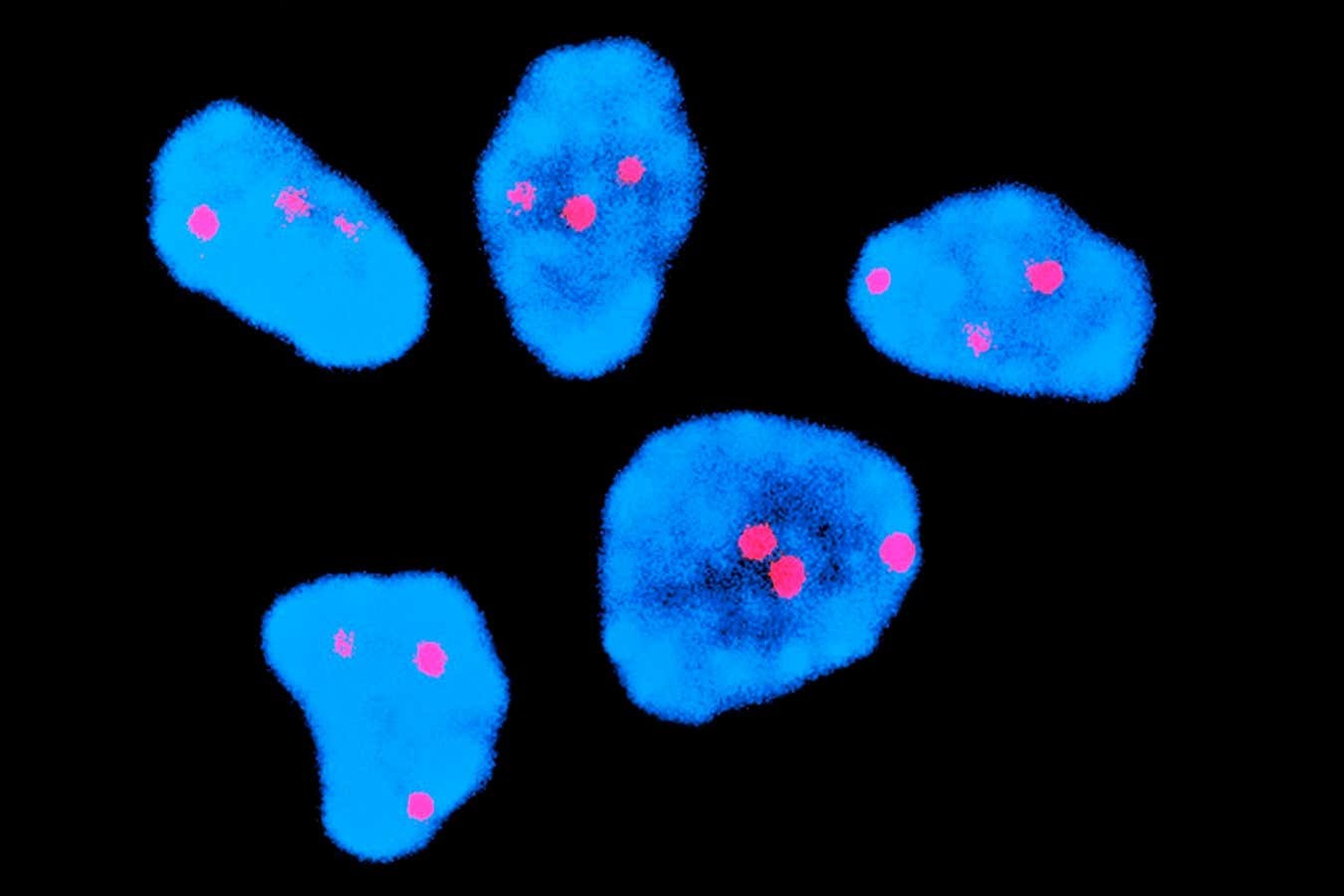
It starts with a number. Or rather, the lack of one.
Too many chromosomes. Too few.
It sounds abstract, like a math problem for robots, but it’s the main reason IVF fails. It causes miscarriage. It causes Down’s syndrome. It breaks hearts in clinic waiting rooms.
For older women, it’s the elephant in the room. The genetics of egg aging are brutal. And until now, science just had to watch it happen.
Not anymore.
The glue is failing
You have to understand aneuploidy. It’s when an egg or sperm keeps half of its chromosomes that it should have ejected. When they finally meet during fertilization, the math doesn’t work. The embryo has extra genetic baggage or is missing vital instructions.
It happens to about 10 percent of eggs in women in their early 30s.
That’s bad enough. But wait till you’re 40.
Agata Zielinska, from the German biotech firm Ovo Labs, put a number to the pain at a London conference. In women in their late 30s? More than 65 percent of eggs are aneuploid. Two thirds of the shots fired go wide.
“We really seem like a big deal,” says Marcos Iuri Roos Kulman, an expert not involved in the work. “To my knowledge, this is the therapy showing clinical potential for this major cause of failure.”
Why does the glitch happen? It’s about meiosis. That’s the cell division that halves your DNA for the big merge with sperm. The process needs a protein called shugoshin-1. Think of it as molecular glue. It holds pairs of chromosomes together while they line up in the center of the egg.
When fertilization finally happens, the glue lets go. The chromosomes separate cleanly. One side becomes the egg; the rest gets thrown away. Clean cut.
In older eggs? The glue degrades before it should.
The chromosomes pull apart too soon. They spread unevenly across the cell like spilled coffee. When the cell divides later, it splits randomly. Some chunks go one way. Some go the other. The result? An egg with the wrong genetic inventory.
Injecting hope
The fix wasn’t magic. It was mechanics.
Zielinska’s team suspected that shugoshin-1 levels drop in older eggs. So they collected 111 immature eggs from over 30 women, ages 22 to 43, who were either freezing eggs or trying for IVF.
They split the samples. Half got an injection of mRNA carrying the code for shugoshin-3. The rest? Nothing.
The difference showed up in hours.
In the untreated control group, premature separation of chromosomes hit 53 percent of the time.
In the injected group? It dropped to 29 percent. Nearly half that rate.
For the older donors—the ones over 35—the story was clearer. Their untreated eggs showed a 65 percent aneuploidy rate. After the injection, it fell to 44 percent. The team admits the sample size was too small for strict statistical significance. They don’t need you to buy their data because a p-value told them to.
They had mice to prove the safety.
Live births
They injected mouse eggs. Fertilized them. Produced live offspring.
Healthy pups. No side effects. The development wasn’t skewed.
“No interference with pregnancy health or pup health,” Zielinska told the audience. “From that perspective, we’re confident.”
It works. In mice. And the human cells looked better. Now the hurdle is simply scaling it up.
The current protocol requires mature eggs for IVF screening. This approach uses immature ones. A tweak. An adjustment. Not a rebuild of the entire reproductive clinic.
What would you say? Is this affordable?
“We anticipate the treatment will cost a fraction of a full IVF cycle,” Zielinska said. She calls it EmbryoProtect.
If it lowers the number of failed cycles for women over 35—if it gives them a shot without having to keep trying and trying until the bank account drains—then maybe the biology of age isn’t as fixed as we thought.
They are testing in people now. We just have to wait.